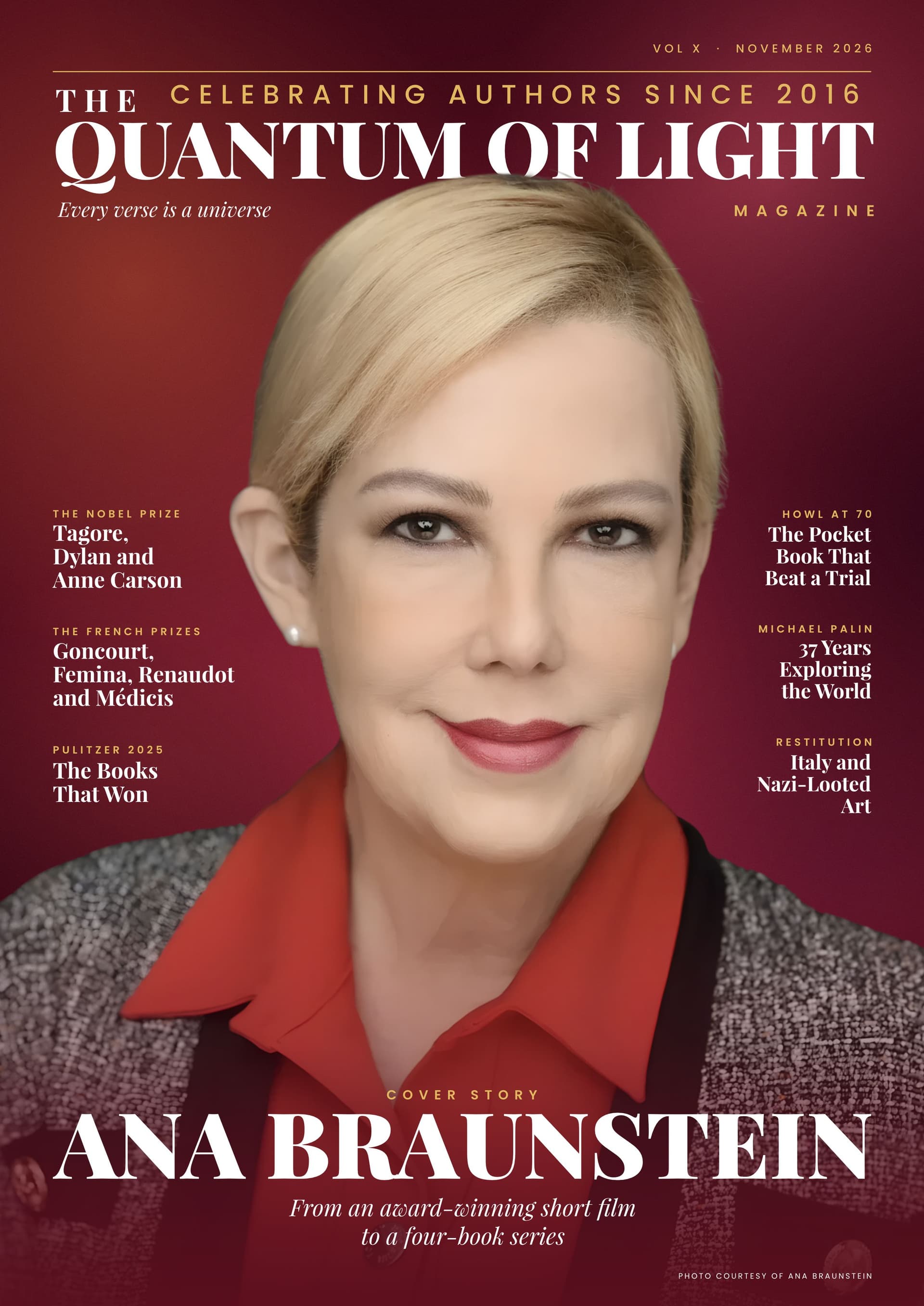
The Quantum of Light Magazine - November 2026

About This Issue

Every child arrives making things up. In this November edition, the writers, filmmakers and poets who never stopped show how stories build new worlds, teach empathy and grow slowly over years.

Editor's Letter

Born Creative, Not Consumers: How Stories Keep the Gift Alive

By Dr Marina Nani

Give a four-year-old a cardboard box and within minutes it is a ship, a castle or a shop with a queue outside the door. Nobody has to sell her the idea. I raised three children, and not one of them ever waited to be handed a story. They invented them at breakfast, performed them in the hallway and changed the ending whenever the ending bored them.

We are born creative. Consuming is a habit we learn later, one screen, one feed and one recommended purchase at a time, until many of us forget that we ever made anything at all. I have always believed that every person arrives in the world a genius. I call it Stardust, and I have never met a child without it.

Our cover star, Ana Braunstein, kept hers. As a little girl she wrote stories and performed them for her mother, her siblings and her friends. As a teenager she wrote and acted in plays at school, at church and in her community whenever she could. Years later she wrote a screenplay, This Case and My Life, and turned it into a short film that she wrote, directed, produced and starred in. It won more than 80 awards at festivals around the world. The response from audiences brought back the love of writing she had carried since childhood, and she spent the next few years turning the film into four novels. The fourth arrived this October. Ana wrote a script, and her career proves there is no script for creativity.

Building New Worlds

A story lets you take something familiar and set it down somewhere nobody expected. Ana took a Manhattan attorney who believes life can be won like a case in court, moved him from a Midtown office into a family home in Connecticut, and wrote his story as romantic comedy-drama, with a new baby, a winter commute and a first Christmas. The lawyer stays the same while the world around him changes, and that is where the comedy and the heartache come from.

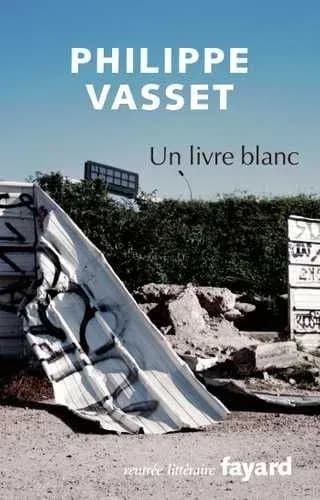
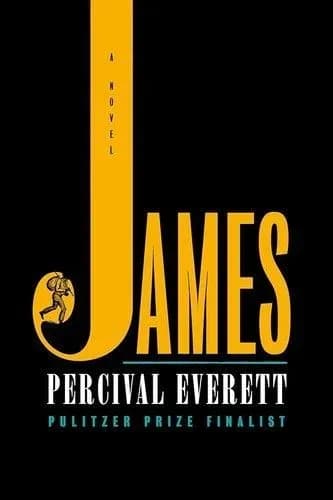
The writers in this edition do the same thing on every page. Percival Everett took the most familiar novel in American literature and handed Huckleberry Finn's story to Jim, and James won the 2025 Pulitzer Prize for Fiction. Rabindranath Tagore translated his own poems into English and won the Nobel Prize in Literature in 1913 with them. Philippe Vasset walked beneath France's high-voltage lines for two years and came back with the book that won this year's Prix Médicis. None of them invented a new landscape. Each of them looked at an old one from a place nobody else had stood.

Developing Empathy

Rich characters let you live inside lives you will never lead. Ana tells her first novel from several points of view, so you see what Chris Roberts's choices do to his wife Stacey, to Bridget and to Kathy, the character Ana played herself on screen. Stacey begins the first book making excuses for her marriage and ends it with her independence and her self-respect, and you travel every step of that road with her.

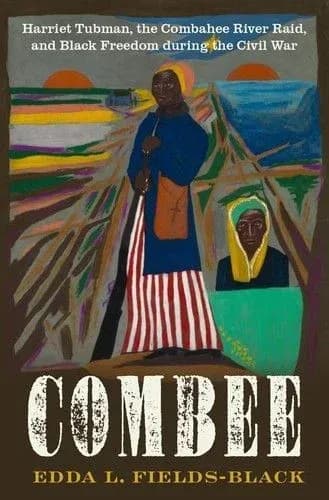
Jim's voice in James does the same work, and so does Combee, the history that won the 2025 Pulitzer by telling Harriet Tubman's Civil War raid through the people she freed. A news feed shows you what other people did. A story puts you inside their skin while they do it, and you close the book a little larger than you opened it.

On my own book tours, it was listening to readers, not speaking to them, that led me to self-actualisation. Empathy runs in both directions: a story teaches the reader to listen, and the reader teaches the writer to do the same.

The Slow Build

Most creative work does not arrive in a single flash of brilliance. It grows through the slow gathering and reshaping of ideas over years. Ana wrote her screenplay more than five years ago, made the film in 2021, then rewrote the same characters as novels and waited until all four books were finished before she gave any of them to readers. Her story changed shape twice before it found its final form.

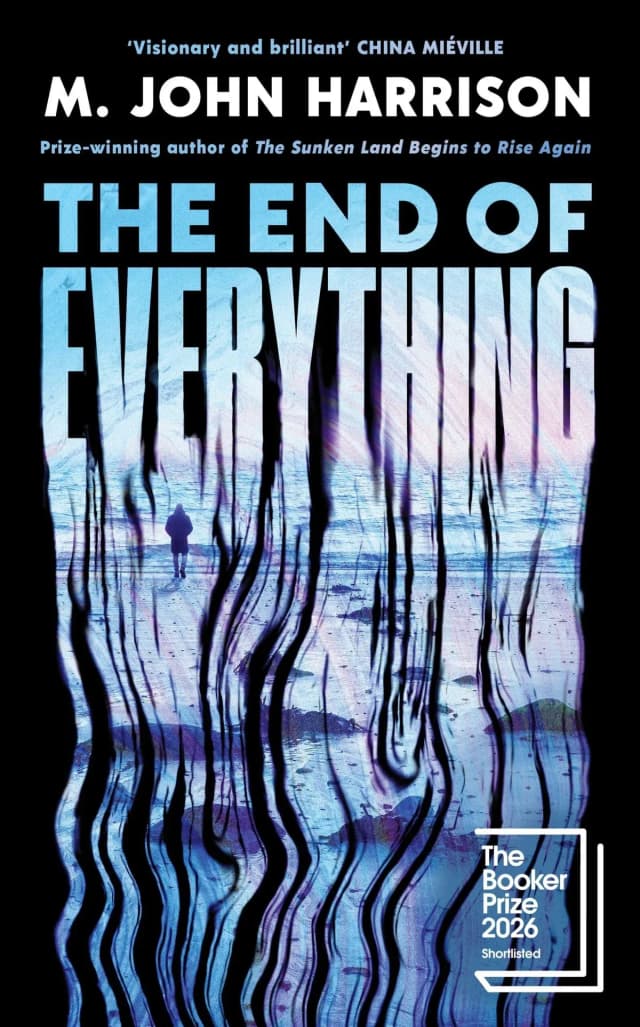
M. John Harrison is 81 and could become the oldest Booker Prize winner in history. Allen Ginsberg's Howl and Other Poems began life as a 75-cent pocket book, survived a customs seizure and an obscenity trial and has stayed in print for 70 years. Creativity keeps its own clock, and the people who finish are the people who keep going.

The youngest voice in this edition belongs to Arrow Travnick, a seven-year-old singer from Sydney whose first single is about growing up with artificial intelligence. She thinks AI can be really cool and helpful, but in her words, 'we still need to use our own brains, have our own ideas, be creative and be ourselves.' I could not have written a better brief for this magazine.

So this month, make something before you buy something. Write the first page, sing in the car, draw on the back of an envelope or tell your children a story with no screen in the room. You were born with a universe inside you, and every verse you write gives it a little more room.

Dr Marina Nani Editor-in-Chief

Ana Braunstein Turns Her Award-Winning Short Film This Case and My Life Into a Four-Book Series

By Dr Marina Nani

Ana Braunstein first brought attorney Chris Roberts to the screen in 2021, in a short film she wrote, directed and acted in, which went on to win more than 80 awards at festivals around the world. She has since written his story as a four-book series, This Case and My Life, and with the fourth novel out this October, you can now read it from the first page to the last.

Chris is a successful New York attorney who has built his career on control. He prepares every argument, anticipates the other side and believes that, with enough preparation, life can be won like a case in court. Across the four books that belief is tested by his marriage, a new love, the arrival of a baby and the people from his past whose lives are still tied up with his.

Ana calls the books romantic comedy-drama, and she writes for readers who enjoy emotional women's fiction, contemporary family drama and clean romance. There is heartache in them, with infidelity, secrets and a marriage that ends, but there is also plenty of humor, friendships nobody expects and a lot of room for forgiveness and second chances.

She lived in New York City for more than 30 years, and the series is set in places she knows well, from Central Park and a Midtown office to the Hamptons, Long Island and Connecticut. She also played one of the story's central characters herself. In the film she is Kathy Welch, and Kathy is still there in Book Four, weighing a career offer that makes her decide what success, loyalty and belonging mean to her.

The Award-Winning This Case and My Life Short Film

Ana wrote This Case and My Life as a screenplay more than five years ago and made it into a short drama, released in 2021. She wrote, directed and produced the film and played Kathy, with Mark Karten as Chris Roberts, Claire Waterhouse as Bridget Glenn and Monica Phillips as Stacey Roberts, Chris's wife.

The film won more than 80 awards, and many of them were for Ana's own work. At the Pinnacle Film Awards it took the Gold Award for Best Narrative Short, and Ana won Diamond Awards for Best Screenplay and Best Actress and a Gold Award for Best Director. She was also named Best Actress at the Black Swan International Film Festival and received the Accolade Competition's Award of Recognition for Leading Actress. At the MLC Awards the film was given an honorable mention for Best Series Potential in a Film.

The response from audiences, festival directors and judges brought back the love of writing she had since childhood. Ana saw how strongly people connected with Chris's story and decided to turn it into a series. "Chris may understand how to build a legal case, but his greatest lessons come from the relationships and responsibilities he cannot control," she says. "I wanted these books to show how love, forgiveness, family, and everyday choices can shape a person's future."

For Ana, a film and a novel are two ways of telling the same story. The novels gave her room to develop Chris's story and to show how his decisions affect everyone around him. Writing them took a few years, and she wanted the whole series finished before she presented it to readers.

Her interest in stories started early. As a child she wrote stories and performed them for her mother, her siblings and her friends, and as a teenager she wrote and acted in plays at school, at church and in her community whenever she could. Her parents loved the arts, were both keen readers and encouraged her to read. Ana's other independent film, A Silent Call: Can Anyone Hear Me? (2022), is also her own work as writer, director and actress, and it will be released as a book in late November.

This Case and My Life Books in Order

Ana suggests starting with Book One and reading the four in order, so that you see every change in the relationships as it happens. All four are available on Kindle, in paperback and in hardcover on Amazon.

Book One: This Case and My Life

The first book finds Chris successful and in control, with a pivotal case on his desk. As the case starts to spill into his private life, the separate parts of that life begin to collide, and he finds that relationships cannot be managed like cases in a courtroom. The story is told from several points of view, so you see what his choices do to Stacey, Bridget, Kathy and others whose lives have become entangled with his.

Stacey has the biggest journey. She starts out questioning her suspicions and making excuses for the problems in her marriage, then decides to find out the truth, and her story becomes one of independence, healing and self-respect. The novel won the Literary Titan Book Award. Literary Titan's reviewer called it "a fast-moving domestic drama about infidelity, deception, and the consequences that arrive when a carefully managed double life falls apart," and singled out Stacey's move from heartbreak to independence as one of the book's most satisfying arcs, along with its film-like pace and details such as the red roses that expose the cracks in Chris's carefully managed world.

Book Two: A Novel Sequel Two

By the second book Chris has built one of New York City's most respected law firms, found love again with Bridget and is preparing to become a father. A chance meeting on a business trip to Chicago reconnects him with someone from his past and brings back memories of how differently his life might have turned out. At the same time there are changes at his firm and more to handle at home.

Bridget senses that something has shifted. Small moments, unanswered questions and the pressure of getting ready for a baby start to put distance between two people who love each other, and Chris learns that winning in court is far easier than handling trust, love and family.

Book Three: A Walk in the Park

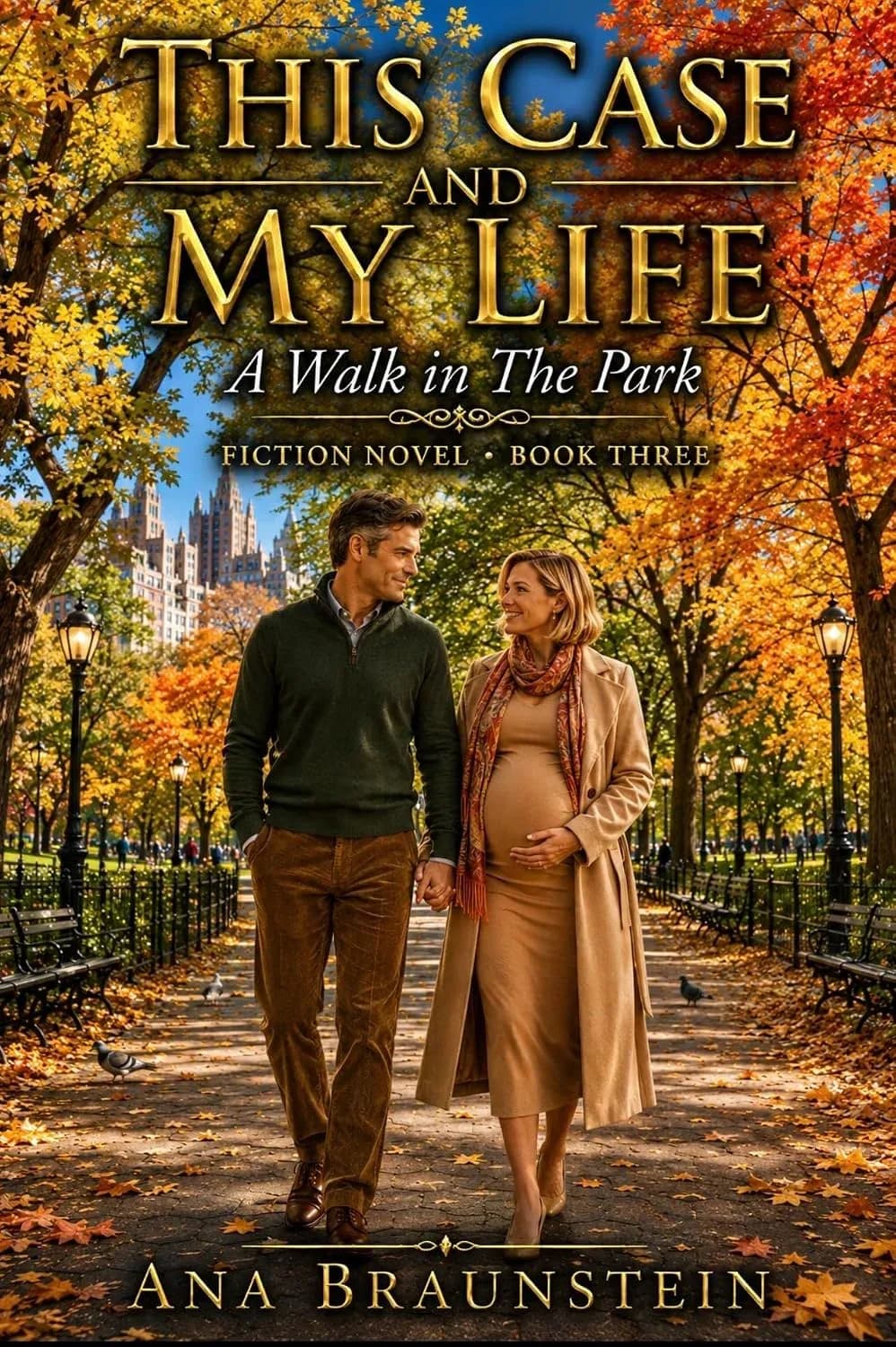
In the third book Chris is secretly looking for the right family home while Bridget prepares for the birth of their first child. Bridget becomes friends with Stephanie, the woman who once shared an important chapter of Chris's life, and neither Bridget nor Chris realizes how closely their lives are about to be linked by secrets from the past. The book is about kindness, forgiveness, second chances and letting go of the past, told with warmth and humor.

Book Four: Christmas Is Here

The final book brings a new home in Connecticut, a small wedding, baby Helen and the family's first Christmas together. Chris's career is still in Manhattan, though, and with winter commutes, early court appearances and the lease on his city apartment running out, the couple agree that he will stay in New York during the working week and come home when his schedule allows. It seems sensible until they start living it. Bridget finds out how hard it is to care for Helen without Chris there every day, while Chris tries to balance his career, his marriage, fatherhood and the life he used to have.

Kathy and Stephanie become friends too. Their conversations bring old secrets into the open, and Kathy's career offer forces a decision about where she belongs. Ana describes it as a story about marriage, parenthood, friendship, loyalty, second chances and the imperfect choices that shape the lives we build.

New York Life in This Case and My Life

Ana's 30 years in New York give the series its setting. Chris works from a Midtown office, the characters walk in Central Park, and other scenes take place in the Hamptons and on Long Island. When the family moves to Connecticut, the distance between home and the office becomes part of the story.

“It's complicated, but that's life. Life has unexpected turns. Our decisions matter.”

— Ana Braunstein

In each book a choice made in one part of Chris's life changes something in another, and the other characters' decisions carry as much weight as his. Over the series Chris changes, the people around him change with him, and secrets and surprises come out as time moves on. Ana calls the story thought-provoking and hopes it gets readers talking, and she wants them to have something to think about long after the last page. She is grateful to every reader who has taken the series to heart.

FAQ

What is the This Case and My Life series about?
The series follows Chris Roberts, a successful New York attorney who has built his career on control, across four books. It shows how his choices affect the people around him, including his wife Stacey, Bridget, Kathy and Stephanie, as he moves through a marriage that ends, a new love, fatherhood and a family home in Connecticut.
What order should the This Case and My Life books be read in?
Start with Book One, This Case and My Life, then read A Novel Sequel Two, A Walk in the Park and Christmas Is Here. Ana Braunstein recommends reading them in order, and with the fourth book out since October 2026, the whole series is available.
Is This Case and My Life based on a film?
Yes. Ana Braunstein first wrote This Case and My Life as a screenplay, and the 2021 short film she wrote, directed, produced and acted in won more than 80 awards, including Best Actress, Best Screenplay and Best Director awards for her. She then developed the story into the four-book series.
What are some good romance novels set in New York City?
Ana Braunstein's This Case and My Life series is one to try if you like romantic comedy-drama with a family story at its heart. It moves between a Manhattan law firm, Central Park, the Hamptons and Long Island before the family settles in Connecticut.

Bob Dylan Skipped His Own Nobel Ceremony Ten Years Ago, and No Songwriter Has Won the Prize Since

By Dr Marina Nani

On 13th October 2016, Sara Danius, the permanent secretary of the Swedish Academy, announced that the Nobel Prize in Literature had gone to Bob Dylan 'for having created new poetic expressions within the great American song tradition'. He was the first musician and songwriter ever to receive it. On 10th December 2026, Anne Carson will collect the same prize in Stockholm, ten years to the day after the ceremony Dylan chose not to attend.

The laureate who did not call back

For days after the announcement, Dylan said nothing. The Academy could not reach him, and one of its members, the novelist Per Wästberg, called the silence 'impolite and arrogant'. Dylan eventually told the journalist Edna Gundersen that the news was amazing and incredible, and in November the Academy confirmed that pre-existing commitments would keep him from Stockholm.

A ceremony without the guest of honour

At the Nobel ceremony on 10th December 2016, Patti Smith sang Dylan's A Hard Rain's A-Gonna Fall with an orchestra, stopping partway through when nerves took her words, and apologising before she carried on. At the banquet that evening, the American ambassador to Sweden, Azita Raji, read a speech Dylan had written for the occasion.

Dylan collected his gold medal and diploma on 2nd April 2017, at a private gathering in Stockholm with twelve members of the Academy and no press. Danius reported afterwards that spirits had been high and champagne had been drunk.

The lecture that arrived just in time

Laureates must deliver a Nobel lecture within six months of the ceremony to receive the prize money, which left Dylan a deadline of 10th June 2017. His recorded lecture appeared on the Nobel website on 5th June. In it he talked about the books that shaped his songs, Herman Melville's Moby-Dick, Homer's Odyssey and Erich Maria Remarque's novel of the First World War, and argued that songs are different from literature because they are 'meant to be sung, not read'.

Within days, the writer Andrea Pitzer showed in Slate that passages about Moby-Dick closely resembled the study guide SparkNotes, including a supposed quotation that does not appear in the novel. An Associated Press analysis found more than 20 similar phrases but no copied sentences. Dylan has long defended borrowing as part of the folk tradition, and the Academy let the matter rest.

Writers took sides

The award split the literary world. Salman Rushdie, Stephen King and Joyce Carol Oates welcomed it. Irvine Welsh dismissed it as a nostalgia award, the French writer Pierre Assouline called it contemptuous of writers, and Will Self argued that it cheapened Dylan. Leonard Cohen said that giving Dylan the prize was like pinning a medal on Mount Everest.

A decade of novelists and poets

Since 2016, the prize has gone back to the page. The laureates have been Kazuo Ishiguro, Olga Tokarczuk, Peter Handke, Louise Glück, Abdulrazak Gurnah, Annie Ernaux, Jon Fosse, Han Kang, László Krasznahorkai and now Anne Carson: novelists, a playwright and two poets, and no songwriter. There is an argument that Carson's award picks up the thread Dylan's left, since the Academy praised her for creating new forms in dialogue with the classical tradition, and Dylan closed his own lecture by returning to Homer.

Dylan, meanwhile, has carried on doing what won him the prize. At 85 he has spent 2026 on the road with his Rough and Rowdy Ways tour, and James Mangold's 2024 film A Complete Unknown, with Timothée Chalamet as the young Dylan, earned eight Oscar nominations. His Nobel medal, collected late and without ceremony, remains the only one ever awarded for songs.

FAQ

Why did Bob Dylan not collect his Nobel Prize?
Bob Dylan did not attend the Nobel Prize ceremony in Stockholm on 10th December 2016, and the Swedish Academy said pre-existing commitments kept him away. He did collect the prize later: he received his gold medal and diploma at a private meeting with members of the Academy in Stockholm on 2nd April 2017, and delivered his required Nobel lecture as a recording in June 2017, which allowed him to receive the prize money.
Why did Bob Dylan win a Nobel Prize?
The Swedish Academy awarded Bob Dylan the 2016 Nobel Prize in Literature for creating new poetic expressions within the great American song tradition, treating his song lyrics as poetry written to be performed. He was the first musician and songwriter to receive the literature prize. The decision was controversial, with some writers arguing that song lyrics should not compete with novels and poems for the award.

Michael Palin, 83, Is Unsure He Will Travel Abroad Again After 37 Years Exploring the World

By Dr Marina Nani

Michael Palin has been travelling for television since 1989, when he set off to follow Phileas Fogg around the world in 80 days. At 83, he is no longer sure he will go abroad again. In an interview with Mishal Husain for Bloomberg in October, he said he did not know whether he would travel again, and suggested that Michael Palin in the Philippines, his latest series, could be his last journey overseas.

The series aired on Channel 5 in three episodes from 28th September to 12th October 2026, alongside a book of the same name. Weeks later, a slip in his bathroom left him with three fractured ribs and a minor pelvic fracture. He cancelled his UK book tour and every other event for the next few months, called the accident a 'comedy fall with no audience there to see it' and thanked the NHS for his care. His official website has closed its shop while he recovers.

Palin has not ruled out travel in Britain, which he said could still be part of his work. The doubt covers long trips abroad, and above all the destinations his team calls 'countries on the edge'.

Michael Palin's Journeys From the North Pole to North Korea

The BBC first broadcast Around the World in 80 Days over seven episodes in 1989, and in all Palin has made 13 serialised travel documentaries. He crossed the planet from pole to pole, circled the Pacific Rim in Full Circle, which covered 50,000 miles through 17 countries over ten months, and followed it with Sahara, Himalaya, New Europe and Brazil.

After 2012 he moved his films from the BBC to Channel 5 and turned towards countries few presenters visit. Michael Palin in North Korea aired in 2018, Into Iraq in 2022, Nigeria in 2024 and Venezuela in 2025. The Philippines series followed this autumn, and the book follows him across the archipelago, from its beauty to the hardship of families living in extreme poverty.

If you are in your 70s or 80s and weighing the same question about your own trips, a few changes to how you plan can keep you travelling abroad with less strain.

How to Keep Travelling Abroad in Later Life

Buy travel insurance before you book, and declare every condition. The UK has no legal upper age limit on travel insurance, and several specialist insurers set none. The ratings firm Defaqto finds that 67% of single-trip policies cover adults aged 80 or over. If you leave a medical condition off the form, the insurer can refuse your claim, so list everything, including conditions that are well controlled.

Carry your GHIC. The UK Global Health Insurance Card is free from the NHS and gives you state healthcare in EU countries at the same cost as local residents. It does not replace travel insurance, as it will not cover private treatment or a flight home.

Book free assistance at the airport. UK and EU airports must provide help for passengers with reduced mobility at no charge, from the check-in desk to your seat. Ask your airline at least 48 hours before you fly.

Take the train for journeys under six hours. A rail journey lets you stand up, walk and arrive in the centre of a city. France's new TGV M makes its first run from Paris to Marseille on 6th November, and our Back on Track series covers the best rail routes across Europe each week.

Build rest days into your itinerary. Two nights in each place, rather than one, gives you a full day without packing. Choose hotels near the station or the old town so that most of what you came to see is within a short walk.

Keep your medicines in your hand luggage. Pack enough for the whole trip plus a few extra days, in their original boxes, with a copy of your prescription.

What Michael Palin Has Given Travellers

On a UK tour in his seventies, Palin's message to audiences was to enjoy travel while you can. His Philippines book is in shops now, and whether or not he crosses another border, his journeys from the North Pole to the Philippines remain on screen and on the page for you to follow.

Tagore Won the 1913 Nobel Prize for Poems He Had Translated Into English Himself

By Dr Marina Nani

On 13th November 1913, the Swedish Academy awarded the Nobel Prize in Literature to Rabindranath Tagore, a Bengali poet most of its members could read only in English. He was the first writer from outside Europe to win it, and the first Indian to receive a Nobel Prize in any category. The Academy praised his 'profoundly sensitive, fresh and beautiful verse', and added that he had made his poetic thought, expressed in his own English words, part of the literature of the West.

The phrase about his own English words is the heart of the story. Tagore was 52 and already the most celebrated writer in Bengal, with decades of poems, songs, plays and stories behind him. Almost none of it existed in English until he translated a selection himself, and that slim book won him the prize.

A notebook of translations reached Yeats in London

The Bengali Gitanjali, a cycle of devotional songs, appeared in 1910. When Tagore sailed to England in 1912, he carried English prose versions of poems drawn from it and from other collections. The painter William Rothenstein, who had met him in Calcutta, passed them to W.B. Yeats, who was moved enough to write the introduction for a limited edition published by the India Society in London that November.

Macmillan published a general edition in March 1913, and it had been reprinted ten times before the Nobel announcement. The English Gitanjali is not a translation of the Bengali book of that name. It is a new collection, in plain rhythmic prose, assembled by the poet for readers who could not hear the rhyme and metre of the originals.

One nomination was enough

Tagore had never been nominated before 1913. The single nomination came from the English poet Thomas Sturge Moore, and most members of the Academy knew his work only through those few English translations. The committee member Per Hallström argued that no European poet since Goethe could rival him, and the Academy passed over a field that included Thomas Hardy, whose work was judged too pessimistic for the terms of Alfred Nobel's will.

The choice surprised Europe. The Times called it unexpected but welcomed it, the New York Times compared him to Walt Whitman, and Le Figaro described him as an author with no significant world reputation. In Santiniketan, the rural school Tagore had founded in 1901, the news arrived by telegram. He did not travel to Stockholm for the ceremony on 10th December, and gave his Nobel lecture there in 1921.

What the prize paid for

Tagore put the prize money into Santiniketan, which grew into Visva-Bharati University in 1921. The British government knighted him in 1915. In 1919, after British troops killed hundreds of unarmed civilians at Jallianwala Bagh in Amritsar, he wrote to the Viceroy to give the knighthood back.

Why the West moved on and Bengal never did

The English Gitanjali made Tagore famous in Europe as a gentle Eastern mystic, and that image hardened fast. There is an argument that the translations themselves did the damage: in turning rhymed songs into devotional prose, Tagore gave Western readers a voice that sounded wise and timeless but lost the music, wit and variety of the Bengali. Yeats, his first champion, later lost patience with the translations that kept coming.

In Bengal, the music never left. Tagore wrote more than 2,000 songs, known as Rabindrasangeet, which are still sung across the region, and his words are the national anthems of both India and Bangladesh. He took up painting seriously in his late sixties and left more than 2,000 pictures. The film director Satyajit Ray studied at Santiniketan and adapted Tagore's fiction for the screen, most famously in Charulata in 1964.

The medal was stolen in 2004

On 25th March 2004, thieves took Tagore's Nobel medal and other belongings from a security vault at Visva-Bharati. The Swedish Academy gave the university two replicas, one in gold and one in bronze, on 7th December that year, and the original has never been found. The theft later inspired the Bengali film Nobel Chor.

A century on, the prize is about to go to another poet who works between languages. Anne Carson, a translator of Sappho and Euripides, receives the 2026 Nobel Prize in Literature in Stockholm on 10th December.

FAQ

Why did Rabindranath Tagore win a Nobel Prize?
Rabindranath Tagore won the Nobel Prize in Literature in 1913 for his poetry, and in particular for Gitanjali: Song Offerings, a collection of his own English prose translations of Bengali poems published in 1912 with an introduction by W.B. Yeats. The Swedish Academy praised the sensitivity and freshness of his verse and the skill with which he made his poetic thought part of Western literature. He was the first writer from outside Europe to receive the prize.
What happened to Rabindranath Tagore's Nobel Prize?
Tagore's Nobel medal was stolen on 25th March 2004 from a security vault at Visva-Bharati University in Santiniketan, West Bengal, along with other personal belongings, and it has never been recovered. Later in 2004 the Swedish Academy presented the university with two replicas, one gold and one bronze, which are kept in the Tagore museum there. Tagore had used the prize money itself to develop the school that became Visva-Bharati.

Klara and the Sun Is the Latest Ishiguro Film to Fail Where The Remains of the Day Succeeded

By Dr Marina Nani

Kazuo Ishiguro turns 72 on Sunday 8th November, a fortnight after the worst reviews any film of his work has received. Taika Waititi's Klara and the Sun, starring Jenna Ortega as the solar-powered Artificial Friend and Amy Adams as the mother who buys her, opened in Britain and the United States on 23rd October. The Guardian, the Telegraph and the Times each gave it one star, its Rotten Tomatoes score sits at 24%, and it has taken about $1.7 million at the box office. Waititi responded by calling his critics irrelevant, out of touch and obsolete.

Ishiguro has said he tries to write 'unfilmable novels', yet almost every one of them has reached the screen, and he has written several films himself. Over forty years the record runs from eight Oscar nominations to a Merchant Ivory film that earned back barely a seventh of its budget. The pattern says a good deal about what his books are and what film can do with them.

The Remains of the Day set a standard nobody has matched

Harold Pinter read The Remains of the Day in proof and optioned it before it was published in 1989, the year it won the Booker Prize. Mike Nichols was to direct from Pinter's script. The project passed to Ismail Merchant and James Ivory, who brought in their regular writer Ruth Prawer Jhabvala to rewrite it, and Pinter declined a shared credit and took his name off the film.

The 1993 film, with Anthony Hopkins as the butler Stevens and Emma Thompson as the housekeeper Miss Kenton, earned eight Academy Award nominations, including Best Picture, Best Actor, Best Actress and Best Adapted Screenplay. It won none, in the year of Schindler's List, but it took $63.9 million on a $15 million budget, and in 1999 the British Film Institute ranked it among the hundred greatest British films of the century.

There is an argument that it worked because it found a screen equivalent for Ishiguro's narrator. In the novel, Stevens tells the reader far less than he knows, and the story lives in the gap. On screen, Hopkins plays the same withholding with his face, so the audience reads what Stevens will not say.

Never Let Me Go kept the love story and lost the audience

Alex Garland, a friend of Ishiguro, asked for the rights to Never Let Me Go before he had finished reading it, and had a script written before the novel came out in 2005. Mark Romanek directed the 2010 film, with Carey Mulligan, Andrew Garfield and Keira Knightley as the three friends raised at Hailsham to become organ donors, and Ishiguro served as an executive producer.

Romanek chose to make a love story rather than a science fiction film, and stripped out the futuristic design he had first planned. Reviews were generally warm, and the film still turns up on streaming lists, but it made about $11 million worldwide on a $15 million budget. The novel's slow reveal, which readers piece together over hundreds of pages, is hard to stage for an audience that has read the poster.

Ishiguro as a screenwriter in his own right

Ishiguro wrote for television before most readers knew his name, with two original television films in the 1980s, A Profile of Arthur J. Mason and The Gourmet. His original screenplay The Saddest Music in the World became Guy Maddin's 2003 film, although Maddin and George Toles kept only the title, the premise and the contest to find which country makes the saddest music, and rewrote the rest.

The White Countess, his original screenplay for James Ivory, set among displaced Russians in 1930s Shanghai, starred Ralph Fiennes, Natasha Richardson and Vanessa Redgrave. It was Ismail Merchant's last film, as he died shortly after shooting ended, and it grossed about $4.1 million against a reported $30 million budget. The New York Times called the script anaemic.

His best screen work came much later, and from someone else's story. Living, his 2022 adaptation of Akira Kurosawa's Ikiru, moved the dying bureaucrat to 1950s London and gave the part to Bill Nighy, the only actor Ishiguro had pictured in it. Ishiguro and Nighy were both nominated for Oscars, and the film holds a 96% Rotten Tomatoes score.

A Pale View of Hills went home to Japan

His first novel, published in 1982, drew on his mother's memories of Nagasaki, where she was living when the atomic bomb fell. The Japanese director Kei Ishikawa filmed it in Japanese with Suzu Hirose and Fumi Nikaido, moving between 1950s Nagasaki and 1980s England, and it premiered in the Un Certain Regard section at Cannes on 15th May 2025, with Ishiguro as executive producer. Critics divided: the film holds a 68% Rotten Tomatoes score, while the Guardian, reviewing its British release in March 2026, found it frustrating and flat.

Klara and the Sun widened a story that only works in one head

Sony held Waititi's film for more than two years before releasing it. It premiered at the BFI London Film Festival on 15th October, and the reviews that followed made the same complaint in different words. The novel is told entirely by Klara, a machine who misunderstands the human world in ways the reader slowly learns to see through. Screen Daily argued that the film loses something by stepping outside Klara's view, and the Guardian objected to the jokey tone Waititi brought to a book that is mostly about grief.

Waititi calls it his most dramatic film, and Ishiguro was an executive producer, so the author was not shut out. The weakness the critics named is structural, not a matter of loyalty to the book.

What Ishiguro says makes a film of his work survive

Ishiguro has been unusually clear about what he wants from the people who film his books. At Cannes in 2025 he told the Associated Press that he wants a film to differ from the novel, that adaptations fail when they are too reverential, and that a film which simply reproduces the book can end up 'like a tribute or an Elvis impersonation'. He also said that for every adaptation that reached the screen, ten or fifteen others he worked on fell away.

He compares the process to storytellers round a fire, each telling a familiar tale a different way, and jokes that if his stories keep being retold he might one day become Homer. By that measure, the films that lasted were the ones that changed the most while keeping the narrator's blind spot at the centre. The Remains of the Day kept Stevens's silence at its centre. Living was not even his story to begin with. Klara and the Sun added comedy and widened the frame, and lost the single, mistaken point of view that made the novel work.

Miss Lambert Steps Aboard Danger is next

Ishiguro's next novel, Miss Lambert Steps Aboard Danger, is due from Knopf on 9th March 2027. It is set in London in 1938, the year before the Second World War, around an encounter between the mysterious title character and a lover of the music hall. His American publisher, Jordan Pavlin, describes it as spy fiction with the kind of wit associated with P.G. Wodehouse, which would be a new register for a writer known for restraint.

It returns him to the England of The Remains of the Day, the book that gave him his best film. Whoever adapts it, on his own evidence, should feel free to change it.

FAQ

What is Kazuo Ishiguro's most famous book?
The Remains of the Day, published in 1989, is usually named as Kazuo Ishiguro's most famous book. It won the Booker Prize that year and became an Oscar-nominated film starring Anthony Hopkins and Emma Thompson. Never Let Me Go, from 2005, runs it close: it was shortlisted for the Booker Prize, is widely taught in schools, and is the Ishiguro title searched for most often. Ishiguro was awarded the Nobel Prize in Literature in 2017 for his body of work rather than for a single book.
In what order should I read Kazuo Ishiguro's books?
Reading in publication order shows how his style developed: A Pale View of Hills (1982), An Artist of the Floating World (1986), The Remains of the Day (1989), The Unconsoled (1995), When We Were Orphans (2000), Never Let Me Go (2005), the story collection Nocturnes (2009), The Buried Giant (2015) and Klara and the Sun (2021). Many readers start with The Remains of the Day or Never Let Me Go, which are the most accessible, and leave The Unconsoled, his longest and most dreamlike novel, until later. His next novel, Miss Lambert Steps Aboard Danger, is due in March 2027.

Me vs AI: The Seven-Year-Old, Arrow Travnick Singing About AI

By Dr Marina Nani

If you are raising a child today, you are raising someone who has never lived in a world without a machine that answers back. Children born from the early 2010s onwards ask the speaker in the kitchen to play their favourite song, watch cartoons picked for them by an algorithm and sit in classrooms where a chatbot can write a homework essay in seconds. Artificial intelligence is simply part of the house they grew up in.

The adults around them spend their evenings worrying about what all this will do. Parents ask which jobs will still exist in twenty years, teachers ask whether children will still learn to think for themselves, and every family fights its own battle over screens. The children at the centre of it are rarely asked what they think.

Arrow Travnick, a seven-year-old singer from Sydney, has answered anyway, with a pop song. Her debut single, Gen Alpha (Me vs AI), takes the biggest worry of her parents' generation and turns it into something you can dance to in a school hall. Her verdict on the technology is simple: AI can be super smart, and she is still the boss.

Getting there took a night of nerves. The night before she recorded her first song, Arrow sat on the floor of a hotel room in Bali and told her manager the truth. 'I don't think I'm ready for tomorrow,' she said.

She was six. Her manager, Amanda, gave her a big hug and told her it would be okay. Her vocal coach and director, Ms Kenny Febrina, was in the room too, and both women kept encouraging her through the evening. The next day Arrow stepped up to the microphone to record Gen Alpha (Me vs AI), a pop song about growing up with artificial intelligence, still feeling the weight of wanting to get it right. Somewhere in the first takes the fear loosened. 'Oh! I can do this!' she remembers thinking.

Halfway through the session, the power went out. The whole team sat and waited for the electricity to come back on before Arrow could carry on singing. A child who had spent the previous night convinced she would fail now tells the story as a comedy. 'It was a little crazy,' she says, 'but now it's one of the funny things I remember about recording my very first song.'

Arrow, now seven, is an Australian-Indonesian singer and performer based in Sydney. Gen Alpha (Me vs AI) is her debut single, released in September 2026 with an official music video. The track is published by Sony Music Publishing Indonesia and was made with the Indonesian creative and production company PT Lihat Dengar Rasakan (LDR), working mainly with producer David Elsandro and songwriter and musician Audree Dewangga. None of it was planned. On a family trip to Indonesia in December 2025, Arrow was scouted and invited to try recording original music.

A Children's Song About Artificial Intelligence

The song started with a remark that had nothing to do with music. Arrow's former school principal said that, with AI, she did not even know which jobs would still be around by the time children Arrow's age grew up. Arrow's mother heard it, and the comment stayed with her.

When the family later met David Elsandro, the producer suggested making a children's song for Arrow. Her mother already had a subject. 'My mum said, "What about Generation Alpha and AI?"' Arrow recalls. Elsandro found the idea interesting, she explains, since most children's songs are about family or friendship, while AI is already a big part of the world her generation is growing up in.

Arrow's father, Caleb Travnick, sees the gap between how adults and children experience the technology. 'Adults talk about AI all the time and whether it is good or bad, but for children Arrow's age, technology is simply part of the world they have been born into,' he says.

Arrow's own conclusion is more practical than most of what is written about her generation. She wants children, and grown-ups too, to know that AI 'can be really cool and helpful, but we still need to use our own brains, have our own ideas, be creative and be ourselves.'

“AI can be super smart… but I'm still the boss.”

— Arrow Travnick

Making the Gen Alpha (Me vs AI) Music Video

The music video was Arrow's first, and it nearly overwhelmed her before a single scene was shot. The production ran a workshop beforehand so she could practise everything, and one day it all became too much. 'I just started crying!' she says. 'I think I was feeling a bit overwhelmed.'

Filming day went the other way. 'I had so much fun,' she says, even with the constant call of 'Again, Arrow!' as the crew reshot scenes to get them right. Repetition used to be her least favourite part of the job. 'I used to hate repeating things, but now I'm much better at it!'

Parts of the video were made using AI, which Arrow thought was 'really cool'. She liked that a song called Me vs AI ended up working with AI to bring it to the screen. The choice fits her message neatly: Arrow is not against the technology, and she simply wants people to stay in charge of it.

Her parents saw the pressure building long before the cameras arrived. 'The production team, her manager and we as her parents were nervous too,' they say. 'Ultimately, a huge part of the production rested on the shoulders of a six-year-old.'

That feeling is familiar to them. Arrow started modelling at four, and she has since worked on children's campaigns across Asia, including for Le Petit Society in Singapore and for Terry Palmer and Zuma Sandals in Indonesia. In Australia she is represented for modelling and commercial work by Munchkins Talent Agency. Before every job, her parents have asked themselves the same things: will she cope with the pressure, take direction and deliver when it matters?

What they have watched grow is resilience. 'Arrow used to really dislike being corrected or asked to repeat something,' they say. 'Over time, she has learned that direction and discipline are simply part of getting better.' In the finished video, once the cameras were rolling, she relaxed and performed for the joy of it. 'For us, that was probably more important than getting every shot perfect.'

Piano, Dance and a Normal School Week in Sydney

Most of Arrow's recording and production work is scheduled for school holidays. The music video was the one exception, and she missed a week of school to fit the shoot. In a normal week she has piano, vocal and dance training after school or at weekends, and the rest of her time belongs to school, friends and family.

'Arrow is still a normal seven-year-old who goes to school, spends time with her friends and family and loves singing, dancing, fashion, arts and crafts, but she also has this incredible creative side that she absolutely loves exploring,' her father says.

The family is careful about how far ahead it looks. 'We aren't trying to map out an adult career for a seven-year-old,' Caleb Travnick says. Her parents want to support her passion, and they want her to enjoy being a child just as much.

Teaching a Young Performer the Value of Money

The Travnicks started teaching Arrow about money early. Every dollar she earns from modelling and music goes straight into her own savings, and her parents encourage her to find small ways to earn money herself. By their account, she once made around $700 selling Pop Mart collectibles, the designer toys sold in blind boxes that children and adults now collect and trade around the world.

For her parents, the point is for Arrow to learn early that money has value, and how to earn it, save it and make thoughtful decisions with it. If you have children of your own, the model is simple to copy: whatever they earn stays theirs, and the habit of saving it starts before the amounts get large.

Secret Songs With a Nineties Sound

Arrow is now working on five more original songs for a planned mini album, and the titles are staying secret for now. Each song looks at life through Gen Alpha eyes. Even familiar subjects such as school, friendship and growing up sound different, she says, when technology, pressure, games, AI, scores and screens are mixed into them.

She wants children her age to hear the songs and think, 'That's so me!' She also wants their parents to hear what her generation's world looks and feels like from the inside. To help with that, the music borrows the energy and sounds of the 1990s and early 2000s and gives them a Gen Alpha feel, so the children relate to the stories while the adults catch something they grew up with.

'The songs are still fun, but there's always something real behind them,' Arrow says. 'It's basically our Gen Alpha world turned into music.'

Her bigger dreams include becoming a K-pop idol and, one day, recording with Bruno Mars. Her father keeps those plans in proportion. 'Arrow is seven, so naturally her dreams may change many times as she grows up, but right now music and performing genuinely excite her and we want to support that in a healthy and positive way,' he says.

For now, the girl who sat on a hotel floor in Bali sure she was not ready has a released single, a finished music video and five new songs in progress. She has also learned to hear 'Again, Arrow!' as part of the job.

You can find out more about Arrow and her music at arrowtravnick.com.

Yannick Haenel Wins the Prix Femina 2026 a Day After Losing the Goncourt

By Dr Marina Nani

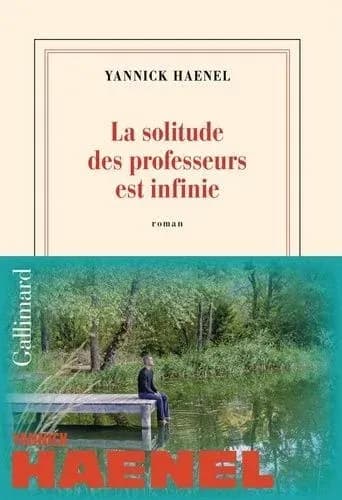
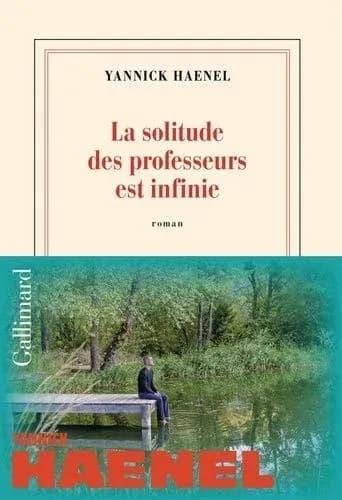
Yannick Haenel won the Prix Femina on Wednesday 4th November for La solitude des professeurs est infinie (Gallimard), one day after the same novel lost the Prix Goncourt. The all-female jury chose it in the second round with six votes, against two each for Emma Marsantes, for N'efface pas mes cercles (Verdier), and Lucie Rico, for Mais que fait ce sang sur le pull de Jennifer ? (P.O.L).

La solitude des professeurs est infinie

Featured Book

La solitude des professeurs est infinie

by Yannick Haenel

Thirty years on, the narrator Jean Deichel looks back on his first year as a French teacher at a difficult school in Mantes-la-Jolie, west of Paris. Worn down by long journeys, money worries and fading hopes, he retreats into a deep solitude. A finalist for the 2026 Prix Goncourt.

Fnac

We may earn a commission from purchases made through this link.

The jury announced its prizes in the winter garden of the Maison Dior at 30 avenue Montaigne in Paris, its new home after five years at the Musée Carnavalet. Brigitte Giraud, who won the Goncourt in 2022, chaired the jury this year. Asked about the new address, the jury said no money was involved and that it keeps its total independence.

La solitude des professeurs est infinie by Yannick Haenel

The title translates as The Loneliness of Teachers Is Infinite. Jean Deichel, Haenel's fictional double, looks back to his trainee year teaching French at a struggling secondary school in the Paris suburbs, lodging at a tennis club in Deuil-la-Barre. Livres Hebdo's critic Julie Malaure described the novel's account of a young teacher's first steps as 'premiers faux pas, premières suées, premiers émois amoureux aussi': first missteps, first cold sweats and first loves too.

Haenel taught French for 17 years, and he began the book after the murder of the teacher Samuel Paty in October 2020. Near its last page, the novel names itself a tribute to Paty and to Dominique Bernard, the two teachers killed in attacks in France in 2020 and 2023. It runs to 320 pages and has sold more than 45,000 copies.

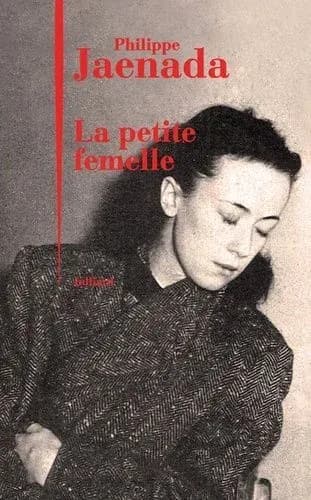
On Tuesday, the Académie Goncourt gave its prize to Philippe Jaenada by six votes to three over Sylvain Prudhomme, leaving Haenel among the finalists who did not win.

Yannick Haenel From Cercle to the Femina

Haenel was born in Rennes in 1967, the son of an army officer. He founded the literary journal Ligne de risque in 1997 and today runs the journal Aventures and its book series at Gallimard. Jean Deichel first appeared in Cercle (2007), which won the Prix Décembre and the Prix Roger-Nimier. Jan Karski (2009) won the Prix Interallié and the Prix du roman Fnac, and Tiens ferme ta couronne (2017) won the Prix Médicis. With the Femina, Livres Hebdo counts him as the writer with the most wins among France's major autumn prizes.

In September, the website ActuaLitté compared Haenel's novel with Grand Poisson, a 2025 novel by Fabrice Sanchez set in a school. It found no copied passages and said the resemblances it listed did not prove any borrowing. Haenel said he had never seen Sanchez's manuscript or read the book.

Laura Kasischke and Jennifer Tamas Win the Other Prix Femina Awards

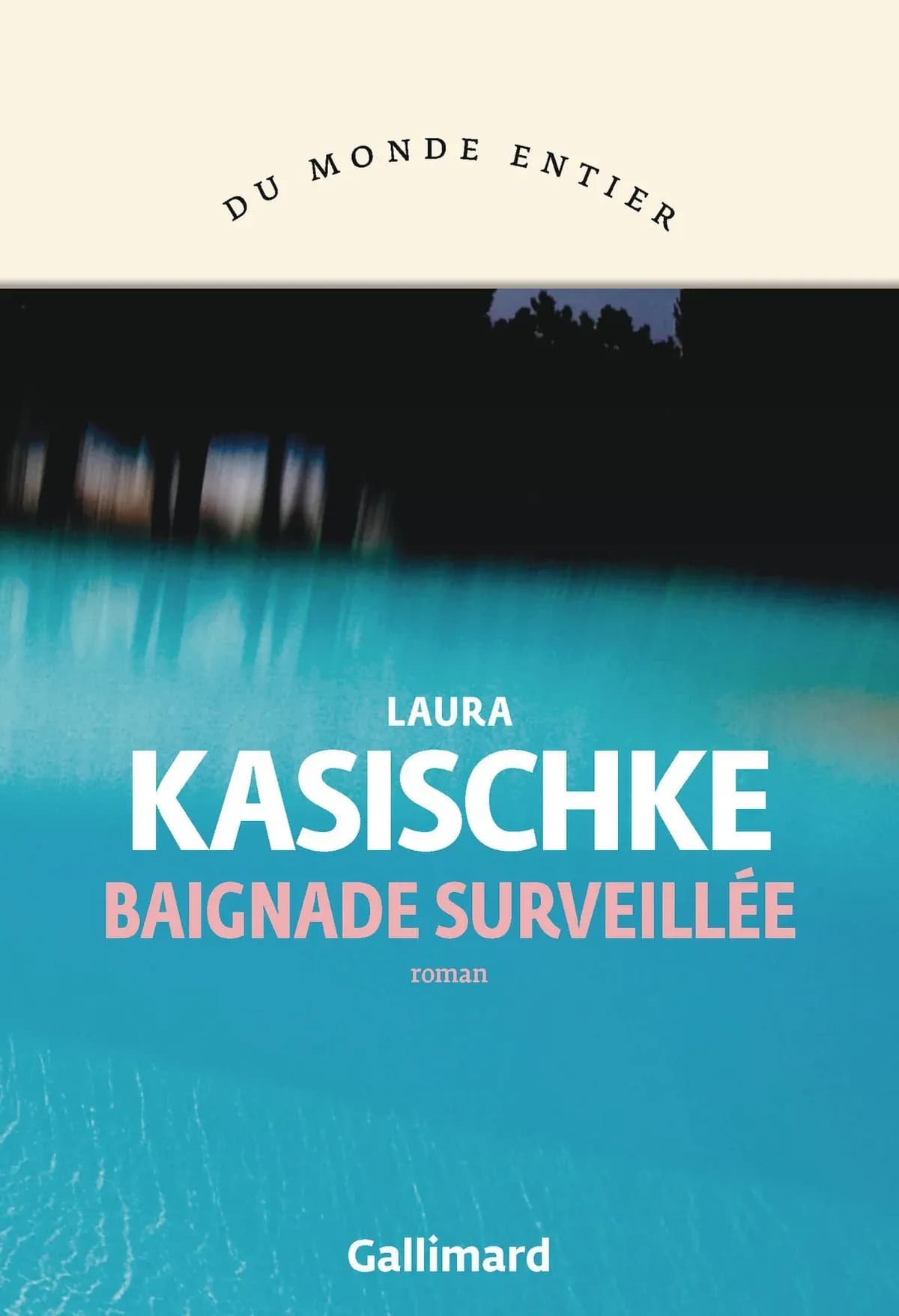
The foreign novel prize went to the American writer Laura Kasischke for Baignade surveillée (Gallimard), translated from English by Céline Leroy. On 16th July 1969, as Apollo 11 heads for the Moon, a boy called Richie Manning drowns in a crowded neighbourhood pool, and the lifeguard is blamed at once. Kasischke follows the small events that led to his death and the class tensions behind the town's tidy front gardens.

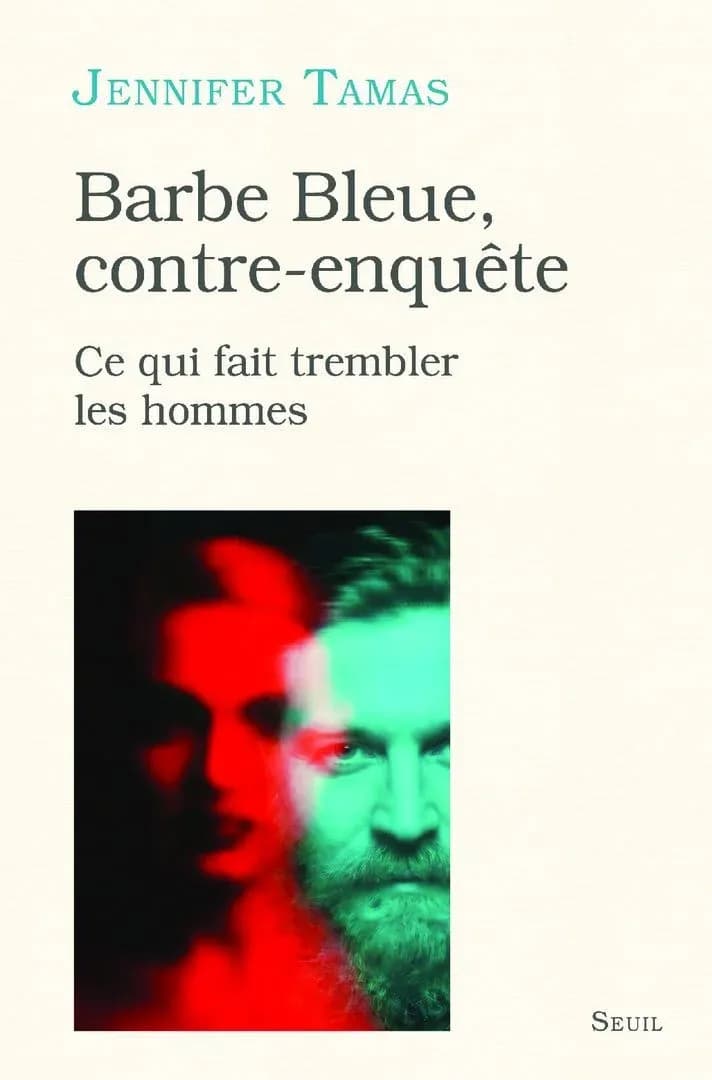
The essay prize went to Jennifer Tamas, associate professor of French at Rutgers University in New Jersey, for Barbe Bleue, contre-enquête (Seuil). Tamas goes back to Charles Perrault's tale of Bluebeard and to 17th-century archives to read the story as one about male domination, domestic violence and the killing of women.

The Other Prix Femina Winners

Fiction

Baignade surveillée

Laura Kasischke

Feminism & Feminist Theory

Barbe Bleue, contre-enquête

Jennifer Tamas

Gallimard's Group Wins All Four Major Autumn Prizes

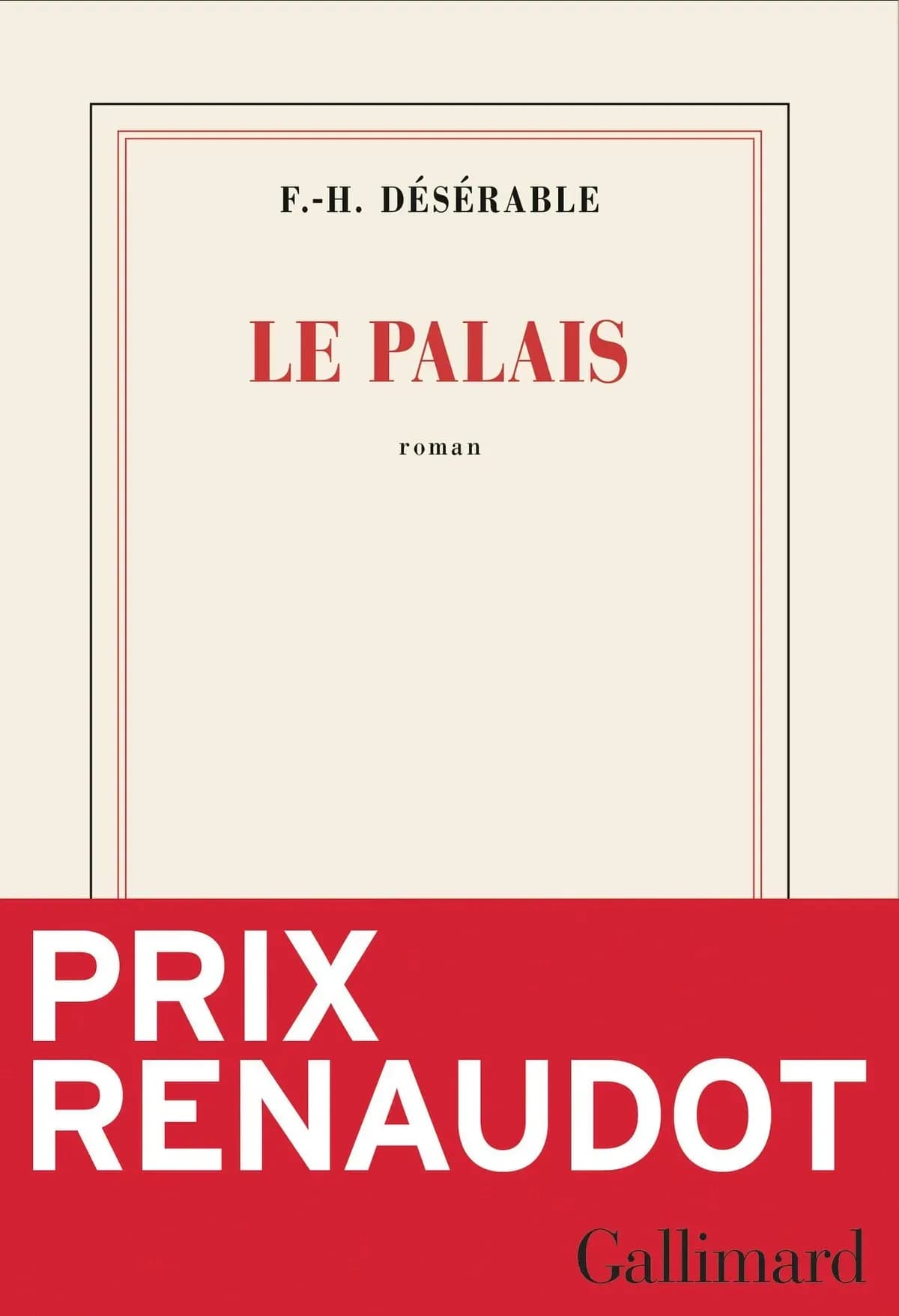
The Femina completes a clean sweep for Madrigall, the family group chaired by Antoine Gallimard. Its imprints won the Prix Médicis with Philippe Vasset (Flammarion), the Goncourt with Philippe Jaenada (Flammarion), the Prix Renaudot with François-Henri Désérable (Gallimard) and now the Femina with Haenel and Kasischke. The only major autumn award to escape the group was the Grand Prix du roman de l'Académie française, which went to Sébastien Lapaque for Le rappel des oiseaux (Actes Sud) on 29th October.

The 2026 winners succeed Nathacha Appanah, who won the French novel prize in 2025 for La nuit au cœur, Marc Weitzmann, who won the essay prize, and John Boyne, who won the foreign novel prize.

Frequently Asked Questions

What is the Prix Femina?
The Prix Femina is a French literary prize chosen every year by a jury made up only of women. Twenty-two writers for the magazine La Vie heureuse founded it in 1904, and it is open to French-language books by men and women alike. It is announced in Paris on the first Wednesday of November and now has separate prizes for a French novel, a foreign novel translated into French and an essay.
What is the Prix Femina étranger?
The Prix Femina étranger is the Femina jury's award for a foreign novel translated into French. It was established in 1985 and is announced on the same day as the main prize.
What is the most prestigious literary award in France?
The Prix Goncourt, founded in 1903, is France's oldest and best-known literary prize, and its winner receives a symbolic cheque of €10. The Prix Renaudot, the Prix Femina, the Prix Médicis, the Prix Interallié and the Grand Prix du roman de l'Académie française make up the other major autumn awards.

The Best Books on Leonardo, Michelangelo and Raphael, the Three Masters of the High Renaissance

By Dr Marina Nani

In January 1504, Florence asked its leading artists where Michelangelo's nearly finished David should stand. Leonardo da Vinci, then 51, was one of them. Michelangelo was 28, and by the end of that year a 21-year-old painter from Urbino called Raphael had arrived in the city to learn from both. For a few years, the three greatest artists of the High Renaissance lived within walking distance of one another, and they watched each other closely.

The books below follow them through that rivalry and beyond, to the Sistine Chapel, the papal apartments of Rome and the French château where Leonardo died. Some are scholarly, some are written for a long train journey, and one is a novel. Each one will change how you look at the paintings.

Books on All Three Masters

Lives of the Artists by Giorgio Vasari

The Lives of the Artists

Featured Book

The Lives of the Artists

by Giorgio Vasari

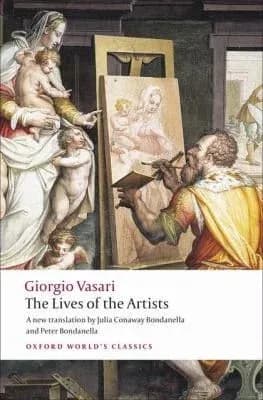
Giorgio Vasari's lives of the Italian artists, first published in 1550 and expanded in 1568, are the founding text of art history and the earliest account of Leonardo da Vinci, Michelangelo and Raphael. This Oxford World's Classics selection is translated by Julia Conaway Bondanella and Peter Bondanella.

Every modern book on these three men starts here. Vasari, himself a painter and architect, published his lives of the Italian artists in 1550 and expanded them in 1568. He knew Michelangelo personally, and Michelangelo was the only living artist in the first edition. Vasari gets dates wrong and loves a good anecdote, but no other source puts you so close to how these artists were talked about in their own century. The Oxford World's Classics selection, translated by Julia Conaway Bondanella and Peter Bondanella, includes all three lives and runs to a manageable length. Read it first, then read everyone else correcting it.

Michelangelo, Leonardo, Raphael by Scott Nethersole and Per Rumberg

Michelangelo, Leonardo, Raphael: Florence, c. 1504

Featured Book

Michelangelo, Leonardo, Raphael: Florence, c. 1504

by Scott Nethersole & Per Rumberg

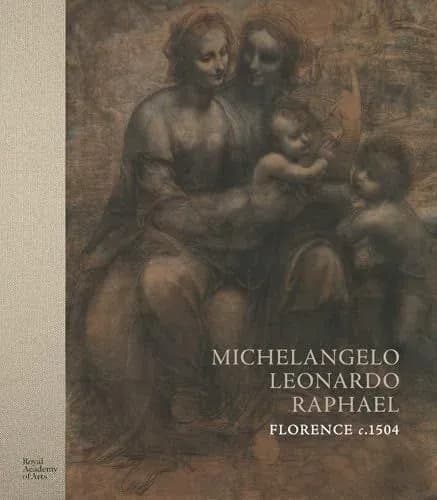
Published to accompany the Royal Academy exhibition of 2024 to 2025, this book takes Michelangelo's Taddei Tondo as its starting point to examine the rivalry between Michelangelo and Leonardo da Vinci in Florence around 1504 and its influence on the young Raphael. It includes 80 colour illustrations.

The Royal Academy published Michelangelo, Leonardo, Raphael: Florence, c. 1504 in October 2024 for its exhibition on the year the three artists overlapped in Florence. Nethersole and Rumberg take Michelangelo's Taddei Tondo, the marble relief that belongs to the Academy, as their starting point and trace how the rivalry between Michelangelo and Leonardo shaped the young Raphael. It is 160 pages with 80 colour illustrations, including Leonardo's Burlington House Cartoon and studies by both older men for the murals planned for the council hall of the Palazzo della Signoria. If you want one short, beautiful book on the three together, this is it.

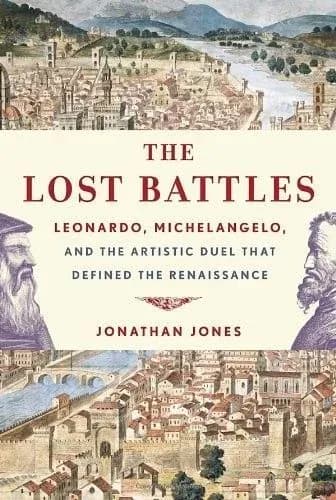
The Lost Battles by Jonathan Jones

The Lost Battles

Featured Book

The Lost Battles

Leonardo, Michelangelo, and the Artistic Duel That Defined the Renaissance

by Jonathan Jones

The story of the rival battle murals Leonardo da Vinci and Michelangelo were commissioned to paint in the great council hall of Florence, the Battle of Anghiari and the Battle of Cascina, neither of which was finished.

In 1503, Florence commissioned Leonardo to paint the Battle of Anghiari in the city's great council hall, and Michelangelo was soon asked to paint the Battle of Cascina in the same room. Neither mural was ever finished, and both are lost. Jones, the art critic of The Guardian, tells the story of that contest as a duel between two temperaments: the restless, scientific Leonardo and the young sculptor who wanted to prove he could beat him with a brush. You finish it understanding why one of the most famous art competitions in history left almost nothing on the walls.

Books on Leonardo da Vinci

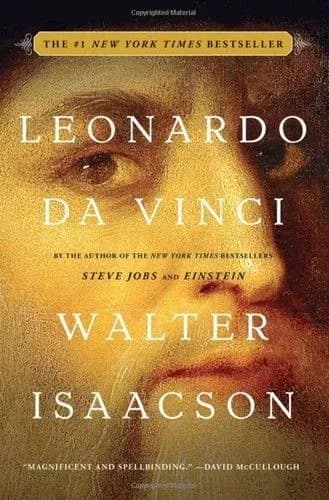
Leonardo da Vinci by Walter Isaacson

Leonardo da Vinci

Featured Book

Leonardo da Vinci

by Walter Isaacson

Walter Isaacson's biography of Leonardo da Vinci, built from the 7,200 surviving pages of his notebooks, portrays the artist as a man of limitless curiosity across art, science and engineering.

Isaacson, who had already written lives of Benjamin Franklin, Albert Einstein and Steve Jobs, built this 2017 biography from Leonardo's notebooks, which survive across some 7,200 pages. The result is the most readable portrait of Leonardo as a man who could not stop asking questions: about the tongue of a woodpecker, the flow of water, the muscles of a smile. Simon & Schuster published it richly illustrated. Read it if you want to understand the mind behind the Mona Lisa rather than the painting alone.

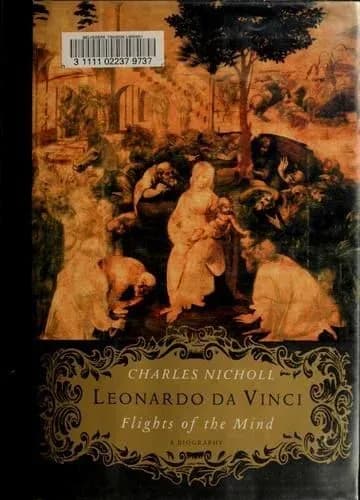
Leonardo da Vinci: The Flights of the Mind by Charles Nicholl

Leonardo da Vinci: The Flights of the Mind

Featured Book

Leonardo da Vinci: The Flights of the Mind

by Charles Nicholl

Charles Nicholl's 2004 biography retranslates much of Leonardo da Vinci's mirror writing and strips away romantic legend to show an engineer obsessed with the designs of nature, who left most of his work unfinished.

Nicholl's 2004 biography goes back to Leonardo's mirror writing and retranslates much of it. It strips away many of the romantic legends and leaves you with a stranger, more human figure: an engineer obsessed with the designs of nature and machines that could fly, who left most of what he started unfinished. Nicholl admits when he is guessing, and some of his guesses are bold, such as his suggestion that an old woman who visited Leonardo in 1493 was his mother. It is the best book for the reader who wants the archive and the man together.

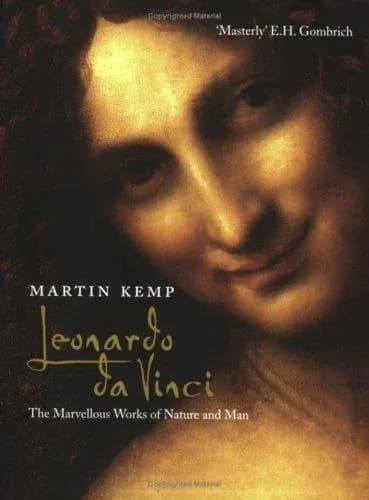
Leonardo da Vinci: The Marvellous Works of Nature and Man by Martin Kemp

Leonardo da Vinci: The Marvellous Works of Nature and Man

Featured Book

Leonardo da Vinci: The Marvellous Works of Nature and Man

by Martin Kemp

Martin Kemp's classic study of Leonardo da Vinci's art, science and thought, first published in 1981 and issued by Oxford University Press in a fully updated edition with a new introductory chapter.

Kemp, emeritus professor of the history of art at Oxford and one of the world's leading authorities on Leonardo, first published this study in 1981. Oxford University Press later issued a fully updated edition with a new introductory chapter. It follows Leonardo's career from his training in Florence through The Last Supper and the Mona Lisa to his last years, and it treats his art, science and thought as one subject. This is the book scholars reach for. If Isaacson makes you curious, Kemp gives you the depth.

Books on Michelangelo

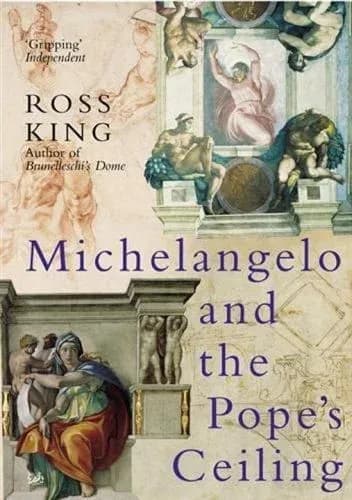
Michelangelo and the Pope's Ceiling by Ross King

Michelangelo and the Pope's Ceiling

Featured Book

Michelangelo and the Pope's Ceiling

by Ross King

Ross King's 2002 account of the four years Michelangelo spent painting the ceiling of the Sistine Chapel for Pope Julius II, shortlisted for the National Book Critics Circle Award.

Penguin

We may earn a commission from purchases made through this link.

In 1508, Pope Julius II ordered a sculptor with little experience of fresco to paint the ceiling of the Sistine Chapel. King's 2002 book tells the story of the next four years: the scaffolding, the plaster, the quarrels with the pope and the young Raphael painting the papal apartments a few rooms away. It was shortlisted for the National Book Critics Circle Award, and it reads like a thriller about a job nobody thought could be done. Start here if you have ever stood in the chapel and wondered how one man managed it.

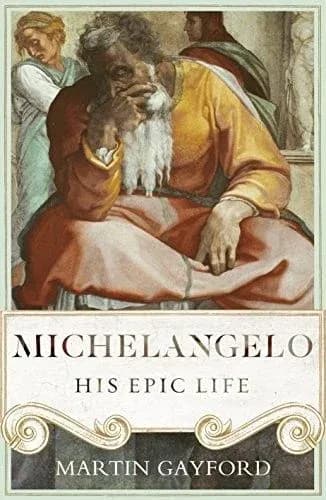
Michelangelo: His Epic Life by Martin Gayford

Michelangelo: His Epic Life

Featured Book

Michelangelo: His Epic Life

by Martin Gayford

Martin Gayford's biography of Michelangelo Buonarroti follows him from the David and the Sistine Chapel ceiling to the Last Judgment and the Counter Reformation, setting out what it felt like to be the artist.

Penguin

We may earn a commission from purchases made through this link.

Michelangelo lived to almost 90 and was considered the finest artist in Italy by his early thirties. Gayford, who has been art critic for The Spectator and The Sunday Times, covers the whole span in 688 pages, from the David and the Sistine ceiling to the Last Judgment and the Counter Reformation. His aim is to show you what it felt like to be Michelangelo Buonarroti and how he changed what an artist could be. The length is worth it: by the end, you know him as a working man with a fierce temper and loyal friends.

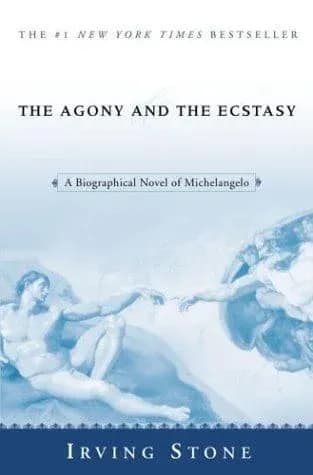
The Agony and the Ecstasy by Irving Stone

The Agony and the Ecstasy

Featured Book

The Agony and the Ecstasy

A Biographical Novel of Michelangelo

by Irving Stone

Irving Stone's biographical novel of Michelangelo, first published by Doubleday in 1961 and adapted for the screen in 1965 with Charlton Heston as Michelangelo and Rex Harrison as Pope Julius II.

Penguin Random House

We may earn a commission from purchases made through this link.

Stone's novel, published by Doubleday in 1961, remains the way many readers first meet Michelangelo. Stone lived in Italy for years, worked in the marble quarries and apprenticed himself to a marble sculptor while he wrote it. He also had Michelangelo's 495 letters translated from Italian, and they appeared in 1962 as I, Michelangelo, Sculptor. In 1965, the novel became a film, with Charlton Heston as Michelangelo and Rex Harrison as Julius II. Read it for the feel of stone dust and Florentine streets, then check the facts against Gayford.

Books on Raphael

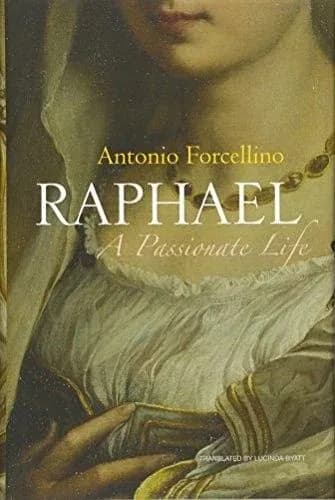
Raphael: A Passionate Life by Antonio Forcellino

Raphael: A Passionate Life

Featured Book

Raphael: A Passionate Life

by Antonio Forcellino

Art restorer Antonio Forcellino's life of Raphael, from his arrival in Rome in 1508 at the age of 25 to his death at 37, covering his frescoes, his workshop and his portraits of women. Translated from Italian by Lucinda Byatt.

Bookshop.org

We may earn a commission from purchases made through this link.

Raphael arrived in Rome in 1508 at the age of 25 and died at 37, and in those twelve years he served two popes, Julius II and Leo X. Forcellino, an art restorer, writes about him with a restorer's eye for how frescoes were made, how his workshop ran and how he painted the women in his portraits. Lucinda Byatt translated it from Italian for Polity. Read it if you have always thought of Raphael as the polite one of the three; Forcellino shows you an ambitious, sensual and fast-moving artist.

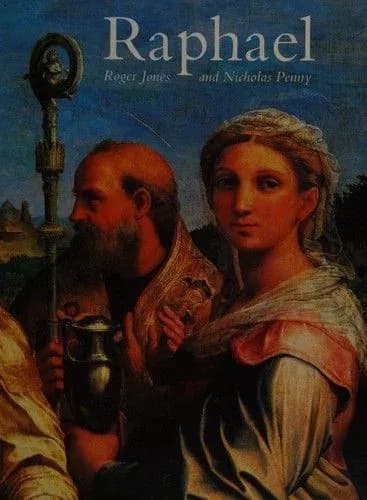
Raphael by Roger Jones and Nicholas Penny

Raphael

Featured Book

Raphael

by Roger Jones & Nicholas Penny

Roger Jones and Nicholas Penny's 1983 monograph on Raphael's whole career, from Urbino and Florence to the Vatican rooms and the Transfiguration, generously illustrated.

Yale University Press published this monograph in 1983, and Penny later became director of the National Gallery in London. It covers Raphael's whole career, from Urbino and Florence to the Vatican rooms, the villa of the banker Agostino Chigi and the Transfiguration, his last great altarpiece. The authors read the portraits as episodes in Raphael's private life and pay close attention to his sensuality and emotional range. It is generously illustrated, and when it appeared reviewers called it the new dependable source on the artist.

Frequently Asked Questions

Who were the three master artists of the High Renaissance?
Leonardo da Vinci, Michelangelo Buonarroti and Raphael are traditionally seen as the three great masters of the High Renaissance, the period of Italian art from roughly the 1490s to about 1520. All three worked in Florence around 1504, and Michelangelo and Raphael later worked side by side for the popes in Rome. Many historians also count the architect Donato Bramante among the leading figures of the period.
Who was the first master of the High Renaissance style?
Leonardo da Vinci is usually seen as the first master of the High Renaissance. Born in 1452, he was a generation older than Michelangelo and Raphael, and his *Last Supper*, painted in Milan in the late 1490s, is often described as the work that opened the period. Giorgio Vasari also placed Leonardo at the start of what he called the third and most perfect manner of Italian art.
What is High Renaissance art?
High Renaissance art is the painting, sculpture and architecture produced in Italy, mainly in Florence, Rome and Milan, between about 1490 and 1520. It is known for balance, harmony and a new mastery of the human figure, perspective and light. Its best-known works include Leonardo's *Mona Lisa*, Michelangelo's *David* and Sistine Chapel ceiling, and Raphael's *School of Athens*.

Every Living Thing Won the 2025 Pulitzer for Biography With Two Rivals Who Tried to Name All Life on Earth

By Dr Marina Nani

You probably picture science as a steady march of discovery, each generation building on the last. Jason Roberts's Every Living Thing: The Great and Deadly Race to Know All Life shows you a contest. In the 18th century, two men born in the same year set out to identify and describe every living thing on Earth. They never met, they disagreed about almost everything and history ended up crowning the one who got more of it wrong.

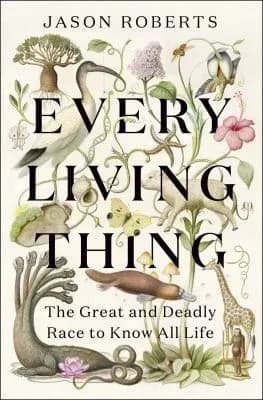
Every Living Thing

Featured Book

Every Living Thing

The Great and Deadly Race to Know All Life

by Jason Roberts

Winner of the 2025 Pulitzer Prize for Biography. Jason Roberts follows Carl Linnaeus and Georges-Louis de Buffon, two 18th-century rivals who set out to identify every living thing on Earth, and shows how their opposing views of nature still shape science today.

Waterstones

We may earn a commission from purchases made through this link.

The book won the 2025 Pulitzer Prize for Biography. The Pulitzer board called it 'a beautifully written double biography' of Carl Linnaeus and Georges-Louis de Buffon, contemporaries whose work still shapes how you understand the natural world. Random House published it in 2024, and The Economist named it one of its books of the year.

A Swedish doctor with tidy boxes and a French count with none

Linnaeus was a pious Swedish doctor with a showman's flair, and he believed life belonged in neat, fixed categories. Buffon was an aristocratic polymath who ran the King of France's garden in Paris, and he saw life as constant, messy change. Both began by assuming the planet held only a few thousand species, about as many as might fit on Noah's Ark. Both were overwhelmed by what they found.

Linnaeus gave you words you still use every day: mammal, primate and Homo sapiens. He also denied that species change and spread racist pseudoscience about human beings. Buffon sketched early versions of evolution and genetics, warned of a changing climate and spoke out against prejudice. In their lifetimes Buffon looked like the winner. After their deaths, the reputations reversed.

Apostles sent to the ends of the Earth

The 'deadly' in the subtitle is literal. Linnaeus sent young followers he called his apostles around the world to collect specimens, and only about half of them came home alive. Roberts follows them through fevers, hardship and long voyages, and these chapters read like adventure stories.

The book then carries the rivalry forward through three centuries, as the two men's successors fought over the new science that became biology. By the final chapters you see how the choices made by two 18th-century naturalists still shape the names in every field guide and natural history museum, and the way science thinks about race.

A storyteller who spent more than a decade on two lives

Roberts writes fiction and nonfiction and lives in Northern California. His earlier book, A Sense of the World, told the life of James Holman, a blind 19th-century Englishman who travelled further than anyone of his era, and it was a national bestseller and a finalist for the National Book Critics Circle Award. He has written for McSweeney's and The Believer, won the Van Zorn Prize for fiction founded by Michael Chabon and edited the bestselling 642 Things to Write About series.

He spent more than ten years researching Every Living Thing. The scholarship stays under the surface: the book reads with the pace of a novel, full of vanity, feuds and odd details from the salons and gardens of the Enlightenment.

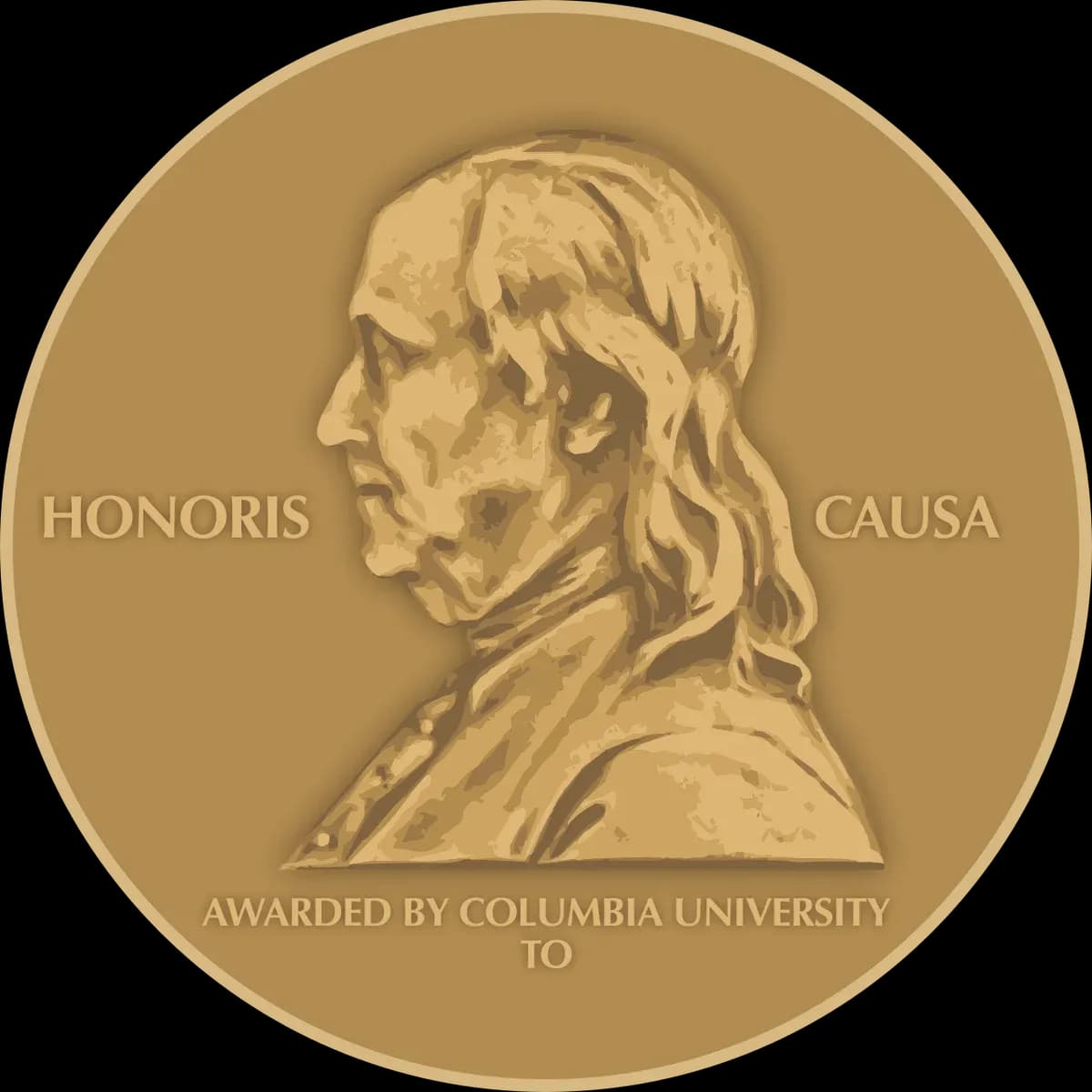
The gold Pulitzer Prize medal, showing Benjamin Franklin in profile with the words Honoris Causa.
Photo: Medal design by Daniel Chester French. Illustration: Wikimedia Commons, CC0 public domain

Two finalists who also wrote about famous lives

The 2025 shortlist held two other biographies. David Greenberg reached the final three with John Lewis: A Life, on the civil rights leader and congressman, and Amy Reading with The World She Edited, the story of Katharine S. White, the editor who shaped The New Yorker's fiction for decades.

A year later the prize went to two sisters in Hamilton's shadow

The 2026 Pulitzer for Biography went to Amanda Vaill for Pride and Pleasure, a double portrait of Angelica and Eliza Schuyler. Rich Books Magazine covers it in its daily series on the 2026 winners: Pride and Pleasure Won the 2026 Pulitzer for Biography by Bringing the Schuyler Sisters Out of Hamilton's Shadow. Two years running, the prize has gone to a pair of 18th-century lives told side by side.

What stays with you after the last chapter

You will never read a Latin name on a museum label the same way again. Behind every Homo sapiens and Felis catus sits a quarrel between two very different men, and Every Living Thing leaves you wondering how much of what you take as settled science began as one person's taste for tidy boxes.

Read it if you love narrative science writing, you enjoy rivalries and the history of ideas, or you want a Pulitzer winner that reads like an expedition.

Buy the book

Every Living Thing on Waterstones / Every Living Thing on Barnes & Noble

Also in this piece

A Sense of the World on Waterstones / Barnes & Noble

John Lewis: A Life on Waterstones / Barnes & Noble

The World She Edited on Waterstones / Barnes & Noble

Next in the series: Feeding Ghosts by Tessa Hulls, winner of the 2025 Pulitzer Prize for Memoir or Autobiography.

Italy Moves to Create a Restitution Panel That Could Return Nazi-Looted Art From Its Own Museums

By Dr Marina Nani

Italy is preparing to set up a panel that could return art taken from Jewish families under Fascism and the Nazi occupation, including works that hang today in its own public museums. A bill before the Chamber of Deputies, known as C. 2834, would hand those decisions to an independent committee and remove the legal barriers that have kept such works in Italian collections for eight decades.

Federico Mollicone, the Brothers of Italy deputy who chairs the Chamber's culture committee, introduced the bill in March. He told The Art Newspaper that passing it would mean 'fulfilling a historic duty', and he wants it to become law within the current parliament, before a general election due by the end of 2027.

If it passes, Italy will join Germany, Austria, France, the Netherlands, the United Kingdom and Switzerland, which created restitution bodies years ago. France set up its commission in 1999 and Britain its Spoliation Advisory Panel in 2000. In September, the Netherlands agreed to return a Jan van Goyen that went into Hermann Göring's collection from the Mauritshuis to Marei von Saher, heir of the Jewish dealer Jacques Goudstikker.

How the Italian Restitution Panel Would Work

The committee would have five members, one of them nominated by Italy's art police. It would examine the history of works confiscated, looted or sold under duress through racial persecution between 1933 and 1945, in public and private collections alike, and it would have to rule on each claim within 180 days.

Original owners and their heirs could bring a claim, and so could the Union of Italian Jewish Communities or any individual Jewish community. Where no living heir can be found, a returned work would go to the Jewish community in Italy.

The bill also changes two rules that have blocked families until now. Statutes of limitations would no longer stand in the way of a claim. A restitution decision would take a work out of the public domain and out of the protection of Italy's heritage code, so it could leave the country for good. Italian law treats works in State collections as inalienable, and the World Jewish Restitution Organization notes that the bill would set that principle aside for art looted from persecuted communities. Once parliament passes the bill, the government would have six months to put the system in place.

Fascist Racial Laws and Wartime Seizures in Italy

Mussolini's racial laws of 1938 banned Jewish books, drove Jews out of public office and limited the property they could own. Seizures grew from 1943, after Italy signed an armistice with the Allies and Germany occupied the country and restored Mussolini to power. In 2001, the Anselmi commission, a government inquiry into the seizure of Jewish property in Italy, counted 7,847 seizure warrants issued up to April 1945.

Italy endorsed the Washington Principles on Nazi-confiscated art in 1998 and the Terezín Declaration in 2009, but it never built a clear procedure to act on them. A 2024 report by the World Jewish Restitution Organization and the Claims Conference found that Italy had made only some progress in 25 years. Gideon Taylor, the organisation's president, said in July that 'families seeking the return of their cultural heritage in Italy have faced considerable resistance'.

Disputed Paintings in Milan's Museums

Four disputed works are publicly known to hang in Italian museums. Katharina Hüls-Valenti, a researcher at the University of Parma, believes the real number could run to dozens, though she says nobody can be certain.

One is Édouard Manet's Portrait de M. Arnaud à cheval (1875) at the Galleria d'Arte Moderna in Milan. Hüls-Valenti says the family of the German painter Max Liebermann sold it in 1935, two years into Nazi rule, and it was donated to the gallery in 1958. Paola Zatti, the gallery's curator, disputes that the sale was forced.

Another is Christ Carrying the Cross, painted around 1508 to 1509 by Girolamo Romanino. Vichy France requisitioned it in 1941 from the family of Federico Gentili di Giuseppe, and the Pinacoteca di Brera in Milan bought it in 1998. In 2011, United States authorities seized the painting while it was on loan to a museum in Florida, after the heirs asked them to act. Disputes such as these are the cases the new committee is designed to decide.

What Happens Next in the Chamber of Deputies

The Chamber's culture committee began examining the bill on 19th May and heard evidence on 24th June. Livia Ottolenghi, president of the Union of Italian Jewish Communities, gave the proposal her full support at that hearing. The World Jewish Restitution Organization welcomed it, while warning that the law will only work as well as its detailed mechanisms.

Lorenzo Casini, the lawyer who wrote a report on Italian public collections for the organisation, has suggested widening the committee's remit to manuscripts, books, archives and ceremonial objects. He has also said that money for provenance research, the digitisation of archives and the training of experts could follow once the law is passed. If you want to follow the bill, it sits with the culture committee of the Chamber of Deputies under the number C. 2834.

Frequently Asked Questions

What are the 1998 Washington Principles on Nazi-Confiscated Art?
The Washington Conference Principles are eleven non-binding guidelines that 44 governments agreed at a conference in Washington in December 1998. They ask countries to identify art confiscated by the Nazis and never returned, to open the relevant records and archives, to publicise such works so that pre-war owners and their heirs can come forward, and to reach just and fair solutions with them. The Terezín Declaration of 2009 renewed these commitments.
Is stolen art from World War II still missing?
Yes. The Nazis looted about a fifth of Europe's art, and more than 100,000 items have still not been returned to their rightful owners, according to official estimates. Works taken during the war still surface in museums, private collections and auction rooms, and families continue to file claims more than 80 years later.
How does the restitution of Nazi-looted art work?
A claim usually starts with provenance research, which traces who owned a work before, during and after the Nazi era. In countries with a restitution body, such as France, the United Kingdom and the Netherlands, a claimant or a museum can refer the case to a panel of experts, which examines the evidence and recommends whether the work should be returned or the family compensated. Elsewhere, families negotiate directly with the holder or go to court.

François-Henri Désérable Wins the 100th Prix Renaudot for Le Palais, a Wine Novel Inspired by a Real Forger

By Dr Marina Nani

François-Henri Désérable won the Prix Renaudot 2026 on Tuesday 3rd November for Le Palais (Gallimard), a 416-page adventure novel that makes wine its hero. The prize turns 100 this year, and the jury announced its choice at the Drouant restaurant in Paris straight after the Prix Goncourt went to Philippe Jaenada for L'Inconnue du quai de Javel.

Le Palais

Featured Book

Le Palais

by François-Henri Désérable

Novel by François-Henri Désérable. Winner of the Prix Renaudot 2026.

Decitre

We may earn a commission from purchases made through this link.

Désérable took six of the ten jury votes. David Djaïz took the other four for La Méthode (Stock). Frédéric Beigbeder chaired the jury this year to mark the centenary.

'I did not expect it. I believed until the last moment that I would not get the prize,' Désérable told AFP. He dedicated the award to winegrowers, whom he called artists who turn grapes into pleasure.

Le Palais by François-Henri Désérable

Arun Kumar, the hero of Le Palais, is an Indian orphan adopted in 1998 by a couple who run a restaurant in Burgundy. He has what the French call a palais absolu, an absolute palate: a memory for aromas so exact that it borders on the miraculous. After brilliant studies in oenology, he takes that gift to New York high society. The story travels from the slums of Delhi to the cellars of Burgundy, the Marquesas Islands and the towers of Manhattan, and Gallimard presents Arun as an outlaw genius whose crimes you can taste.

Désérable has said that, as far as he knew, no great novel had ever made wine its main subject. The idea came to him in 2020, during a stay in Burgundy after the first lockdown. He then spent five years learning the cycle of the vine, the craft of winemaking and what makes a good barrel. He says he now drinks a great deal more and a great deal better, and would like to open a wine bar one day.

French critics have read the book as a story about inequality, inheritance, ambition and revenge as much as about grapes. Livres Hebdo set him in the line of Zola for his learning and of Dumas for his love of the improbable. If you read French, the technical vocabulary of tasting never gets in the way of the plot.

Rudy Kurniawan and the Wine Forgery Behind the Novel

Désérable drew part of Arun Kumar's story from Rudy Kurniawan, an Indonesian wine connoisseur who became a forger of rare wines and was sentenced by a court in the United States in 2014. Désérable has described Arun Kumar as a boy who tries to take revenge on his own karma.

François-Henri Désérable From Ice Hockey to Gallimard

Désérable was born in 1987 and grew up in Amiens. He was still playing professional ice hockey when Gallimard published his first book, Tu montreras ma tête au peuple, set during the French Revolution, at the age of 25. Évariste followed, a novel about the mathematician Évariste Galois, then Un certain M. Piekielny, built on a childhood promise Romain Gary made to a neighbour.

Mon maître et mon vainqueur won the Grand Prix du roman de l'Académie française in 2021. L'Usure d'un monde, his account of a journey across Iran, won the Prix Nicolas Bouvier in 2023. His books have been translated into more than a dozen languages.

The Prix Renaudot Centenary and Its Goncourt Rivalry

Ten journalists and art critics created the Renaudot in 1926 while they waited for the Goncourt jury to finish its deliberations. They named it after Théophraste Renaudot, who founded La Gazette, the first French newspaper, in 1631. The first winner was Armand Lunel, for Nicolo-Peccavi ou l'Affaire Dreyfus à Carpentras.

The Renaudot is still announced on the same day and in the same room as the Goncourt, and it can never go to the same book. The jurors always keep a second choice ready in case the Goncourt takes their first. In 1971, Jacques Laurent's Les Bêtises was the Renaudot jury's first choice, but it won the Goncourt, so the Renaudot went to Pierre-Jean Rémy for Le Sac du palais d'été.

The AI Row Over Thélyson Orélien

The centenary season also had to deal with Thélyson Orélien. In September, the Académie Goncourt removed his novel C'était ça ou mourir (Grasset) from its longlist after claims that artificial intelligence had written most of it, alongside plagiarism allegations about earlier work. The Renaudot jurors kept the book in their second selection, then left it out of the final list. The organisers of the Prix Renaudot des lycéens in Loudun withdrew it too. Orélien denies using AI and says he began writing the novel in 2017.

More From the 2026 French Prize Season

C'était ça ou mourir

Thélyson Orélien

Prix Renaudot Essay and Paperback Winners

The jury split the essay prize between Jean-Paul Enthoven, for Dictionnaire amoureux du bonheur (Plon), and Christophe Ono-dit-Biot, for L'Odyssée de l'Odyssée (Grasset). The Renaudot Poche, for paperbacks, went to the journalist Jean-Christophe Buisson for Complètement à l'Est ! (Perrin). The 2026 winners succeed Adélaïde de Clermont-Tonnerre, who won the novel prize in 2025 for Je voulais vivre, and Alfred de Montesquiou, who won the essay prize for Le Crépuscule des hommes. Around 400 secondary school pupils will name the Prix Renaudot des lycéens on 17th November.

Frequently Asked Questions

What is the Renaudot prize?
The Prix Renaudot, or Prix Théophraste-Renaudot, is one of France's leading literary awards for a novel written in French. Ten journalists and critics founded it in 1926, and it is announced every November at the Drouant restaurant in Paris, on the same day as the Prix Goncourt. Since 1996 it has also had an essay category.
What is the Renaudot prize worth?
The Renaudot carries no cash award. Its value lies in the sales and attention it brings to the winning novel in bookshops, in France and in translation abroad.
What is the most prestigious literary prize in France?
The Prix Goncourt, founded in 1903, is France's oldest and best-known literary prize, and its winner receives a symbolic cheque of €10. The Renaudot is widely seen as the second most important. The other major autumn prizes are the Prix Femina, the Prix Médicis, the Prix Interallié and the Grand Prix du roman de l'Académie française.
What literary prizes are awarded in November 2026?
The Prix Médicis opened the first week of November, and the Goncourt and Renaudot followed on 3rd November. The Prix Femina follows on 4th November in Paris and the Booker Prize on 9th November in London. The Prix Renaudot des lycéens is named on 17th November and the Prix Goncourt des lycéens on 26th November.

Philippe Jaenada Wins the Prix Goncourt 2026 for Reopening a 1949 Murder on the Banks of the Seine

By Dr Marina Nani

L'inconnue du quai de Javel

Featured Book

L'inconnue du quai de Javel

by Philippe Jaenada

In 1949 Louise Cansot, a model for the Montparnasse painters, was found murdered on the quai de Javel in Paris, and the case was closed months later without an answer. Seventy-six years on, Philippe Jaenada reopens the investigation. A finalist for the 2026 Prix Goncourt.

Fnac

We may earn a commission from purchases made through this link.

Philippe Jaenada won the 124th Prix Goncourt on Tuesday 3rd November for L'inconnue du quai de Javel (Flammarion), his investigation into the unsolved death of a young woman found in the Seine in 1949. The nine members of the Académie Goncourt, meeting at the Drouant restaurant in Paris, chose him by six votes to three over Sylvain Prudhomme. It is the most prestigious award in French literature, and it comes with a symbolic cheque for €10. Its real value lies in the readers it brings to the book in the weeks before Christmas.

Jaenada is 62 and has spent more than a decade writing books built from real crimes. 'My career may change, but my life certainly will not,' he said after the vote, as La Libre reported.

L'inconnue du quai de Javel and the Death of Louise Cansot

In September 1949 a young woman's body was found in the Seine at the quai de Javel, in the west of Paris. The next day the police identified her as Louise Cansot, a model who posed for several Paris painters and one of the best-known faces of Montparnasse. Detectives named four suspects but could never establish how she died, and the case was closed without anyone being charged.

Jaenada goes back through the archives, walks the streets Louise Cansot knew and follows her life back to her childhood in Brittany. He takes Georges Simenon's Maigret novels with him as a guide, and he ends the book with his own answer to the case. The book came out on 12th August, runs to 528 pages and had sold nearly 60,000 copies before the prize.

Philippe Jaenada From Le Chameau sauvage to the Goncourt

Jaenada was born in 1964 in Saint-Germain-en-Laye, west of Paris. His first novel, Le Chameau sauvage, won the Prix de Flore, and he went on to write comic novels for Grasset, among them Le Cosmonaute and Plage de Manaccora, 16h30.

From 2013 he turned to true stories. Sulak followed the gentleman bank robber Bruno Sulak, La Petite Femelle reopened the case of Pauline Dubuisson, tried for murder in 1953, and La Serpe, about a triple murder at the château d'Escoire, won the Prix Femina in 2017. His previous book, La désinvolture est une bien belle chose, was on the Goncourt list in 2024. He moved to Flammarion this year. 'I am counsel for the defence,' he has said of his method. 'I make my plea and the reader judges.'

Philippe Jaenada's True Crime Books

Sulak

Philippe Jaenada

La Serpe

Philippe Jaenada

The Three Prix Goncourt 2026 Finalists Who Did Not Win

Sylvain Prudhomme, who won the Prix Femina in 2019 for Par les routes, took the other three votes with De l'autre côté du lac (Minuit). Yannick Haenel's La solitude des professeurs est infinie (Gallimard) returns to a young teacher's first year at a school in Mantes-la-Jolie. Clémentine Mélois's Choses que je croyais perdues (L'Arbalète/Gallimard) follows a woman packing up her flat after a love affair ends.

All four finalists were published by imprints of Madrigall, the family group chaired by Antoine Gallimard, so the group wins whichever name came out of Drouant. Last year's winner, Laurent Mauvignier's La maison vide, also from Minuit, has sold nearly 640,000 copies.

The Other Prix Goncourt 2026 Finalists

Fiction

De l'autre côté du lac

Sylvain Prudhomme

Fnac →
Fiction

Choses que je croyais perdues

Clémentine Mélois

Fnac →

The Thélyson Orélien AI Row

This year's prize carries a story that began in September. On 25th September the Académie removed C'était ça ou mourir, the debut novel of the Haitian-born Canadian writer Thélyson Orélien, published by Grasset, from its first selection. It cited plagiarism in Orélien's earlier writing and several analyses that found the novel was 'in all likelihood very largely the product of an artificial intelligence'. Orélien admitted the earlier plagiarism but denied using artificial intelligence to write the novel.

On 21st October his Canadian publisher, Boréal, ended its work with him. It said an outside analysis of the novel's working files had found traces of artificial intelligence in their metadata, and that it would not reprint the book or publish his future work. If you write, the case sets a marker: a book that reaches the most famous prize list in France can still lose its place over how it was written.

A Jury of Nine and the Rest of Prize Week

The jury voted with nine members instead of ten. Didier Decoin, who won the Goncourt in 1977 and led the Académie from 2020 to 2024, died on 5th August, and his seat has not yet been filled. Philippe Claudel, the novelist and film director, has been president since 2024.

The Prix Renaudot, announced at the same lunch in its centenary year, went to François-Henri Désérable for Le Palais (Gallimard). The week opened on Monday with the Prix Médicis, which went to Philippe Vasset for Dans les grandes lignes, and closes with the Prix Femina on Wednesday 4th November. The Goncourt des lycéens, voted by secondary school students from the same longlist, will be announced on 26th November.

L'inconnue du quai de Javel has not yet been published in English. If you read French and like a true crime told with a novelist's eye, it is the book of the season.

Also in This Story

Le Palais

Le Palais

François-Henri Désérable

Decitre →
La maison vide

La maison vide

Laurent Mauvignier

C'était ça ou mourir

C'était ça ou mourir

Thélyson Orélien

Philippe Vasset Wins the Prix Médicis 2026 for Two Years on Foot Beneath France's High-Voltage Lines

By Dr Marina Nani

Dans les grandes lignes

Featured Book

Dans les grandes lignes

by Philippe Vasset

Philippe Vasset spends two years crossing France on foot beneath the high-voltage power lines, from the Paris region outwards. Winner of the Prix Médicis 2026.

Decitre

We may earn a commission from purchases made through this link.

Philippe Vasset won the Prix Médicis on Monday 2nd November for Dans les grandes lignes (Flammarion), a book in which he follows France's high-voltage power lines on foot. The nine jurors met at La Méditerranée, a restaurant in Paris, and chose Vasset by five votes to four over Lucie Rico, author of Mais que fait ce sang sur le pull de Jennifer ? (P.O.L). It is the first major literary prize for the 54-year-old writer, and it opened the busiest week of the French literary year, with the Prix Goncourt and the Prix Renaudot announced on Tuesday 3rd November and the Prix Femina on Wednesday 4th November.

Dans les grandes lignes and the Walk Under the Pylons

Vasset spent two years crossing France on foot from the Paris region, walking hundreds of kilometres beneath the cables of the high-voltage network. The book, his fourteenth, came out on 26th August and runs to 192 pages. It records landscapes most people only see from a car, the unexpected people he met along the way and the mark electricity leaves on the land and on the minds of those who live beside it. In the book he writes that the great pylons are rarely seen up close: they stand in the middle of fields, and you look at them from the road without really seeing them.

Pascale Roze, who announced the prizes for the jury, called the book fascinating, concrete, geographical, scientific, funny and poetic. Vasset said he was particularly happy to win 'for such an improbable book', and admitted his publisher had been doubtful when he first described the idea.

Philippe Vasset, Journalist of Maps and Secrets

Vasset was born in 1972 and studied geography, philosophy and international relations. He won the Prix du Jeune Écrivain in 1993, worked for an American corporate investigation firm and joined the Paris press group Indigo Publications in 2001. He was editor-in-chief of Intelligence Online, its newsletter on the intelligence world, from 2007 to 2014, and today edits Glitz, its newsletter on the luxury business. With the journalist Pierre Gastineau he presents Conversations secrètes, a France Culture podcast about spies that has since become a book.

The pylon walk belongs to a line of books about the places maps leave out. Un livre blanc (Fayard, 2007) took him, over a year in the early 2000s, into the areas left blank on the official IGN maps of the Paris region. Une vie en l'air (Fayard, 2018) followed the abandoned aérotrain of the engineer Jean Bertin, a ruin of the future that had haunted him since childhood. Alongside these he has written novels, among them La Conjuration and A cappella, and a series of fictional diaries written in the voices of a predator, an arms dealer and a blackmailer.

Philippe Vasset's Earlier Books

La Conjuration

Philippe Vasset

A cappella

Philippe Vasset

The Other Prix Médicis 2026 Winners

The foreign novel prize went to the Catalan writer Eva Baltasar for Déclin et fascination (Verdier), translated by Annie Bats. Her narrator loses her job in Barcelona, takes work as a cleaner and moves into a shared house with no heating.

The essay prize went to the novelist Jean-Baptiste Del Amo for Une éclaircie (Stock). In 2023 he spent a night with the paintings of Goya at the Prado in Madrid, and the book turns that night into a reflection on illness and on how it changed his life and his writing.

A special jury prize went to Richard Zenith for Pessoa, l'œuvre-vie (Seuil), his biography of the Portuguese poet Fernando Pessoa, first published in English in 2021 as Pessoa: An Experimental Life.

The Three Other Winning Books

Une éclaircie

Jean-Baptiste Del Amo

Pessoa, l'œuvre-vie

Richard Zenith

How the Prix Médicis Works

Gala Barbisan and Jean-Pierre Giraudoux founded the Médicis in 1958 to reward a writer whose fame has not yet caught up with their talent. It has kept a reputation as the rebel of the autumn prizes and is often called the anti-Goncourt. This year's jury was Marianne Alphant, Michel Braudeau, Marie Darrieussecq, Dominique Fernandez, Anne Garréta, Patrick Grainville, Andreï Makine, Pascale Roze and Alain Veinstein. Last year's winner, Emmanuel Carrère's Kolkhoze, has sold more than 255,000 copies.

Dans les grandes lignes has not yet been published in English. If you read French, it is the most direct way into a writer who has spent twenty years mapping the parts of France you usually drive past.

Also in This Story

Native Nations Won the 2025 Pulitzer for History by Starting North America's Story a Thousand Years Ago

By Dr Marina Nani

You probably picture Native American history as a list of losses: the colonists, the wars, the Trail of Tears. Kathleen DuVal's Native Nations: A Millennium in North America starts five centuries before any of that. A thousand years ago, cities on the continent rivalled urban centres anywhere in the world. When Europeans finally arrived, they met nations they did not understand and consistently underestimated.

Native Nations

Featured Book

Native Nations

A Millennium in North America

by Kathleen DuVal

Joint winner of the 2025 Pulitzer Prize for History and winner of the Bancroft Prize. Kathleen DuVal tells a thousand years of Indigenous North America, from cities that rivalled any in the world to nations that held the upper hand over European colonists for centuries, and shows how their sovereignty continues today.

Waterstones

We may earn a commission from purchases made through this link.

The book is joint winner of the 2025 Pulitzer Prize for History. The Pulitzer board called it a panoramic and accessible account of Native nations' 'endurance, ingenuity and achievement' in the face of conflict and dispossession. Random House published it in 2024, and it has also won the Bancroft Prize, the Cundill History Prize and the Mark Lynton History Prize.

Cities first, then a turn away from them

DuVal opens around the year 1000, when large cities stood in the heart of the continent. After a period of climate change and instability, many people left the cities and built smaller nations instead, with egalitarian forms of government, skilled diplomacy and trade networks that spread across North America.

That choice shapes everything that follows. When the Spanish, French, Dutch and English arrived in the 16th and 17th centuries, they mistook these societies for weak ones. DuVal shows you how wrong that judgement was.

Nations that used the Europeans for their own ends

For centuries, Native nations held the upper hand across most of the continent. The Mohawks controlled trade with the Dutch and influenced markets across the Atlantic. The Quapaws played French colonists to their own advantage. After the American Revolution, the Shawnee brothers Tecumseh and Tenskwatawa built new alliances to hold back the United States, the Cherokees created institutions to assert their sovereignty on the world stage and the Kiowas controlled the passage of white settlers across their lands in the west.

The book runs to more than 700 pages, and it never reads like a textbook. DuVal moves through the centuries by following people, and each chapter shows you a different nation making choices on its own terms. The losses are all there, but they arrive inside a much longer story of power, adaptation and survival that continues today.

A quarter of a century of listening

DuVal is a professor of history at the University of North Carolina at Chapel Hill, where she teaches early American and American Indian history. She grew up in Fayetteville, Arkansas, and earned her doctorate at the University of California, Davis. Her earlier books include Independence Lost, a finalist for the George Washington Prize, which tells the American Revolution from the Gulf Coast, and The Native Ground.

She has said that Native Nations drew on around 25 years of learning about Native American history. The book carries an idea she returns to often: Native Americans are not only a minority group within the United States. 'They are members, citizens, of their own nations,' she told the Chapel Hill radio station WCHL.

The gold Pulitzer Prize medal, showing Benjamin Franklin in profile with the words Honoris Causa.
Photo: Medal design by Daniel Chester French. Illustration: Wikimedia Commons, CC0 public domain

Two winners and one finalist

The 2025 history prize was shared between two books: Native Nations and Edda L. Fields-Black's Combee, the story of Harriet Tubman's Combahee River Raid. The third finalist was Seth Rockman, with Plantation Goods: A Material History of American Slavery. All three books widen the cast of American history beyond the people who wrote its founding documents.

A year later the prize went to the people who tried to change the Constitution

The 2026 Pulitzer for History went to Jill Lepore for We the People: A History of the U.S. Constitution. Rich Books Magazine covers it in its daily series on the 2026 winners: We the People Won the 2026 Pulitzer for History With the Story of Americans Who Tried to Rewrite the Constitution. DuVal's book starts long before 1787 and Lepore's starts with it, and together they give you a far larger picture of who has shaped the continent.

What stays with you after the last chapter

You will look at a map of North America differently. Many of its rivers, states and cities still carry names from the nations that lived there long before the colonies, and Native Nations leaves you with the sense that the continent's longest story is still being written by the nations DuVal describes.

Read it if you want a history of America that starts at the beginning, you love big narrative histories that cover centuries, or you want to understand the sovereignty of Native nations today.

Buy the book

Native Nations on Waterstones / Native Nations on Barnes & Noble

Also in this piece

Combee on Waterstones / Barnes & Noble

Independence Lost on Waterstones / Barnes & Noble

Next in the series: Every Living Thing by Jason Roberts, winner of the 2025 Pulitzer Prize for Biography.

Ian Gillan's Medical Emergency Halts Deep Purple's UK Tour, Three Months After Ritchie Blackmore Rejoined Him on Stage

By Dr Marina Nani

Deep Purple have postponed the rest of their European and UK tour after Ian Gillan, the singer who first joined the band in 1969, needed urgent hospital treatment in Leipzig. The band called off its concert at the QI Arena in Leipzig on Saturday 31st October, hours before the show, and the next night's concert at the Sporthalle in Hamburg followed. On Monday 2nd November Gillan wrote to fans himself to say every remaining date would be postponed until further notice.

Ian Gillan's Statement to Fans

Gillan thanked fans for their messages and said he had suffered 'a medical problem whilst in Leipzig' that needed urgent attention at the hospital. He had hoped his doctors would let him finish the tour, he wrote, but 'there are very serious risks involved' in carrying on. The decision came on the advice of his medical team and management. He did not say what the problem was, and Deep Purple have given no further details.

The postponement covers four more German concerts, starting in Dortmund on 3rd November and continuing in Berlin, Frankfurt and Nuremberg, and the whole UK leg: Newcastle, Glasgow, Birmingham, Manchester and a closing night in London on 24th November. No new dates have been announced. If you hold tickets, your ticket agent or the venue will publish the latest information.

Deep Purple's Splat! Year

The tour was the live half of Splat!, the band's 2026 album, released on 3rd July through earMUSIC. It is their sixth record with the producer Bob Ezrin, who has worked on every Deep Purple album since Now What?! in 2013. The Splat! world tour opened in Europe in the early summer with shows in Finland, Norway, France, Germany, Spain, Switzerland and Italy, crossed North America in August and returned to Europe in the autumn. Gillan was on stage at the Unipol Forum in Assago, outside Milan, on 17th October, two weeks before Leipzig.

Ritchie Blackmore's Return at Jones Beach

The night most fans will remember from 2026 came on 12th August at the Jones Beach Theater in Wantagh, New York. Ritchie Blackmore, the guitarist who co-founded Deep Purple in 1968 and walked out during the 1993 tour, joined the band for 'Smoke on the Water' and played with them for the first time in 33 years. Blackmore, also 81, had said beforehand that he had not played rock music in 25 years. Afterwards he said the night might be the last time the old friends saw each other. Gillan later said the bad feeling between them had been settled years earlier, and that the cameo had been coming for some time.

The encore put Gillan, the bassist Roger Glover and the drummer Ian Paice on one stage with Blackmore again: four of the five men who recorded Machine Head in 1972. The fifth, the keyboard player Jon Lord, died in 2012.

Ian Gillan From Episode Six to Deep Purple in Rock

Gillan was born on 19th August 1945 in Chiswick, west London. He sang with the Javelins and then Episode Six, where he worked alongside Roger Glover. In 1969 the two of them replaced Rod Evans and Nick Simper in Deep Purple, and the line-up fans call Mark II went on to make Deep Purple in Rock (1970), Fireball (1971) and Machine Head (1972). As the band's lyricist, Gillan put words to 'Smoke on the Water', 'Highway Star' and 'Child in Time'.

In 1970, between Deep Purple records, he sang the role of Jesus on the original album of Andrew Lloyd Webber and Tim Rice's Jesus Christ Superstar. He left Deep Purple in 1973, exhausted by relentless recording and touring, and led the Ian Gillan Band and then Gillan through the late 1970s and early 1980s. He sang on Black Sabbath's Born Again in 1983 before the Mark II line-up reformed for Perfect Strangers in 1984. He left again in 1989, returned in 1992 and has fronted the band ever since. Deep Purple entered the Rock and Roll Hall of Fame in 2016.

Ian Gillan's Eyesight and Talk of Retirement

Gillan has spoken openly about his health. In an interview with Uncut in November 2025 he said he had only 30 per cent of his vision, that it would not improve, and that he would stop performing if he lost his energy. In July 2026 he told The Independent that he had never said he was close to retiring, only that he would retire when he no longer had the strength. Roger Glover has said the band will not stage a farewell tour or a final concert.

If you want to hear the voice behind this week's news, start with 'Child in Time' on Deep Purple in Rock, move to Gillan's 'Gethsemane' from the 1970 Jesus Christ Superstar album, and finish with Splat!, the record he was touring this autumn.

35 Rembrandt Etchings Bought for a Few Guilders Kept in an Old Drawer

By Dr Marina Nani

Between 1900 and 1920, a Dutch print lover bought 35 different etchings by Rembrandt van Rijn for a few guilders. Nobody around him thought much of them. 'Nobody was interested in etchings back then,' his granddaughter, Charlotte Meyer, told the regional broadcaster Omroep Gelderland. Her grandmother paid the prints no attention, and the family kept them without expecting anything.

A century later, those same sheets were hanging in a museum, and the head of collections at the Rembrandt House Museum in Amsterdam was saying he had never seen so many in one place.

A Folder of Prints in a Zutphen Home

When her grandfather died, the folder passed down to Meyer, who lives in Zutphen, a Hanseatic town on the river IJssel in the eastern province of Gelderland. For years she assumed it held nothing more than attractive old pictures and left it closed in an old drawer among the family keepsakes.

In 2020, during the pandemic and just after moving house, she opened it again. Inside were small sheets, some measuring only 10 by 5 centimetres. Among them were Rembrandt's Self-Portrait in a Fur Cap, etched in 1630 when he was about 24 and still working in Leiden, and The Pancake Woman of 1635, in which an old woman fries pancakes while children crowd around her pan.

The longer Meyer looked, the more she suspected the prints were more than decoration.

Rembrandt House Museum Experts in Zutphen

Meyer contacted the museum world, half expecting to be politely dismissed. She said later that she sensed the specialists had her down as one more hopeful owner convinced she had found a real Rembrandt.

Epco Runia, head of collections at the Rembrandt House Museum, has admitted he thought the same. He told NH Radio that he assumed it would come to nothing, as the museum hears from hopeful owners very often and most of what they bring in turns out to be a reproduction or a later version.

The mood changed when the specialists came to Meyer's home and went through the folder sheet by sheet. 'Charlotte, you have no idea what you are holding,' they told her, as she recalled to Omroep Gelderland. All 35 were confirmed as etchings by Rembrandt, and a century in a closed folder, away from light, had kept them in excellent condition.

How Rembrandt Etchings Were Made and Sold

Rembrandt (1606 to 1669) is best known for his paintings, but he was also one of the most inventive printmakers Europe has produced. To make an etching, he drew with a needle through a waxy, acid-resistant coating on a copper plate. Acid then bit into the exposed lines, and the inked plate went through a press. One plate could print many sheets, and Rembrandt often went back to his plates to add or remove lines, so the same image can survive in several distinct versions.

That is why a find like this differs from the discovery of a lost painting. Runia explained that Rembrandt made around 300 different etchings, printed in runs, and that the Rembrandt House holds almost all of them. The museum already knew every image in Meyer's folder. What struck him was the number gathered in one family collection. 'Having so many together is unique. I have never experienced that before,' he said.

There is an irony in the price her grandfather paid. Rembrandt's etching of Christ healing the sick, made around 1648, earned the nickname the Hundred Guilder Print from the high sum it was said to fetch in his own day. Two and a half centuries later, a few guilders bought 35 of his sheets.

What 35 Rembrandt Etchings Are Worth

Meyer will not put a figure on the collection, and she has no intention of selling it. Runia estimated that each etching is worth thousands of euros.

The top of the market sits far higher. In December 2025, Christie's in London sold Rembrandt's portrait of Arnout Tholinx, etched around 1656, for £3.1 million, the highest price ever paid at auction for an old master print. Christie's described it as the last impression of that great rarity still in private hands. In February 2026, Sotheby's sold his drawing Young Lion Resting for $17.9 million.

Meyer's etchings come from editions the experts know well, so they belong to a different tier. For any print, though, condition and the quality of the impression carry much of the price, and these sheets came out of the folder in fine shape.

Charlotte Meyer's Growing Rembrandt Collection

The discovery turned Meyer from an heir into a collector. Since 2020 she has bought etchings from across Europe, by Rembrandt and by the artists who came before him, worked alongside him and followed him. Her collection now numbers around 70 prints.

She has called it a risky business, given how many copies circulate, and said she does not fall for them any more than her grandfather did. She has also said she has become completely enchanted by Rembrandt and the mastery of his work.

Rembrandt, From Dark to Light at Stedelijk Museum Zutphen

Meyer chose her own town's museum, the Stedelijk Museum Zutphen, as the first in the Netherlands to show the collection. The exhibition Rembrandt, van donker naar licht (Rembrandt, From Dark to Light) ran from 21st March to 14th June 2026, with more than fifty of Rembrandt's etchings seen in public for the first time in a hundred years.

The museum hung them alongside prints by his predecessors, contemporaries and followers, together with etchings from its own collection and from the Museum Henriette Polak. The rooms followed the course of Rembrandt's life: his early years, his years of success, his period of mourning and his final years in poverty. Scents and hands-on stations showing how etching works were added to bring visitors into seventeenth-century Amsterdam. The show had support from the Cultuurfonds, the Mondriaan Fonds and the Municipality of Zutphen.

Meyer led guided tours herself on 29th March and 17th May, focusing on the symbolism in Rembrandt's etchings. When the exhibition closed, the prints went back to her home.

Checking an Old Print at Home

The story set off a small rush. Within days, Runia said, five people turned up at the Rembrandt House in a single day with prints of their own, far more than usual. Every one of them was a fake.

If you have an old print tucked away in a family folder, the most useful step is the one Meyer took: ask a museum print room or a specialist at an established auction house to look at the sheet in person. Rembrandt's etchings have been copied by hand, reprinted from his worn plates long after his death and reproduced photographically for well over a century. A photograph or a description over the phone cannot settle the question, and only someone with the paper in hand can tell an impression from Rembrandt's lifetime from a later one.

Meyer's grandfather bought prints he liked, at a price that suited him, and kept them together. That choice is the reason 35 Rembrandt etchings survived a century together, in excellent condition, in a family home in Zutphen.

Combee Won the 2025 Pulitzer for History by Telling Harriet Tubman's Civil War Raid Through the People She Freed

By Dr Marina Nani

You probably picture Harriet Tubman leading people north on foot, by night, along the Underground Railroad. Edda L. Fields-Black's Combee shows you a chapter most films and biographies leave out. During the Civil War, the Union Army hired Tubman to work behind enemy lines in South Carolina. On 2nd June 1863 she guided Union gunboats up the Combahee River, and by the end of the day hundreds of enslaved people had left the rice plantations for freedom.

Combee

Featured Book

Combee

Harriet Tubman, the Combahee River Raid, and Black Freedom During the Civil War

by Edda L. Fields-Black

Joint winner of the 2025 Pulitzer Prize for History. Edda L. Fields-Black tells the story of the June 1863 raid in which Harriet Tubman guided Union gunboats up South Carolina's Combahee River and 756 enslaved people freed themselves in a single day. A descendant of one of the soldiers, she rebuilds the lives of the people who escaped.

Waterstones

We may earn a commission from purchases made through this link.

The book is joint winner of the 2025 Pulitzer Prize for History. The Pulitzer board called it 'a richly-textured and revelatory account' of a slave rebellion that brought 756 enslaved people to freedom in a single day. Oxford University Press published it in 2024, and it has also won the Gilder Lehrman Institute's Lincoln Prize.

A spy ring, three gunboats and a river of rice fields

Tubman spent months in Beaufort, South Carolina, before the raid, and she ran a ring of spies, scouts and river pilots who mapped the Confederate defences. On the night of the raid, she and her crew piloted Black soldiers of the Second South Carolina Volunteers and their white commanders up the Combahee in three gunboats. The soldiers set fire to the rice plantations along the banks.

When the gunboats sounded their steam whistles, enslaved men, women and children ran from the fields to the riverbank and climbed aboard. Many of the men freed that day enlisted in the same regiment and went on to fight for the freedom of others still enslaved in South Carolina, Georgia and Florida.

Families, sweethearts and neighbours rebuilt from the archives

Fields-Black tells the story through the people who escaped, not only through Tubman and the officers. She rebuilt their lives from records historians had barely touched, including Tubman's own Civil War pension file and the bills of sale, wills and estate papers of the planter families. You meet extended families, neighbours, members of the same praise houses and couples split apart by sale, and you follow many of them after the war, when they returned to the land they had fled, bought plots of it and raised families.

The rice fields themselves become a character. Fields-Black describes the tidal swamps of the Lowcountry as deadly places to work, where malaria was a constant threat and the skill of enslaved West Africans made the planters rich.

A historian who found her own ancestor in the story

The book began as family history. Fields-Black is a direct descendant of Hector Fields, her great-great-great-grandfather, who freed himself from slavery in Beaufort County, enlisted in the Second South Carolina Volunteers in March 1863 and fought in the raid. She traced him through his pension file, and that search opened the way to the whole community that freed itself on the Combahee.

She is a professor of history at Carnegie Mellon University and directs its Dietrich College Humanities Center. Her first book, Deep Roots, followed rice farmers from West Africa to the plantations of the Americas. She also takes history off the page and on to the stage, as a librettist, and her research inspired an exhibition at the Gibbes Museum of Art in Charleston in 2024. 'As a descendant, we need to know our ancestors' names,' she told the radio station WFAE.

The gold Pulitzer Prize medal, showing Benjamin Franklin in profile with the words Honoris Causa.
Photo: Medal design by Daniel Chester French. Illustration: Wikimedia Commons, CC0 public domain

Two winners and one finalist

The 2025 history prize was shared between two books: Combee and Kathleen DuVal's Native Nations, a thousand-year history of Indigenous North America. The third finalist was Seth Rockman, with Plantation Goods: A Material History of American Slavery, which follows the cloth, shoes and tools made in the North for the enslaved workers of the South.

A year later the prize went to the people who tried to change the Constitution

The 2026 Pulitzer for History went to Jill Lepore for We the People: A History of the U.S. Constitution, the story of the ordinary Americans who tried to amend it. Rich Books Magazine covers it in its daily series on the 2026 winners: We the People Won the 2026 Pulitzer for History With the Story of Americans Who Tried to Rewrite the Constitution. Read the two books together and you see the same instinct: both put the people left out of the founding story back at its centre.

What stays with you after the last chapter

You finish Combee with names, not numbers. The 756 people freed on the Combahee become mothers, husbands, children and soldiers, and Tubman becomes a military commander as well as a legend. The next time you see her face on a poster, you will think of the gunboats and the rice fields.

Read it if you want the full story of Harriet Tubman, you love history built from family records, or you are tracing your own ancestors and want to see how far the archives can take you.

Buy the book

Combee on Waterstones / Combee on Barnes & Noble

Also in this piece

Native Nations on Waterstones / Barnes & Noble

Plantation Goods on Waterstones / Barnes & Noble

Deep Roots on Waterstones / Barnes & Noble

Next in the series: Native Nations by Kathleen DuVal, joint winner of the 2025 Pulitzer Prize for History.

James Won the 2025 Pulitzer for Fiction by Handing Huckleberry Finn's Story to Jim

By Dr Marina Nani

You probably picture Jim as Mark Twain drew him: a runaway on a raft, loyal, superstitious and speaking in a thick dialect while a white boy tells the story. Percival Everett's James takes the raft, the river and the boy, and hands the story to the man. In this version Jim reads, thinks in perfect English and speaks one way to white people and another to his own family, as a means of staying alive.

James

Featured Book

James

A Novel

by Percival Everett

Winner of the 2025 Pulitzer Prize for Fiction and the National Book Award. Percival Everett retells Adventures of Huckleberry Finn through the eyes of Jim, the enslaved man who runs to save his family. In this version Jim reads, thinks in perfect English and performs the dialect white people expect to hear in order to stay alive.

Waterstones

We may earn a commission from purchases made through this link.

The novel won the 2025 Pulitzer Prize for Fiction. The Pulitzer board described it as an accomplished reconsideration of Huckleberry Finn that exposes 'the absurdity of racial supremacy' and offers a new take on the search for family and freedom. Doubleday published it in 2024, and by the time the Pulitzer arrived it had already won the National Book Award, the Kirkus Prize and the Carnegie Medal for fiction, and reached the Booker Prize shortlist.

A runaway with a plan and a library in his head

The story starts where Twain's does. Jim overhears that he is about to be sold to a man in New Orleans, which would separate him from his wife and daughter for good. He runs to the island in the river to work out what to do. Huck, meanwhile, has faked his own death to escape his violent father, and the two meet and set off down the Mississippi toward the free states.

Everett's Jim has secretly read the books in Judge Thatcher's library, and he talks with philosophers in his dreams. He teaches the children of the enslaved how to perform the dialect white people expect to hear, a lesson in survival rather than speech. Everett told the Vineyard Gazette that Twain 'was ill-equipped to tell Jim's story', so he chose to let Jim tell it himself.

A familiar river, a different journey

The plot follows the old route closely enough that you recognise the landmarks, and then it turns away from them. Jim is separated from Huck, sold, hidden and hunted, and each time the book shows you what Twain's comic episodes looked like from the side of the man with the most to lose. The violence is direct and the humour is sharp, often in the same scene.

The book is short, at around 300 pages, and it moves fast. You do not need to have read Twain to follow it, though a reread of Adventures of Huckleberry Finn afterwards becomes a strange experience: Jim's silences in the original start to sound like a performance you have now seen from behind the curtain.

Twenty-four novels before the one that broke through

Everett was 68 when the Pulitzer came, and James was his 24th novel. The Associated Press described his rise after decades of being little known to the general public, and the book has since sold more than a million copies. He is a Distinguished Professor of English at the University of Southern California and lives in Los Angeles with his wife, the novelist Danzy Senna.

The work behind the breakthrough runs deep. Erasure, his 2001 satire of a publishing industry that wants Black writers to sound a certain way, became the film American Fiction, which won the Academy Award for Best Adapted Screenplay. Telephone was a Pulitzer finalist, The Trees reached the Booker shortlist and Dr. No won the PEN/Jean Stein Book Award. A film of James is in development with Steven Spielberg producing. Everett said in a statement after the announcement that he was 'shocked and pleased'.

The gold Pulitzer Prize medal, showing Benjamin Franklin in profile with the words Honoris Causa.
Photo: Medal design by Daniel Chester French. Illustration: Wikimedia Commons, CC0 public domain

A finalist in 2021, a winner four years later

The Pulitzer for Fiction has passed Everett by before. In 2021 Telephone reached the final three, and the prize went to Louise Erdrich for The Night Watchman. Four years later he took it outright.

The 2025 shortlist held three other books. Gayl Jones reached the final three with The Unicorn Woman, her second appearance as a finalist after Palmares in 2022. Stacey Levine made it with Mice 1961, and Rita Bullwinkel with Headshot, a novel set across a girls' boxing tournament.

A year later the prize went to a war told in one sentence

The 2026 Pulitzer for Fiction went to Daniel Kraus for Angel Down, a First World War novel told in a single unbroken sentence. Rich Books Magazine covers it in its daily series on the 2026 winners: Angel Down Won the 2026 Pulitzer for Fiction With a War Story Told in a Single Sentence. Read the two winners back to back and you see the same instinct at work: each writer takes a familiar American form and breaks it open to show what it left out.

What stays with you after the last chapter

You finish James with a new name in your head. Twain gave the man a single name and a dialect. Everett gives him the name on the cover, an inner life and the last word. The next time you hear Huckleberry Finn called a great American novel, you will hear the second novel running underneath it.

If James is your first Everett, go back next to Erasure for the satire, then to The Trees for the anger and the jokes at full volume.

Read it if you love classics and want to see one turned inside out, you enjoyed the film American Fiction, or you want a Pulitzer winner that reads like an adventure story.

Buy the book

James on Waterstones / James on Barnes & Noble

Also in this piece

Erasure on Waterstones / Barnes & Noble

The Trees on Waterstones / Barnes & Noble

Telephone on Waterstones / Barnes & Noble

Adventures of Huckleberry Finn on Waterstones / Barnes & Noble

Next in the series: Combee by Edda L. Fields-Black, joint winner of the 2025 Pulitzer Prize for History.

Howl and Other Poems Turns 70: The 75-Cent Pocket Book That Survived a Customs Seizure and an Obscenity Trial and Never Went Out of Print

By Dr Marina Nani

On 1st November 1956, City Lights Books in San Francisco published a small black-and-white paperback priced at 75 cents. It was number four in the shop's Pocket Poets Series, it carried an introduction by William Carlos Williams, and it was the first collection by a 30-year-old poet named Allen Ginsberg. Seventy years later, Howl and Other Poems is still on sale in the same compact City Lights edition, and the publisher counts well over a million copies in print.

The book reached that number after its second printing was seized by United States Customs, its bookseller was arrested by undercover police, and its publisher stood trial for obscenity. Each of those events was meant to remove Howl from the shelves. Together they made it one of the most widely read poetry collections of the twentieth century.

A poem too short for a book, printed in England

Lawrence Ferlinghetti, the poet who co-founded City Lights, was in the audience at the Six Gallery in San Francisco in October 1955 when Ginsberg first read Howl aloud. He wrote to Ginsberg that night, borrowing a line Ralph Waldo Emerson had once sent to Walt Whitman: 'I greet you at the beginning of a great career.' He asked for the manuscript.

Howl on its own was too short to fill a book, so Ferlinghetti asked for more. Ginsberg added the poems he had been writing in the same long-breathed style, including A Supermarket in California, Sunflower Sutra and America. The poem itself carried a dedication to Carl Solomon, a friend Ginsberg had met in a psychiatric hospital.

Ferlinghetti sent the book to Villiers, a printer in England. The first run was 1,000 letterpress copies, and they crossed the Atlantic and passed through customs without anyone stopping them. Before the book went to press, Ferlinghetti had also sent a copy of the manuscript to the American Civil Liberties Union and secured a promise that it would defend the book if it was ever challenged.

Customs seized 520 copies of the second printing

The first printing sold well enough that City Lights ordered a second from England. On 25th March 1957, Chester MacPhee, the collector of customs at the port of San Francisco, seized 520 copies on arrival and declared the writing obscene. His explanation to the press, 'You wouldn't want your children to come across it,' has been quoted in accounts of the case ever since.

The American Civil Liberties Union told MacPhee in early April that it would contest the seizure. Ferlinghetti, meanwhile, arranged a new edition printed in the United States by photo-offset, which put the book outside customs jurisdiction entirely. Not a word of the text changed. While the British copies sat impounded at the port, the American copies went on display at City Lights and into shops across the country. By late May, customs had dropped its case.

Police arrested the man who sold it

The San Francisco police then took up the matter themselves. Two plainclothes officers bought a copy of Howl and Other Poems from Shigeyoshi Murao, the City Lights manager, and returned with a warrant. In June 1957, Murao was arrested and taken to the Hall of Justice for selling the book. Ferlinghetti was charged with publishing it. Ginsberg was in Tangier at the time and was never charged.

Both men faced up to six months in the county jail and a fine of $500. The American Civil Liberties Union posted bail, and the trial of People of the State of California v. Lawrence Ferlinghetti opened in August 1957, with the lawyers Jake Ehrlich and Albert Bendich leading the defence. The prosecution had to prove that the book was obscene and had no literary value. The defence called critics, professors and writers, one after another, to testify that it did.

On 3rd October 1957, Judge Clayton Horn ruled that Howl and Other Poems was not obscene. He found that the book had 'redeeming social importance' and was therefore protected by the First and Fourteenth Amendments to the United States Constitution.

How a pocket edition stayed in print for seventy years

The trial was reported across the United States, and readers who had never bought a book of poetry went looking for the one that had been put in the dock. City Lights kept printing it in the same small format, sized to fit a coat pocket and priced for students. The paperback now sells for $7.95, and a reader who buys it this November holds essentially the same book that sat on the City Lights counter in 1956, with the same cover, the same introduction and the same poems in the same order.

Ginsberg wrote Howl to be read aloud, and he performed it in cafes, bars, universities and concert halls for the rest of his life, at a time when most American poetry lived on the page and in the lecture hall. There is an argument that the obscenity trial gave Howl its fame, but the trial alone cannot explain why students still study it and why performers still read it on stage seven decades later.

This November also falls in Ginsberg's centenary year. He was born in Newark, New Jersey, on 3rd June 1926 and died in New York on 5th April 1997. The centenary has brought readings around the world, a vinyl reissue of his own recorded reading of Howl and Other Poems, and concerts pairing his poems with the music of Philip Glass, his friend and collaborator.

A first edition from that 1,000-copy Villiers run, sold for 75 cents in 1956, now fetches several thousand dollars from collectors. The book Ferlinghetti printed in England on a small press budget, with a promise of legal support in his pocket, has outlived its publisher, its bookseller and its author, and City Lights is still printing it.

FAQ

What is Howl by Allen Ginsberg about?
Howl is a long poem in three parts, written by Allen Ginsberg in 1954 and 1955 and dedicated to his friend Carl Solomon. The first part describes the lives of Ginsberg's friends and contemporaries, artists and outsiders he believed had been broken by a conformist, materialist society. The second part attacks the forces Ginsberg held responsible, which he gave the name of the ancient god Moloch. The third part is addressed directly to Solomon in the psychiatric hospital where he was confined. The poem is written in very long lines meant to be read in single breaths, and it became a founding text of the Beat Generation.
Why was Howl so controversial?
Howl was controversial because of its open references to drug use and to sex, including sex between men, at a time when such writing could be prosecuted in the United States. In 1957, customs officials in San Francisco seized imported copies of Howl and Other Poems as obscene, and police arrested the City Lights bookstore manager, Shigeyoshi Murao, for selling it. The publisher, Lawrence Ferlinghetti, was charged and tried for obscenity. On 3rd October 1957, Judge Clayton Horn ruled that the book had redeeming social importance and was protected by the First Amendment.
What is the most famous line in Allen Ginsberg's poem Howl?
The most famous line in Howl is its opening line, in which Ginsberg says he saw the best minds of his generation destroyed by madness. It introduces the long catalogue of lives that makes up the first part of the poem, and it is one of the most widely quoted opening lines in American poetry.

M. John Harrison, 81, Could Become the Oldest Booker Winner Ever

By Dr Marina Nani

The End of Everything

Featured Book

The End of Everything

by M. John Harrison

In a near-future Kent, years after a crisis that nobody can agree on, the government barely functions, the sea is full of new creatures and Europe has been mislaid. Phillip Tennent makes his living on the Channel tideline, collecting whatever washes in. When he pulls from the water something that keeps changing, he has to carry it inland before it undoes everything he thinks he knows. M. John Harrison's novel is shortlisted for the 2026 Booker Prize.

Serpent's Tail

We may earn a commission from purchases made through this link.

A man called Phillip Tennent comes up from the Kent shore carrying something wrapped in rags, about the size of a baby. He makes his living on the tideline, collecting whatever the Channel washes in, and this find is different: he tells a woman on the beach that it will eventually 'turn into speech', and he cannot explain why he knows. The scene comes from The End of Everything, the novel that has put M. John Harrison on the shortlist for the 2026 Booker Prize.

Harrison was born in Rugby, Warwickshire, on 26th July 1945, and he is 81. He is the oldest writer on this year's shortlist, and if the judges choose his book at Old Billingsgate in London on Monday 9th November, he will become the oldest winner in the prize's history. The record belongs to Margaret Atwood, who was 79 when she shared the 2019 prize with Bernardine Evaristo.

He started out reviewing books for New Worlds in the 1960s

Harrison sold his first story in 1965. By the end of the decade he was on the staff of New Worlds, the London magazine that Michael Moorcock turned into the home of experimental British science fiction, and he ran its books pages, often writing criticism under the pen name Joyce Churchill. In 1971 he published The Pastel City, which opened the Viriconium sequence, a set of fantasies about a decaying city at the far end of history that he kept returning to, and taking apart, for more than a decade.

He has reviewed fiction for the TLS, The Guardian and The New York Times, and in 2022 he sat on the Booker panel himself, as a judge. Olivia Laing, Robert Macfarlane and Neil Gaiman are among the writers who have called him 'one of the most brilliant prose stylists alive today'.

A climbing book won him his first major prize

As a boy, Harrison read his way through a cupboard of old paperbacks: pulp thrillers, The Saint, Mickey Spillane, Alfred Bester. He read The Lord of the Rings every year for about a decade, then lost interest in it entirely. 'Obsessive books are like old lovers,' he told the Booker. The book that made him want to write was W.H. Davies's The Autobiography of a Super-Tramp, and it also set him climbing. He lived in the Peak District from 1976 to 1986, ghostwrote Fawcett on Rock (1987) for the British rock climber Ron Fawcett, and in 1989 published Climbers, a novel about a group of climbers in the north of England. It won the Boardman Tasker Prize for Mountain Literature.

He has never stayed in one place on the shelf. With the editor and novelist Jane Johnson, writing together as Gabriel King, he co-wrote four fantasy novels about cats between 1997 and 2001.

Light and Nova Swing made him a science fiction prize winner in his fifties and sixties

In 2002 Harrison published Light, a space opera that moves between a serial killer in 1990s London and a far future at the edge of a region of space called the Kefahuchi Tract. It won the James Tiptree Jr. Award. Its sequel, Nova Swing (2006), won both the Arthur C. Clarke Award and the Philip K. Dick Award, and Empty Space (2012) completed the trilogy.

His later work moved back towards England and the present. The Sunken Land Begins to Rise Again, a story of two people so absorbed in their own lives that they miss a political takeover happening around them, won the 2020 Goldsmiths Prize for fiction that breaks the mould. Harrison was the oldest author on that shortlist too. In 2023 he published Wish I Was Here, which he called an anti-memoir, and in 2025 he was elected a Fellow of the Royal Society of Literature.

The End of Everything is set on an English coast after a crisis nobody can explain

Serpent's Tail published The End of Everything in June 2026. In a near-future Kent, years after a crisis that nobody can agree on, the government barely functions, the sea is full of new creatures and Europe, in the publisher's word, has been 'mislaid'. The thing Phillip pulls from the water keeps changing, and he has to carry it inland before it undoes everything he thinks he knows. Out at sea, something without a fixed shape is learning to copy human speech and human habits.

Harrison has said the setting comes from the art towns of England's east coast, which he loves, from Hastings along the Thames and up into Suffolk. The satire comes from the news, and from his interest in how people go on living when every explanation they have for the world has turned into a slow disaster. The judges called it 'a book not just about everything but about now'.

He writes by hand first. He fills small black notebooks with squared paper, using red and black pens, then types the notes into the computer and does most of the real writing as he revises them. Asked by the Booker about the books he loves, he named Penelope Fitzgerald's Offshore, which won the prize in 1979, as the Booker book everyone should read.

Where to start if you have never read him

If you want to read Harrison before the result, start with The End of Everything. At 224 pages it can be read in a weekend, and it is the best introduction to his way of writing: precise about objects and places, and calm about the strangest events. If it holds you, go back to Climbers for the England he knew in the 1970s, and to Light for the science fiction that won him his prizes. Our guide to all six shortlisted novels sets his book beside the other five.

The winner receives £50,000. On Monday 9th November you will find out whether a writer who sold his first story in 1965 adds the Booker to a career that has already covered fantasy, science fiction, climbing, cats and the English present.

John Berger at 100: How He Used His 1972 Booker Prize Speech to Name the Caribbean Sugar Fortune Behind the Money and Gave Half of It to the Black Panthers

By Dr Marina Nani

G.

Featured Book

G.

by John Berger

John Berger's novel G. won the 1972 Booker Prize. Its hero, G., is the illegitimate son of an Italian merchant and a wealthy American woman, raised on an English farm at the end of the nineteenth century. He moves through a Europe heading towards the First World War, from the Milan uprising of 1898 to the first flight across the Alps, seducing women as he goes. Berger mixes historical fiction and a coming-of-age story with essays, poems and drawings to write about desire, love and solidarity. This centenary edition from NYRB Classics has a new introduction by Ben Lerner.

Penguin Random House

We may earn a commission from purchases made through this link.

On Thursday 23rd November 1972, John Berger stood up at a dinner in the Café Royal on Regent Street in London with a prepared statement in his hand. He had just won the Booker Prize, then in its fourth year and worth £5,000, for his novel G. Within a few minutes he had told the room that the money came from a company grown rich on Caribbean sugar, and that half of it was going to the London-based Black Panther Movement.

Berger was born in Stoke Newington, London, on 5th November 1926, and he would have turned 100 this Thursday. His centenary has filled the year with exhibitions, film seasons and new editions across Europe, and it lands four days before the 2026 Booker winner is named at Old Billingsgate on 9th November, for a prize now worth £50,000. In more than half a century of Booker nights, his is the one writers still bring up.

Berger opened by comparing shortlisted writers to racehorses

The speech began as an attack on the prize itself. Berger told the guests he found the competitiveness of literary prizes distasteful, and he described the publicised suspense of the shortlist as treating writers like horses at a race meeting. He then thanked that year's jury for choosing four books of real imaginative independence, and said the win pleased him as a response from fellow writers.

He spent the next part of the speech on money. G. had taken five years to write, and he had already planned the next five years of his life around a book on the migrant workers of Europe: eleven million people doing the dirtiest and worst paid work in the industrial cities, and some forty million family members left behind in towns and villages. He wanted to travel with Turkish, Portuguese and Greek friends as interpreters and to work again with the Swiss photographer Jean Mohr, his partner on A Fortunate Man, their 1967 book about a country doctor. He put the cost at about £10,000 over four years, and he had none of it.

He traced the £5,000 back to Guyana's sugar estates

Booker McConnell, the company behind the prize, had traded in the Caribbean for more than 130 years, and Berger named Guyana as the seat of its wealth. He told the dinner that the region's modern poverty came directly from that trade, and that the same poverty had pushed hundreds of thousands of West Indians to Britain as migrant workers. A book about migrants, he pointed out, would be paid for out of profits made from migrants and their ancestors.

He went further, linking the slave trade to the money that financed the industrial revolution and modern Europe. In G., set in the years before the First World War, the most important single image is the Monument of the Four Moors in Livorno, a statue of four chained African captives at the feet of a Medici duke. 'I have to turn this prize against itself,' Berger said. He insisted the gesture had nothing to do with guilt or charity, and that it concerned his development as a writer and his relationship with the culture that had formed him.

The cheque for £2,500 helped buy a house in Finsbury Park

Berger chose the Black Panther Movement in London for its work against the exploitation of black workers and for its links, through its Black People's Information Centre, to campaigners in Guyana and Trinidad. The group needed money for its newspaper. He closed the speech with the line that people have quoted ever since: the half he gave away, he told the guests, would change the half he kept.

Historians of the British Black Power movement later traced what happened next. The cheque was handed over in the Albany pub on Great Portland Street, and the money went towards the mortgage on a house in Finsbury Park. The Booker's own account told a different story for four decades, claiming that Booker McConnell had left the Caribbean by 1972 and that the Panthers had already disbanded. The prize corrected its website only in 2012, for the fortieth anniversary of the win.

The other half did what Berger promised. A Seventh Man, his book with Jean Mohr on migrant workers in Europe, came out in 1975, and its mix of photographs, testimony and essay is still read as one of the most vivid accounts of that labour.

Fifty years on, the Booker itself retold the story

In 2022 the Booker Prize Foundation commissioned a film, Seeing G., in which the novelist Jo Hamya revisited the night, followed the money and looked again at the novel. This autumn Hamya has written the introduction to a new centenary edition of G., one of three Berger reissues alongside About Looking, introduced by his biographer Tom Overton, and Across a Frontier, a selection of his work across genres chosen by Teju Cole.

The speech also marked a turn in Berger's own life. In 1973 he left London for Quincy, a small farming village in the Haute-Savoie, where he spent seventeen years writing Into Their Labours, his trilogy on the disappearance of European peasant life. He lived in France for the rest of his life and died at home outside Paris on 2nd January 2017, aged 90.

If you follow the Booker on 9th November, the winner will collect ten times what Berger did, in a ceremony he would have recognised. His speech runs to about a thousand words, and you can read it in full on the Booker Prizes website in five minutes. His closing line still sits at the top of most tributes this month: in the end, he told the Café Royal, 'clarity is more important than money.'

To the Success of Our Hopeless Cause Won the 2025 Pulitzer for General Nonfiction With the Soviet Dissidents Who Turned the Law Against the State

By Dr Marina Nani

You probably picture Soviet dissidents as a few famous names: Andrei Sakharov, Alexander Solzhenitsyn, faces on the evening news in the 1970s. Benjamin Nathans's To the Success of Our Hopeless Cause: The Many Lives of the Soviet Dissident Movement gives you the whole crowd behind them. From the 1960s onwards, an unlikely band of Soviet citizens held unauthorised gatherings, signed petitions for arrested writers and passed banned texts from hand to hand. Their demand was simple: the state should obey its own laws.

To the Success of Our Hopeless Cause

Featured Book

To the Success of Our Hopeless Cause

The Many Lives of the Soviet Dissident Movement

by Benjamin Nathans

Winner of the 2025 Pulitzer Prize for General Nonfiction. Benjamin Nathans tells the story of the Soviet citizens who, from the 1960s, demanded that the state obey its own laws. They signed petitions, attended trials and passed banned texts from hand to hand, and each crackdown only brought new dissidents forward.

Waterstones

We may earn a commission from purchases made through this link.

The book won the 2025 Pulitzer Prize for General Nonfiction. The Pulitzer board called it a prodigiously researched history of Soviet dissent, how the state crushed it again and again and how it kept coming back to life. Princeton University Press published it in 2024. It also won the Pushkin House Book Prize and reached the shortlist for the Cundill History Prize.

A toast to a cause nobody expected to win

The title comes from a toast the dissidents raised at their gatherings. They knew the odds. The authorities answered them with arrests, show trials, smear campaigns in the press, confinement in psychiatric hospitals, labour camps and exile. Each crackdown turned more of them into martyrs, and each new generation found a way to start again.

Nathans follows the movement from the years after Stalin's death to the collapse of the Soviet Union. You meet Nobel laureates and people almost nobody remembers, and you see how a small number of determined citizens undermined a superpower and helped hasten its end.

The strategy: behave like free people

The dissidents' method was what made them dangerous. The Soviet constitution promised rights on paper, and the dissidents insisted on using them. One of them summed up the approach: 'in an unfree country, they began to conduct themselves like free people.' They wrote open letters, attended trials, recorded the state's abuses and published them in samizdat, the typed and retyped underground press.

Nathans built the story from diaries, memoirs, private letters, interviews and records of KGB interrogations. The result is a large cast, and the early chapters ask for your attention, but the book reads as a story of courage rather than a study of an ideology. Its final pages connect the story to Vladimir Putin's Russia, where the struggle continues.

A historian raised in the house of a Nobel laureate

Nathans is a professor of history at the University of Pennsylvania. He was born in 1962 and grew up in Baltimore, the son of Daniel Nathans, who shared the Nobel Prize in Physiology or Medicine in 1978. He studied in Tübingen in West Germany, and he writes regularly for The New York Review of Books and the Times Literary Supplement.

His first book, Beyond the Pale: The Jewish Encounter with Late Imperial Russia, won the Koret Jewish Book Award. To the Success of Our Hopeless Cause was decades in the making.

The gold Pulitzer Prize medal, showing Benjamin Franklin in profile with the words Honoris Causa.
Photo: Medal design by Daniel Chester French. Illustration: Wikimedia Commons, CC0 public domain

Two finalists on the cost of telling the truth

The 2025 shortlist held two other books about people who paid for speaking up. Rachel Nolan reached the final three with Until I Find You, on the children taken from their families and adopted abroad during Guatemala's civil war, and Rollo Romig made it with I Am on the Hit List, on the murder of the Indian journalist Gauri Lankesh. Recent winners of the prize include David Zucchino in 2021, Andrea Elliott in 2022, Robert Samuels and Toluse Olorunnipa in 2023 and Nathan Thrall in 2024.

A year later the prize went to working families with no home

The 2026 Pulitzer for General Nonfiction went to Brian Goldstone for There Is No Place for Us, his account of five working families in Atlanta who lose their homes. Rich Books Magazine opened its daily series on the 2026 winners with it: There Is No Place for Us Won the 2026 Pulitzer for Reporting on Homeless Families Who Work Full Time. Read the two winners back to back and you move from a vanished empire to one American city, and both books build their story from individual lives.

What stays with you after the last chapter

You finish the book with a toast in your head and a long list of names. Nathans leaves you with the sense that freedom is defended by ordinary people who refuse to pretend, and that the fight the dissidents began is not over.

Read it if you want to understand Russia today, you love history told through courageous individuals, or you are drawn to stories of people who stand up to power with nothing but the law and their voices.

Buy the book

To the Success of Our Hopeless Cause on Waterstones / To the Success of Our Hopeless Cause on Barnes & Noble

Also in this piece

Until I Find You on Waterstones / Barnes & Noble

I Am on the Hit List on Waterstones / Barnes & Noble

Beyond the Pale on Waterstones / Barnes & Noble

Next in the series: James by Percival Everett, winner of the 2025 Pulitzer Prize for Fiction.

Twenty Five, a Lycan Found-Family Fantasy for Mature Teens and Adults Drawn from Author Moshea's Years in Group Homes

By Darie Nani

Twenty Five, a paranormal fantasy by Moshea, is the story of 25 wounded boys in a group home who become the family they never had. Moshea wrote it from his own years in group homes and the experiences of the boys he grew up with.

Jean-Eza can feel the emotions of the people around him, and he has a wolf beneath his skin. After a savage beating leaves him hospitalized, the ten-year-old shows his injuries to the media, and the national attention that follows changes the course of his life. He is sent to a group home in a converted school, where he becomes number twenty-five, the boy who completes Unit Five. The other 24 have sensed his pain from miles away. Together they discover that they are Lycans and a pack, and that Jean is a rare alpha.

Under the protection of the Bureau of Earth's Lost Lycans, Jean and the other boys are given the chance to heal. As his telepathic abilities and his leadership grow, Jean helps the 24 boys become a united pack, and they learn to trust one another, to create and to stand together. The further they go into the Lycan world, the clearer it becomes that there is more ahead of them than survival.

Twenty Five

Featured Book

Twenty Five

A Found Family Paranormal Fantasy

by Moshea

Ten-year-old Jean-Eza can feel the emotions of everyone around him, and he has a wolf beneath his skin. After a savage beating leaves him hospitalized, he shows his injuries to the media, and the national attention that follows changes the course of his life. He is sent to a group home in a converted school, where he becomes number twenty-five, the boy who completes Unit Five. The 24 boys already there have sensed his pain from miles away. Together they discover they are Lycans and a pack, with Jean as a rare alpha. Under the protection of the Bureau of Earth's Lost Lycans, the boys are given the chance to heal, and they learn to trust one another, to create and to stand together. A found-family paranormal fantasy about brotherhood and healing, recommended for mature teen and adult readers. Contains depictions of child abuse and strong language.

Amazon

We may earn a commission from purchases made through this link.

Moshea's Years in Group Homes and Decades Working With Children

"I wrote Twenty Five because of my experiences in group homes as a child and the boys I grew up with," Moshea says.

He has spent decades with young people, studying child psychology, fostering children, coaching gymnastics, tutoring and raising a family, and he says that work taught him how children grow, heal and overcome adversity. "Those experiences helped me keep the story emotionally authentic while still embracing the wonder of fantasy," he says.

When Jean arrives at the group home, the only counselor he willingly shakes hands with is Mr. Williams, a university student studying child psychology. Where the other counselors see troubled boys, Williams sees children who need understanding. Moshea, who studied child psychology himself, sets the two approaches side by side in the book, and he believes trust, empathy and capable leadership can achieve what punishment and fear cannot.

Lycan Packs and Alphas in Twenty Five

“The strength of the pack is the alpha. The strength of the alpha is the pack.”

— Moshea

Jean's brothers follow him because he earns their trust, loyalty and love, not out of fear. In Moshea's idea of an alpha, leadership comes from sacrifice, compassion and the ability to help others become their best selves.

Moshea's Lycans are far removed from traditional werewolves. He writes them as intelligent and empathetic, and closely tied to one another through family and community. As Jean and the other boys learn what they are, they are introduced to a hidden world in which Lycans protect Earth and the life on it from threats to the planet's future.

Found Family Fantasy for Mature Teen and Adult Readers

Twenty Five is a paranormal fantasy for mature teen and adult readers about trauma, healing and how a group of survivors becomes a family. Jean-Eza's Lycan awakening starts the story, but most of the book belongs to the pack, 25 boys who learn to trust, protect and believe in one another.

"The pack is a thriving family with the power of love that heals both the body and mind," Moshea says. Over the course of the book the boys find strengths they did not know they had, and a sense of belonging they have long gone without.

Moshea describes the book as part coming-of-age story, part supernatural adventure and part found-family fantasy, and as a story about hope, brotherhood and finding where you belong.

Lycan and Found-Family Stories Moshea Recommends

Asked which stories he would hand an adult reader, Moshea named four books and a television series.

The Talisman by Stephen King and Peter Straub (1984). Twelve-year-old Jack Sawyer crosses into a parallel world, the Territories, to save his dying mother, and is joined on the road by Wolf, a werewolf who becomes his loyal companion. Moshea calls it a story "about found family and a protagonist who suffers greatly but prevails."

Ender's Game by Orson Scott Card (1985). A gifted boy is sent to a Battle School in space and trained to lead other children against an alien threat. Moshea calls it "an excellent book about what children can do with the right leadership" and says Ender is similar to Jean.

Speaker for the Dead by Orson Scott Card (1986). The sequel to Ender's Game follows Ender as an adult, when he travels to a colony world where humans live alongside an alien species. Moshea recommends it for the way it explores empathy, understanding and human connection, and counts it as a found-family story among much else.

The First Colony series by Ken Lozito. The science fiction series follows colonists building a new home on a distant planet. Moshea recommends it for its mix of science fiction, survival and found family.

Teen Wolf (MTV, 2011 to 2017). In the television series, a teenager in a small California town is bitten by a werewolf and, with his friends, protects the town from supernatural threats. Moshea chose it as a story "about kids who prevail regardless of impossible odds," and he says fans of the show will recognize some of the same ground in Twenty Five.

FAQ

What are some actually good werewolf books for adults?
Twenty Five by Moshea is a Lycan paranormal fantasy for mature teen and adult readers about 25 boys in a group home who discover they are a pack, with ten-year-old Jean-Eza as their alpha. Moshea also recommends The Talisman by Stephen King and Peter Straub, in which the young hero is joined by a werewolf named Wolf.
What are some popular found-family stories for adults?
Moshea recommends the First Colony series by Ken Lozito for its mix of science fiction, survival and found family, Speaker for the Dead by Orson Scott Card for its focus on empathy and human connection, and The Talisman by Stephen King and Peter Straub for its adventure and its wolf companion. He says fans of the television series Teen Wolf will recognize some of the same ground in Twenty Five, where a pack of 25 boys follows an alpha who has to earn their trust.
What is Twenty Five by Moshea about?
Twenty Five tells the story of Jean-Eza, a ten-year-old boy who discovers he is a Lycan after surviving a violent childhood. Sent to a group home with 24 other boys carrying wounds of their own, Jean helps form a pack built on loyalty, trust and brotherhood. Together they uncover a hidden Lycan world and develop remarkable abilities, and they come to rely on one another more than on their powers.
Is Twenty Five suitable for teenagers?
Moshea recommends Twenty Five for mature teen and adult readers. The novel contains depictions of child abuse and strong language, and the abuse the boys have survived is central to the story.

Anthony Eddolls on His FBI Thriller Series and Where Agent David Stilley Goes Next

By Darie Nani

Anthony Eddolls, who writes from his home in Kula, in Upcountry Maui, has published six crime novels since 2022 through his own company, Robert Anthony Books. Three follow Special Agent Elliott Murphy. The other three make up his FBI thriller series about Special Agent in Charge David Stilley, and the latest, Call Out The Dogs, came out this year. A seventh novel is due in November. He answered our questions by email.

You write your books from Kula, in Upcountry Maui. What does a writing day actually look like for you there?

My studio is upstairs in the southeast corner of the home we built in Kula, so when I look away from my screen, I gaze up at Haleakala, Maui's dormant volcano. Native birds are always chirping… no traffic noise, nothing to distract, and the tranquility is incredible. For years, I lived in Manhattan, and the constant barrage of sirens, trucks, and other noises became the city's anthem, but trust me, I will take this tranquility any day.

So, my venue and the absence of distraction are my starting point, and the pace of our life in Hawaii is another factor. I can't think of a setting more relaxed and writer-friendly, but I am sure plenty of authors would say the same about their venue. I think we make our individual environments work, and mine just happens to be paradise! What more can I say?

You run two series, the Elliott Murphy adventures and the David Stilley adventures. How do the two relate, and do they share one universe?

Stilley first appears in The Lines We Cross, which I believe is my best procedural FBI thriller. I intended to feature Murphy as my protagonist in a three-title series, which I accomplished. Stilley appears and doesn't have a huge role because, when I wrote the book, I had yet to decide to feature the character as my protagonist in future work. But in the third title of the Murphy series, The Final Cross, Special Agent in Charge Stilley takes on a much larger role. After I finished the third novel, I decided Stilley would be my protagonist moving forward, and in fact, he would anchor my next series.

Each of the three FBI books in the first Stilley series is unique, and trust me, no one can accuse me of recycling the same themes, plots, twists, and so on. The end result of the cases I developed is used to illustrate Stilley's maturity and the strength he has built emotionally, bringing him to the end of the journey with the FBI. My next title continues to feature Stilley, but under entirely different, surprising circumstances.

Readers compare your pacing to a film. How do you build that, chapter by chapter?

When I am in development, when I am writing the unedited manuscript, which I approach organically, there is no AI involved, or human editors – I fully immerse myself in the story. As a result, I can really feel the pace, and if I don't see it on the screen, if the story isn't developing visually for me – I can't expect my readers to see it… and that is what I expect from a decent thriller. Pacing is directly intertwined with visualization, at least in my mind: when the momentum slows, the picture blurs, and readers' interest and attention wane… and I am after the opposite.

Call Out The Dogs ends with a decision that you have said seeds your next series. What can you tell us about it?

Yes, the finale of the book includes Stilley leaving the Bureau for new and different horizons. More importantly, with this novel I took the leap into co-opting controversies that are present today in real life – political corruption, improper international relationships and profiteering by leaders, the underbelly of Black Ops and CIA dirty deeds – the explosive nature of Stilley's final case is a disheartening glimpse into the very people that lead his agency – but he leaves for his marriage, to use more of his credentials and experience, and also, to cash in by moving into the private sector.

Everything fits, and that is where the story and this series end. It sets everything up for Stilley and his partner to experience life in crime-fighting, without a badge.

Spoiler Alert: A highly successful expat, living in London, someone Stilley met in Call Out The Dogs, someone he protected, and the character whose actions unraveled a threat that was considered to be impenetrable – anyway, as a result, he offers Stilley a job – actually, he offers him a partnership to build a top-tier international security and investigations business; except, Stilley no longer has his badge. So I am going to have a blast with this; the part of this adventure I enjoy most is creating a new manuscript when the storyline is flowing.

Book seven is due in November. What can you reveal now?

Without revealing the storyline, I think the point where I left off answering the previous question will make weaving the entire series so interesting, especially this book. Private security and defense contracting are common sectors for top agents to move into and earn exponentially higher paychecks in real life. Stilley enters the business not as an employee, but as a partner to a billionaire who invests tens of millions just to launch the venture. Furthermore, he insists on paying Stilley a massive salary. This provides the Stilley family with a challenge, as they find themselves in the 1% overnight.

But despite the income, private jets, and unlimited resources at his disposal, he no longer has a badge! He can't arrest anyone, use his gun, or even drive above the speed limit! He faces the realities of hunting down bad guys, corporate thieves, and even the mob – as a private citizen. I will face numerous challenges writing this role, and I can't wait.

You came to publishing with forty years of entrepreneurial experience, yet you have described the indie market as brutally competitive. What has worked for you in reaching readers?

I am getting there, but yeah, Indie authors face a massive uphill battle to accumulate an audience, and despite the critical reception each title has received, and the six-figure investment I have made in advertising and promotion, I am just beginning to gain traction. Over 1,500 self-published books are published on Amazon every day! Mind-blowing. So I have begun investing in SEO, paying close attention to site traffic, and trying everything I can to convert visitors into readers and purchasers of my books.

But reaching an audience and selling enough books to make a living is nearly an impossible mountain to climb in self-publishing. I went into this to satisfy my creative itch and write and publish fiction. I am fortunate that I don't need income, and I have resources to advertise and promote my work. So when one of my books hit #75,000 in a category over the summer, it wasn't until I realized that there were over 7,500,000 other titles that I was in the top one percent! However, readers would have to scroll past 75,000 titles to find my book if they looked in descending order. So you advertise and promote, which I have done ad nauseam. But now I rely on organic SEO, and my sales are the same, but I am actually making money!

What would you tell a new independent author about protecting themselves from the predatory side of this industry?

This quickly became my reality, and as my reviews and titles have grown, I deal with it every single day. I have received emails from imposters representing every major publishing house, from a fraudster posing as David Muir, the ABC anchor, Daniel Silva, the blockbuster writer with numerous bestsellers, the BBC, too many radio stations to count – but the worst approach, which I know succeeds often, is the emails purporting to offer marketing and publishing assistance to new authors: formatting, converting the manuscript to eBook, and for many new writers, the world of online marketing is intimidating and the ridiculous claims they make sound like the solution. Fraudsters begin by requesting a small payment, then raise it, leaving the victim with nothing but failure and fraud.

I have often compared the level of fraud and deceptive schemes in self-publishing to what the public often sees and thinks of the securities industry or the mortgage business. The number of attempts to defraud, and the number of schemes I have been directly confronted with as an Indie author, make my old industry, Wall Street, look like preschool. It is unfortunate, and it really shocked me. Now, when I have the chance, I will pass the intel along to the good guys, people like Stilley and Elliott Murphy!

Books by Anthony Eddolls

Crime

Crossing Over

Anthony Eddolls

Amazon Kindle →
Thrillers

The Beast Within Us

Anthony Eddolls

Amazon Kindle →
Thrillers

Call Out The Dogs

Anthony Eddolls

Amazon Kindle →

The Original 1768 Mason-Dixon Line Map, Once Owned by Malcolm Forbes, Is Up for Auction Again

By Dr Marina Nani

The hand-drawn 1768 survey of the western Mason-Dixon Line, signed by Charles Mason and Jeremiah Dixon, goes on sale at Brunk Auctions in Asheville, North Carolina, at 10 a.m. Eastern on October 29. The auction house's own listing estimates it at $800,000 to $1.2 million, with bidding starting at $400,000.

Christie's put the same estimate on the map in March 2002, when it was sold from the Forbes Collection of American Historical Documents to a private collector for $556,000. Twenty years before that, in April 1982, Malcolm Forbes, then president of Forbes magazine, bought it at Christie's for $360,000, a result The Washington Post called a "world record price for an autographed map." The Library of Congress had gone to that sale hoping to acquire it, according to Brunk Auctions.

The Map Is a Single Hand-Drawn Strip About 76 Inches Long

Brunk's listing gives the map's full title as "A Plan of the West Line or Parallel of Latitude which is the Boundary between the Provinces of Maryland and Pensylvania," with Pennsylvania misspelled as in the original. It is drawn in ink over graphite pencil on six joined sections of laid paper, about 76 inches long, and signed by both men at lower right. Mason and Dixon drew it in Philadelphia between December 26, 1767 and February 29, 1768. Princeton University Library holds their manuscript of the eastern section of the boundary, also drawn and signed by both men.

The listing's condition notes describe a much-conserved document: the map is mounted on a later backing of Japanese paper, with professional restoration throughout, losses and insect damage repaired with paper pulp and inserts, and areas of retouching. After the 2002 sale, conservators at Colonial Williamsburg relined the map, and removing the old linen backing alone took more than 200 hours, according to Brunk Auctions.

Mason and Dixon Were Given One Month and Took Five Years

The two English surveyors' contract with the Penn family and Lord Baltimore, signed on August 4, 1763, called for them to finish the whole survey in one month, according to Christie's 2002 catalogue entry. They first ran the border between Maryland and the Three Lower Counties, present-day Delaware, then the west line over the Allegheny Mountains, which took two and a half years on its own, Brunk's listing says.

In September 1767, 26 Indigenous axemen refused to go beyond the Monongahela River for fear of the Shawnees and Delawares, and the last 36 miles stayed unsurveyed until a joint Virginia and Pennsylvania survey finished the line in 1784, according to Brunk Auctions. The commissioners formally ratified the boundaries on November 9, 1768, according to Christie's. Mason had left on September 11, 1768, boarding a packet boat for Falmouth and writing in his journal, "Thus ends my restless progress in America."

A Property Line Became the Divide Between North and South

The line never ran more than 233 miles, the historian Genevieve Blatt wrote in a passage Christie's quoted in its catalogue, yet "North of it would be North; south of it would be South." Princeton University Library dates the first official use of the name Mason's and Dixon's Line to the Missouri Compromise of 1820, which barred slavery above the line and allowed it below. By some accounts, Christie's notes, Dixon's name became "Dixie."

The Western Map Was Taken for an Engraving Until 1963

For almost two centuries the western strip sat among the Chew family papers, kept by descendants of Benjamin Chew, the Penn family's representative, and was taken for a printed engraving. In January 1963 the historian Nicholas Wainwright and Benjamin Chew III noticed that its cartouche did not match the printed version, and a comparison with the eastern manuscript at Princeton showed it was an original drawing by the same hand, according to Brunk Auctions.

"Most historical documents of consequence exist in multiples, copies, printings, other surviving drafts," said Andrew Brunk, CEO and president of Brunk Auctions.

The sale at Brunk Auctions, 117 Tunnel Road, Asheville, also includes period maps and manuscripts on the survey. Bidders can register online through the listing.

The map's listing is on Brunk Auctions' site.

FAQ

How many printed copies were made from the Mason-Dixon manuscripts?
Robert Kennedy published an engraved map at Philadelphia in 1768, derived from Mason and Dixon's manuscript maps, and 200 copies were printed, according to Christie's. One of them was dissected onto a large sheet and became the commissioners' official copy, certifying that the survey was complete.
What else sold when the map first came to auction in 1982?
The map was lot 23 in Christie's April 1, 1982 sale of colonial American documents from the Chew family papers, which also included the Declaration of Independence. A broadside of the Declaration sold at that sale for $285,000, $75,000 less than the map.

True Crime Author Maureen Hughes on Spotting a Rehearsed Answer and Staying Safe While Investigating the Mob

By Dr Marina Nani

Maureen Hughes, a former police officer and bodyguard who has spent 26 years writing true crime, decides whether to believe someone by watching what they do while they answer.

“It wasn't formal training. It's experience, dealing with people day after day. You learn to watch their actions: are they fidgeting, avoiding eye contact, pacing? Those things make me question whether an answer is a programmed response or the truth.”

— Maureen Hughes

She learned to read people over 21 years of police work in southern Illinois counties and at the University of Illinois, and as a bodyguard and private investigator, and she credits two early supervisors with the discipline behind her reporting. As a true crime author she has conducted hundreds of interviews, she says, some used in later books and others kept for reference. Among them were 10 strong cases she felt she could solve. All five of her books are about people or events in Illinois, and she discussed them with Jim Masters on Close Up Radio on September 30.

The Countess and the Mob

Featured Book

The Countess and the Mob

The Untold Story of Marajen Stevick Chinigo and Mafia Lord Johnny Rosselli

by Maureen Hughes

Maureen Hughes first met Countess Marajen Stevick Chinigo in a hospital room in Champaign, Illinois, where she was assigned to protect her. After three years of research and conversations with the Countess's friends, she tells the story of the newspaper heiress who mixed with Frank Sinatra, Joan Crawford and Lucky Luciano, her marriage to Johnny Rosselli and her ties to the Mafia.

Amazon

We may earn a commission from purchases made through this link.

The Countess and Johnny Roselli

Maureen first met the woman she calls the Countess, Marajen Stevick Chinigo, the longtime owner of The News-Gazette in Champaign, in a hospital room where she had been assigned to guard her. Years later she saw her again at an art museum, gowned and gracious, greeting university presidents by name. Watching her hold court, Maureen sensed there was something underneath the performance.

Later, a stranger sat down beside her on a park bench and told her there was more to the story than she knew. The conversation turned into a two-hour dinner, where the stranger told her the Countess had once been married to Johnny Roselli, who represented the Chicago mob in Las Vegas.

The research that followed took three years, much of it spent talking to the Countess's friends. Maureen came to believe the Countess had her own husband killed in Rome, and that fear and guilt led her to spend the rest of her life recording every room in her house. Maureen published the story as The Countess and the Mob in 2010.

Her Books on James Earl Ray, the Slave House and a Chicago Private Investigator

In River of Shame, Maureen writes that Ted Crowley, a mob figure in Quincy, Illinois, recruited a young, poor and uneducated James Earl Ray to run errands for his gambling operation, long before Ray was convicted of killing Martin Luther King Jr. The book asks whether Ray was a patsy for the real killer.

An Angry Fire Still Burns tells the story of the so-called Slave House in southern Illinois, which was promised to enslaved people as a stop on the Underground Railroad. Those who trusted it were sent back south instead. Maureen toured the building's third floor herself and later found a woman whose great-great-aunt had been sold there, sale bill and all. After reading the book, a state superintendent of schools wrote to tell her he had cried on a flight while finishing it.

The Skin Game, her only work of historical fiction, draws on her police work. Its Chicago private investigator, Samantha O'Malley, is about 95 percent her, Maureen says, down to a mission in which she posed as a decoy at a mafia sit-down dinner staffed entirely by undercover FBI agents.

Staying Safe While Investigating Organized Crime

Throughout her career, Maureen has never stayed in the same motel two nights running. "While investigating, I'm always watching small things: where I park, where I eat, where I sit in a restaurant, details that seem minor but can keep you from getting hurt," she says. "I rarely kept documents myself, since many couldn't be copied, but sources were willing to show them to me, often at their own expense, risking exposure and punishment so the truth could get out."

Her most dangerous reporting was in Cairo, Illinois, where a former state representative, the son of a local nightclub owner, asked her to reopen his father's case, which had been ruled a suicide in 1956. Maureen says she proved he was murdered. She traced a second weapon through a source in Florida, and the next morning watched a news report showing the building where that gun was supposedly hidden on fire. The case is at the center of Sins of the South, her book on mafia links in small southern Illinois towns.

After she testified in a high-profile mob case, people who wanted her silenced found her, and she had to leave Illinois for her own safety. She keeps a photograph of Frank Serpico, the former New York police officer whose whistleblowing nearly got him killed. "He was only trying to be a good, decent cop. But he found out some things, very much like I did. And his life was threatened. He had to leave the country," she says. "Thank God I haven't had to leave the country, yet."

Maureen raised two sons and a daughter while keeping her investigative life apart from her family, a line she says was never easy to hold. Asked whether she wishes she could forget what she has learned, she says no, because it gave her a clear picture of how power works and what silence protects.

More Books by Maureen Hughes

True Crime

River of Shame

Maureen Hughes

Amazon →
True Crime

Sins of the South

Maureen Hughes

Amazon →
Crime

The Skin Game

Maureen Hughes

Amazon →

FAQ

What is the easiest way to tell if someone is lying?
Maureen Hughes watches what people do while they answer. Fidgeting, avoiding eye contact and pacing make her question whether an answer is a programmed response or the truth. She learned to read those signs over years of police work and hundreds of interviews, not through formal training.
What are the risks associated with investigative journalism?
For Maureen, the risks have been personal. After testifying in a high-profile mob case she was found by people who wanted her silenced, and she had to leave Illinois for her own safety. She never stays in the same motel two nights running, and the sources who showed her documents often did so at the risk of exposure and punishment.
How do investigative journalists get their information?
Maureen works mainly from interviews, hundreds of them over her career by her own count, and from documents that sources let her see but not copy. She also goes to the places involved, as she did at the Slave House in southern Illinois, and tracks down the families of the people in her stories.
What happened to Johnny Roselli?
Johnny Roselli, who represented the Chicago mob in Las Vegas, disappeared in July 1976, and his body was found in a steel drum in a bay near Miami in August that year. Maureen's book The Countess and the Mob tells the story of the Champaign newspaper owner she was told had once been married to him.

Tom LeNoble, Who Joined Facebook at 50, on How to Reinvent Yourself

By Darie Nani

Tom LeNoble joined Facebook as its 57th employee at the age of 50, one of many times he has started his working life again. His memoir, My Life in Business Suits, Hospital Gowns, and High Heels: In Control, Being Controlled, Out of Control!, has won seven book awards, including a 2026 NYC Big Book Award.

My Life in Business Suits, Hospital Gowns, and High Heels

Featured Book

My Life in Business Suits, Hospital Gowns, and High Heels

In Control, Being Controlled, Out of Control!

by Tom LeNoble

Tom LeNoble's memoir follows a life rebuilt many times, from a childhood home in Florida with no hot water, through the AIDS years and a corporate career at MCI, Walmart.com, Palm and Facebook, to his work as a coach and confidential advisor to leaders. Along the way he lived with two life-threatening illnesses and was told three times that he had six months to live. The book won the LGBTQ Nonfiction category at the 2026 NYC Big Book Award and was named a Distinguished Favorite at the Independent Press Award.

Amazon

We may earn a commission from purchases made through this link.

The book follows him from a childhood home in Florida he calls the Shack, which had no hot water or refrigerator, through the AIDS years and a corporate career in Silicon Valley, to his work today as a confidential advisor to founders, executives and nonprofit leaders. "I didn't write this book to tell a perfect story. My life certainly hasn't been one," he says. "I wrote it to tell the truth about a life shaped by business, illness, love, loss, risk, reinvention, resilience, and more than a few moments when the path ahead wasn't clear."

Reinventing Yourself at 50

"I was 50 when I joined Facebook as employee number 57, at an age when conventional wisdom might have suggested I should be settling into what I already knew rather than stepping into something completely new," LeNoble says. "It was a huge risk."

In his corporate career he also led customer service at MCI and at Walmart.com, ran global service operations at Palm, served as Chief Support Officer at a company whose technology became the backbone of Geek Squad's remote support, and was VP of HR and Customer Care at a dating site later bought by Match.com, where he managed the merger.

Asked how many times he has rebuilt his working life from the ground up, he says he has lost count. "I have moved between large corporations and startups, survived companies failing, helped build companies that succeeded, stepped into entirely new industries, became a coach and advisor, wrote a bestselling memoir, became a professional speaker, and founded Opening Pathways Collective," he says. "Reinvention has never been a single chapter in my life. It has been one of the recurring themes."

Coaching Leaders Through a Change of Direction

LeNoble runs his advisory work through Opening Pathways Collective, where he is CEO. He is also CEO of the Academy for Coaching Excellence, a coach training organization, and a leadership coach with the Miller Center at Santa Clara University, and he says he has coached hundreds of professionals in the for-profit and nonprofit sectors.

When a leader comes to him wanting to change direction, he starts with what lies behind the wish. "The first thing I do is slow down the decision without slowing down the person," he says. "Are they moving toward something they genuinely want, or simply trying to escape something that has become uncomfortable? Those are very different motivations."

He and the client then look at what they are protecting, what they are willing to risk and what they might regret if they do nothing. He helps them separate the facts from their fears, and other people's expectations from their own wishes. He says the most useful work usually happens a few levels below the question a client brings, and clients often arrive with one question and leave with a different answer. "The goal is not for me to tell them which direction to take," he says. "It is to help them become clear enough and courageous enough to make the decision that is truly theirs and then take responsibility for what comes next."

Taking Risks When You Reinvent Yourself

Much of the usual advice on reinventing yourself is to start small and stay safe. LeNoble says his life has taught him that "sometimes starting small is wise but keeping it safe can become another way of staying stuck." He has walked away from security, taken on businesses he had to learn, started companies and become an author and speaker, often with no guarantee that he would succeed, and he says some of the biggest openings in his life came because he took the risk before he knew where it would lead.

"That does not mean being reckless. I believe in understanding risk, not eliminating it. There is a difference," he says. "Reinvention often requires trusting yourself enough to move before certainty arrives. If I had waited until every decision felt safe, much of the life I describe in My Life in Business Suits, Hospital Gowns, and High Heels would never have happened."

He says one lesson from his own life now runs through much of his work with leaders at defining moments. "For much of my life, being fully who I am wasn't always the easiest path. Over time, I learned that hiding pieces of ourselves doesn't make the journey safer. It just makes the journey smaller."

Starting Over in Life After a Serious Illness

"The hardest reinventions were the ones I did not choose," LeNoble says. He has lived with HIV/AIDS for 37 years and, for more than 14 years, with metastatic prostate cancer in the bone, and has been told on three separate occasions that he had six months to live. Each time, he faced something much larger than a career change. "In the month before, an ordinary day could be filled with work, meetings, plans, deadlines and all the things we convince ourselves are urgent. Then suddenly my days became doctors, hospitals, tests, treatments, and questions about whether there would even be another month."

He says he eventually had to work out how to live again, not only how to survive, and that it changed the way he approached work, risk and time. "Once you have had the future taken away from you and then unexpectedly handed back, starting over has a very different meaning," he says. "You become much less interested in waiting for the perfect moment, the past, or even the future."

Awards and the Opening Pathways Podcast

The memoir has won seven book awards, among them the LGBTQ Nonfiction category at the 2026 NYC Big Book Award and a Distinguished Favorite honor from the Independent Press Award in January. This year's NYC Big Book Award drew entries from the United States and more than a dozen other countries, from first-time independent authors to Penguin Random House, Wiley and NYU Press, and winners will receive their awards on stage at a dinner on April 10, 2027, during BookCAMP.

LeNoble likes to say he retired to be inspired. He hosts the Opening Pathways podcast on leadership, resilience and reinvention, which he says is now in its fourth season with more than 170 episodes. His second book, Morning Ground, is an inspirational daily guide, and both of his books have won awards. He has contributed to two further books and has two more of his own due in the next six months.

"Resilience isn't about avoiding what knocks us down," he says. "It is discovering who we become because we chose to get back up."

FAQ

How do I start reinventing myself?
LeNoble begins with the reason for the change. He slows the decision down and asks whether the person is moving toward something they want or getting away from something that has become uncomfortable. He then looks with them at what they are protecting, what they would risk and what they might regret if they did nothing, and helps them separate facts from fear.
Is 40 too old to reinvent yourself?
LeNoble's own career suggests not. He joined Facebook as its 57th employee at 50, and later moved into coaching, writing, podcasting and speaking. He says he has rebuilt his working life from the ground up more times than he can count.
What is My Life in Business Suits, Hospital Gowns, and High Heels about?
It is Tom LeNoble's memoir of a life spent between corporate leadership, illness and reinvention, from a Florida childhood in a home without hot water to Facebook, with the AIDS years in between. It has won seven book awards, including the LGBTQ Nonfiction category at the 2026 NYC Big Book Award and a Distinguished Favorite honor from the Independent Press Award.

Anne Carson Wins the Nobel Prize in Literature : Always Trying To Do Something Else

By Dr Marina Nani

Anne Carson, the Canadian poet and classicist who won the 2026 Nobel Prize in Literature on October 8, has one rule for anyone opening her books for the first time: "Start in the middle."

She gave the same answer three times in a short telephone interview with the Nobel Prize soon after the announcement, when Jenny Rydén asked where a new reader should begin, how Carson starts a book of her own and what she would tell someone who wants to be a writer. "Start in the middle. It's the only rule I have," she said. Asked what she meant, she added: "Well, whatever you take that to mean, find the middle, start there." To the would-be writers, she said: "No, the same one, start in the middle."

The Swedish Academy gave her the prize "for her bold and inventive oeuvre that, in playful dialogue with the classical tradition, has created new forms for contemporary literature." Born in Toronto in 1950, Carson has spent more than four decades moving between scholarship, poetry, translation and theater. Carson's books range from Eros the Bittersweet, a 1986 study of desire in ancient Greek poetry, to Nox, a 2010 elegy for her brother that comes in a box.

Gender Queer Tops the American Library Association's Ranking of the Most Challenged Books Since 1990

By Dr Marina Nani

Gender Queer: A Memoir by Maia Kobabe is the most challenged book in American libraries and schools since 1990, according to a ranking the American Library Association published on Oct. 5. George M. Johnson's All Boys Aren't Blue is second and Toni Morrison's The Bluest Eye third.

ALA's Office for Intellectual Freedom ranked the 150 books most often targeted for removal or restriction from 1990, when it began tracking censorship, through 2025. The last five titles tie, so the full ranked list runs to 153 books. ALA published it during Banned Books Week, which runs Oct. 4 to 10, and a day before its own 150th anniversary on Oct. 6.

The ranking adds up challenges from every year since 1990, and ALA has recorded far more of them recently: challenges to 4,235 unique titles in 2025, against an average of 273 a year from 2001 to 2020. Four of the ranking's top 10 were also in ALA's top 10 for 2025 alone. Patricia McCormick's SOLD was first that year with 36 challenges, The Perks of Being a Wallflower second with 33, Gender Queer third with 25 and John Green's Looking for Alaska tied for eighth with 21.

Ellen Hopkins Has 14 Books on the List, More Than Any Other Author

By our count of ALA's list, Ellen Hopkins has 14 of the 153 titles, among them Tricks at No. 11, Crank at No. 13, Identical, Glass and Traffick. Sarah J. Maas has nine, led by A Court of Mist and Fury at No. 16, with A Court of Thorns and Roses, Empire of Storms and House of Earth and Blood among the rest. Lauren Myracle has six, including ttyl and yolo, and Tiffany D. Jackson and Elana K. Arnold have three each.

In ALA's count for 2025 alone, Sarah's Empire of Storms was fourth with 24 challenges and A Court of Thorns and Roses seventh with 22. Ellen's Tricks tied for fifth with 23, and Identical tied for eighth with 21.

To Kill a Mockingbird Ranks No. 65 and Harry Potter No. 40

Among the classics, Margaret Atwood's The Handmaid's Tale is No. 23 and John Steinbeck's Of Mice and Men No. 39. Harper Lee's To Kill a Mockingbird is No. 65 and J. D. Salinger's The Catcher in the Rye No. 108.

The Harry Potter series, No. 1 on ALA's ranking for 2000 to 2009, is No. 40 on the new list. Sherman Alexie's The Absolutely True Diary of a Part-Time Indian, No. 1 for 2010 to 2019, is No. 6. Alvin Schwartz's Scary Stories series, No. 1 for the 1990s, appears on the new list as two separate volumes, at No. 89 and No. 104.

Pressure Groups and Officials Started 92% of Challenges in 2025, ALA Says

ALA reports that pressure groups, government officials and decision makers started 92% of book challenges in 2025, up from 72% in 2024, and that fewer than 3% came from individual parents. Challengers who submitted lists of books accounted for 94% of the titles challenged, and school library materials made up 80% of the titles targeted, according to the 2025 data ALA released in April.

Of the books challenged in 2025, ALA documented 5,668 removed from libraries and another 920 restricted, for example moved to another section or made available only with a parent's permission. The office says that is the most titles censored in any year from 1990 to 2025. It also estimates that between 82% and 97% of challenges are never reported to it.

Banned Books Week Ends With Let Freedom Read Day on Oct. 10

ALA started Banned Books Week in 1982, after a sudden rise in challenges in libraries, schools and bookstores. Judith Krug, the first director of the Office for Intellectual Freedom, which ALA founded in 1967, helped set it up.

"Every book on this list is a reminder that readers have the right to explore ideas and decide for themselves what to read," said Maria McCauley, ALA's president. "For 150 years, ALA has worked alongside library workers to keep that choice open to everyone."

Libraries, bookstores and schools are holding local events through the week, which ends on Saturday, Oct. 10, with Let Freedom Read Day. ALA is asking readers to take at least one action that day against censorship or in support of library workers, authors, educators and booksellers.

FAQ

Which other books were among the most challenged in 2025?
ALA's top 10 for 2025 also included Malinda Lo's Last Night at the Telegraph Club, which tied for fifth with 23 challenges, and Anthony Burgess's A Clockwork Orange and Jennifer L. Armentrout's Storm and Fury, which both tied for eighth.
What are the top 10 most challenged books in America?
ALA's 1990 to 2025 ranking lists them in this order: Gender Queer: A Memoir, All Boys Aren't Blue, The Bluest Eye, The Perks of Being a Wallflower, Looking for Alaska, The Absolutely True Diary of a Part-Time Indian, This Book Is Gay, Flamer, SOLD, and Me and Earl and the Dying Girl.
What is the difference between a challenged book and a banned book?
ALA defines a challenge as "an attempt to remove or restrict access to materials or services based upon the objections of a person or group." In ALA's count, a book is banned when it is removed from a library, and in 2025 that happened to 66% of the books challenged.
What is the theme for Banned Books Week 2026?
The theme is "Let Books Be. Protect the Freedom to Read." The week runs from Oct. 4 to Oct. 10, 2026.

Rick Tabor's Sci-Fi Political Thriller The Blink of Humanity Explores the Dire Cost of Political Corruption

By Darie Nani

Rick Tabor's new sci-fi political thriller, The Blink of Humanity, follows a bioengineer with epilepsy, her robot companion and two "illegal aliens" - a stranded extraterrestrial and an Inuit - as they try to bring a corrupt American president to justice. The novel, Rick's second, has been available on Amazon since September 7 and will soon reach other major booksellers.

The Blink of Humanity

Featured Book

The Blink of Humanity

by Rick Tabor

A sci-fi political thriller by Rick Tabor. Colon Pyles, a corrupt real estate mogul, wins the US presidency with help from Russia's president, Vladimir Zmeya. After two nuclear suitcase bombs destroy Chicago, bioengineer Mila Cross, her AI robot dog Kelsey and two "illegal aliens", a stranded extraterrestrial and an Inuit, set out to bring the two most powerful men in the world to justice before it is too late.

Amazon

We may earn a commission from purchases made through this link.

Can One Man Spark the Next Global War?

Colon Pyles is a real estate mogul who has ruined the lives of trafficked young girls, hiding his deeds behind lies, wealth, fame and influence. With help from Russia's president, Vladimir Zmeya, he moves into national politics and wins the presidency of the United States.

Mila Cross is a bioengineer who has epilepsy and designs medical assistance robotic dogs for other people living with the condition. When two nuclear suitcase bombs destroy Chicago, the love of her life is killed in the attack. Mila and Kelsey join forces with a stranded extraterrestrial and the Inuit who rescued him from the CIA to bring Pyles and Zmeya to justice before it's too late.

“I wanted to write a story that explores a David versus Goliath clash between corrupt political power and the resilient spirit of the average American.”

— Rick Tabor

"The election of Donald Trump for a second term was the catalyst for this book," Rick says. Once he started writing, the novel took him eight months to complete. "Through Mila, Kelsey, and their 'illegal alien' friends, readers will see a terrifyingly plausible world pushed to its absolute brink, where the only hope lies in love," he says.

Kelsey, the AI Robot Dog in The Blink of Humanity

Rick calls Kelsey the most humorous character in the book. He is Mila's own AI robot dog, and he dreams of becoming King of the World. Rick modeled him on Trixie, the family's 20-pound miniature schnoodle, and took his manner from Frasier Crane, the pompous radio psychiatrist played by Kelsey Grammer, the actor whose first name the robot dog shares.

From Polymer Chemist to Texas Thriller Author

Rick has worked in polymer science for more than 40 years. He spent 20 years in research at Dow Chemical, leading work on polyurethanes and polyolefins, followed by 13 years on the innovation team at Stepan Company and six years as chief technology officer of Resinate Materials Group. He now runs his own firm, Tabor Polymer Consulting, which advises companies on polyurethane and polymer product development, and he is named on more than 60 patents.
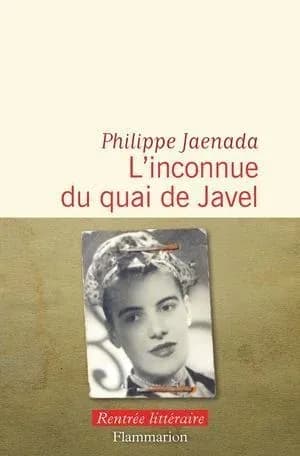
Children of the Scroll and Rick Tabor's Author Podcast

Rick's first novel, Children of the Scroll, was published by Long Overdue Books in December 2024. It won the StoryTrade Award for Best Urban Fantasy of 2026 and was a finalist in the American Legacy Book Awards.

He also hosts the podcast Authors Learning Something New, which he publishes on YouTube, Instagram, X, Spotify and his author website. He now records about two interviews a week for the show and is booked for the next four weeks. On October 17 he is due to appear at the Tex-Indie Author Book Fair in Houston.

Rick lives in Katy, Texas, with his wife, children and Trixie.

More Books by Rick Tabor

Stress Management

Children of the Scroll

Rick Tabor

Amazon →

FAQ

What inspired Rick Tabor to write The Blink of Humanity?
Rick says the election of Donald Trump for a second term was the catalyst for the book. He wanted to write about a David versus Goliath clash between corrupt political power and the resilient spirit of the average American.
What else has Rick Tabor written?
His first novel, Children of the Scroll, came out in December 2024. It won the StoryTrade Award for Best Urban Fantasy of 2026 and was a finalist in the American Legacy Book Awards. He also hosts the podcast Authors Learning Something New.
Where can I buy The Blink of Humanity?
The novel has been available on Amazon since September 7, 2026, and will soon be available from other major booksellers.

Hanns Scharff's Son Chris Scharff Traces His Family's Path From Wartime Germany to Africa and America in WWII Memoir

By Darie Nani

Chris Scharff was about six years old when his father, Hanns Scharff, was drafted into the German military, and the job Hanns was given there, questioning American fighter pilots shot down over Europe, later made him famous. In Memories: My Life Story: Germany to Africa to the USA, now available worldwide on Amazon and through the author's own website, Chris tells what that war looked like to the interrogator's son, and follows his family from Germany through two decades in Africa to a new start in California.

Memories: My Life Story

Featured Book

Memories: My Life Story

Germany to Africa to the USA

by Chris Scharff

Chris Scharff's account of a life that began in Greiz, Germany, in 1936 and ran through wartime Berlin, a displaced persons camp, school in South Africa, nine years of tobacco farming in Rhodesia and a career in Los Angeles. His father, Hanns Scharff, questioned captured American fighter pilots for the Luftwaffe, and the book tells that story from a son's side of it.

Amazon

We may earn a commission from purchases made through this link.

Hanns Scharff, the Luftwaffe Interrogator, Seen From Home

Hanns Scharff worked at the Luftwaffe's main interrogation center at Oberursel, near Frankfurt, from 1943 until the end of the war. He held a junior rank, but he became known as the Luftwaffe's master interrogator because he got information from captured airmen without threats or force. He called the prisoners his "guests", took them on walks and talked with them at length, and they often told him more than they meant to.

When Hanns came home on leave to Greiz, a small textile town in Thuringia, Chris writes, he brought keepsakes from the men he had questioned, such as compasses hidden in shirt buttons and escape maps printed on silk. The family still has one of those silk maps, framed.

A framed silk escape map kept by the Scharff family since the Second World War

The approach Hanns used is now studied by psychologists as the Scharff technique, and researchers have tested it in controlled experiments on how people give up information. In the book, Chris recalls meeting a veteran who had helped set up a US military survival and resistance training center in Warner Springs, California, where interrogations were modeled on his father's methods.

Life in Germany During and After WW2

Chris was born in Greiz in 1936, while his parents were visiting from South Africa, where they had married. A second trip to Germany in 1939 left the family stranded when war broke out. His mother, Margaret, was English, and Chris credits her above anyone else with getting the family through.

In the early chapters Chris describes wartime Berlin as a child saw it. He and his older brother, Fig, rode the city's commuter trains on their own to meet their father for lunch, and he walked to school past apartment blocks still burning from the night's air raid. Back in Greiz, as fuel and food ran short in the last winters of the war, his mother kept the family going in ways the boys were sworn to keep secret. In 1945, with American troops in Greiz, she set out to get her five children out of Germany, and a year later the family sailed from Southampton to Cape Town.

Twenty Years in South Africa and Rhodesia

Chris says he spent 20 years in various parts of Africa. He finished school in Durban, where his mother had started a screen-printing business, won a South African championship in track cycling and took a job at the Netherlands Bank, where he met Maureen Hamilton. In 1956, at 19, he moved to Southern Rhodesia to learn tobacco farming, and he and Maureen married at the Salisbury courthouse the following January. Their daughter, Karen, was born in 1959 in the same Salisbury hospital where his mother had been born.

In the Rhodesia chapters, Chris describes nine years on a string of tobacco farms, ending as manager of an estate at the edge of the settled farmland. He writes with humor about the accidents along the way, including a fall down a 33-foot well shaft. Alone in the bush one day, he became convinced the family had to leave Rhodesia, and in July 1965 they left for America, a few months before the country declared independence from Britain.

Chris Scharff and his wife Maureen at Ardura Farm, Southern Rhodesia, 1957

From Africa to Los Angeles

Chris says it was his father's wartime history that eventually brought Hanns to the United States, which in turn made it possible for the family to follow. Because Chris had been born in Germany, he could enter under the German immigration quota. Fig had been born in South Africa, a country with a much smaller quota, and he could only follow four years later, once Hanns had become an American citizen and could sponsor him.

Hanns met his son at customs in San Francisco. By then he was working as a mosaic artist in Los Angeles, and in later years he made the mosaic murals inside Cinderella Castle at Walt Disney World. Chris started out in his father's studio before retraining in computer programming, and went on to spend 26 years at Yamaha.

The Interrogator, the Hanns Scharff Book, and the Old Bold Pilots

“I wanted my friends and family to have a record of that whole journey, from World War II Germany, through Africa, to the life we built in the United States.”

— Chris Scharff

After Chris and Maureen retired to Carlsbad, California, they found that Raymond Toliver lived nearby. Toliver, a retired US Air Force colonel, had written The Interrogator, the book about Hanns Scharff first published in 1978. He invited Chris to join the Old Bold Pilots, a group of veteran airmen who met for breakfast every week. The group included one of the American pilots his father had questioned during the war.

Another member of the group, the World War II pilot Ron Nash, kept urging Chris to write his life story. Nash passed away before the book was finished, and Chris continued in his memory. He says the writing took roughly six to nine months. The memoir was first published independently in 2022 and has now been released worldwide in hardcover, paperback and ebook editions.

FAQ

Who is Chris Scharff?
Chris Scharff is the author of Memories: My Life Story: Germany to Africa to the USA and the son of Hanns Scharff, the World War II Luftwaffe interrogator. He was born in Greiz, Germany, in 1936, spent 20 years in South Africa and Rhodesia, moved to the United States in 1965 and retired from Yamaha in 1996. He lives in Carlsbad, California.
What happened to Hanns Scharff after the war?
Hanns Scharff moved to the United States and settled in Los Angeles, where he worked as a mosaic artist. He later became an American citizen and sponsored his son Fig's move to the US. He passed away in California in 1992.
What is the Scharff technique?
The Scharff technique is the name psychologists give to the questioning method Hanns Scharff used on captured Allied airmen. It relies on a friendly manner and on appearing to know more than he did, rather than on pressure or threats. Researchers have tested it in controlled experiments, and his son's memoir recalls a US military training center that modeled its interrogations on his methods.
What did Hanns Scharff do for Disney?
After the war Hanns Scharff worked as a mosaic artist, and he made the mosaic murals inside Cinderella Castle at Walt Disney World. His son Chris worked in his mosaic studio after arriving in the United States in 1965.
What is Memories: My Life Story about?
It is Chris Scharff's account of his life from a wartime childhood in Berlin and Greiz, through displaced persons camps, school in South Africa and tobacco farming in Rhodesia, to his career in Los Angeles. He wrote it so his family would have a record of that journey.

Physician Associate and Spiritual Coach Elizabeth M. Lykins Says Lasting Change Begins in Stillness

By Darie Nani

Elizabeth M. Lykins has worked as a physician associate in emergency and urgent care medicine since 1996, and in her book Reflections on Transcendence: Everything You Have Been Searching for Is Already Inside of You, she makes a case that will be familiar to anyone who has tried a new diet, a new wardrobe or a new city and felt the good feeling fade within weeks. Outward change, she says, brings only temporary satisfaction, and the change people really want starts with becoming still enough to hear what is going on inside them.

Reflections on Transcendence

Featured Book

Reflections on Transcendence

Everything You Have Been Searching for Is Already Inside of You

by Elizabeth M. Lykins

Reflections on Transcendence sets the short spiritual reflections of author and coach Elizabeth M. Lykins among 59 paintings by the late expressionist artist Steven D. Lyons, who chose each piece himself to match the text. A book of meditations and reflections on self-awareness, inner stillness and letting go of anxious thinking, it is written to be opened at any page. A BookLife Editor's Pick, described as "awash in calming insight" and recommended for readers of Sydney Banks's The Enlightened Gardener and Eckhart Tolle's The Power of Now.

Amazon (Paperback)

We may earn a commission from purchases made through this link.

"The inner voice does not scream at you," Elizabeth says. "You have to eliminate the distractions and become still enough to hear it."

Elizabeth M. Lykins and the Three Principles of Sydney Banks

“For years I sought answers outside myself, through religion, teachers, therapy and certifications in life coaching. Thirteen years ago, the work of Sydney Banks, Wayne Dyer and Eckhart Tolle gave me the 'aha' moment: everything I had been searching for was already inside of me. That realization changed how I show up in the world, both in my coaching and in my work as a medical provider in urgent care.”

— Elizabeth M. Lykins

Elizabeth says she was always drawn to spirituality, but had been conditioned from an early age to look for it in other people and places, in religion, in teachers and in leaders she believed could give her the tools to find inner peace. She read widely on self-discovery and on overcoming conditioning, went through therapy, and trained in life coaching, neuro-linguistic programming, cognitive behavioral therapy for insomnia and clinical hypnotherapy. Those qualifications improved the way she thought, she says, but she was still relying on techniques and practices to direct her. The Three Principles, the teaching Sydney Banks developed from the 1970s onward, holds that people experience life through their own thinking rather than through their circumstances. The realization it gave her became the subtitle of her book. The teaching is now the basis of her coaching, which she describes as an inside-out approach drawing on Banks, Tolle, Don Miguel Ruiz and other spiritual teachers.

Spirituality vs Religion in Elizabeth's Coaching

Elizabeth calls herself a spiritual advisor rather than a religious one and draws a clear line between the two. "Religion is about following rules. It is about belonging to an organization," she says. "Spirituality is about looking within yourself and connecting to your higher power."

She does not ask readers to leave their faith behind, only to recognize that no church, teacher or other person can do their inner work for them. "Religion will not improve you," she says. "The only way you can improve yourself is to work on yourself."

"There have been many moments in working with clients where I can see the shift in their thinking, as they awaken to their unconditioned self and embrace shedding the conditioning that no longer serves them (and likely never did)," Elizabeth says of her coaching. "It is very gratifying work to gently guide a person inward, where they can gain a greater understanding of who they really are for themselves, underneath all that they have been conditioned to believe about themselves."

Being Present With Patients in Urgent Care

Elizabeth says she now treats patients with more intention and presence than she did before, and that patients often tell her about the most painful moments in their lives as well as their physical symptoms. Being fully present lets her hear what they say and also notice when there is something they are not saying, which leads her to ask deeper questions and offer support.

"I do not use AI and am not charting while I am in the exam room," she says. "I look at the patient and devote all of my attention to them. This results in a more powerful encounter for both of us."

A Daily Reflection Practice for Hearing Your Inner Voice

Each day Elizabeth reads a short inspirational passage and reflects on it for at least a few minutes. She arrives early for clinic shifts and appointments so that she never feels rushed, and spends a few minutes reflecting in her car before she goes in. Music is the most powerful way for her to look inward. "It is the language of the soul and does truly speak to me at the deepest level of my being," she says.

She believes most people lose that inner voice to noise, and that much of the noise now comes through their phones. Someone may scroll past a violent or negative post in seconds, she says, but the mind can hold onto it long after the screen is gone. "Don't get in negativity," she says. "You have to be conscious of what you are allowing into your mind."

Becoming Your Authentic Self

Elizabeth says people can spend years trying to fit into relationships, friendships, careers and places that do not reflect who they are, and that time spent in self-reflection shows them when it is time to change. "The right people will stay and love you. The wrong people will leave. Have courage to be yourself," she says.

"If you are becoming a new person, your environment needs to reflect the new you," she says. She suggests art classes, music lessons, local libraries and community meetups as places where people with shared interests are more likely to meet. "When you start doing the things you like, you start discovering who you are and who is naturally drawn to you."

"Change is going to happen," she says. "Look within yourself to find the change that best suits you."

The Expressionist Paintings of Steven D. Lyons

“The 59 paintings in the book are a living legacy of a few of his select pieces, chosen by Steve personally to match the text of the book.”

— Elizabeth M. Lykins

Reflections on Transcendence sets Elizabeth's short reflections among 59 paintings by Steven D. Lyons, a lifelong friend. Steve grew up in the foothills of Appalachia and spent most of his working life as a corporate writer before he began painting on scrap wood on his back porch. He went on to paint full time from a studio in Chatham on Cape Cod, opened a gallery in Westport, Connecticut, in 2019, and was named one of the top five expressionist artists in the world by the American Art Awards in 2016. He used the impasto technique, building the paint up thickly so that it stands out from the canvas.

Elizabeth says his work helps readers step out of the constant stream of thoughts in their minds and simply appreciate what is in front of them, which is the purpose of the book itself. Steve passed away from brain cancer in March 2021, six months after the first edition was published. "As a lifelong friend of Steve, I feel honored to feature his work in my book," she says.

The book is meant to be opened at any page, and BookLife made it an Editor's Pick, calling it "awash in calming insight" and recommending it to readers of Sydney Banks's The Enlightened Gardener and Eckhart Tolle's The Power of Now. The first edition was published in October 2020 and a second edition followed in November 2022. The book is available in hardcover, paperback, ebook and audiobook.

Elizabeth M. Lykins, Spiritual Coach and Author

Elizabeth lives on the California coast and trained at the University of Washington School of Medicine and the University of Nebraska Medical Center. Alongside her medical work she runs a spiritual transformation coaching practice, A Magnificent Metamorphosis, and writes a biweekly LinkedIn newsletter, Tips for Inside-Out Living. She previously published Magnificent Metamorphosis Magazine, which ran for 12 issues, and wrote an earlier memoir about adoption and motherhood, Letter to Caroline, under the name Elizabeth Fannin.

FAQ

What is the difference between religion and spirituality?
Elizabeth M. Lykins describes religion as following rules and belonging to an organization, and spirituality as looking within yourself and connecting to your higher power. She does not ask people to give up their faith, but she says no organization can do a person's inner work for them.
Can a person be spiritual but not religious?
Yes. Elizabeth calls herself a spiritual advisor rather than a religious one, and her coaching focuses on self-reflection and inner stillness rather than any particular faith, so it is open to people with or without a religion.
What are the Three Principles of Sydney Banks?
The Three Principles are Mind, Consciousness and Thought. Banks taught that people experience life through their own thinking rather than through outside circumstances. Elizabeth says discovering his work, along with that of Wayne Dyer and Eckhart Tolle, was the turning point that led to her book and now shapes her coaching.
What is Reflections on Transcendence about?
It is a collection of short spiritual reflections by Elizabeth M. Lykins set among 59 paintings by the late expressionist artist Steven D. Lyons, who chose the pieces himself to match the text. Its subtitle, Everything You Have Been Searching for Is Already Inside of You, sums up its message, and it is written to be opened at any page.

Beautifully Unbroken Review: The Shower Shirt Inventor's Breast Cancer Memoir Begins with the Loss of Her Mother

By Dr Marina Nani

Anyone who has come home from surgery with drains stitched in and been told not to get them wet for three weeks will understand Lisa F. Crites straight away. She is the medical journalist from Florida who taped a trash bag over her chest after a double mastectomy in 2009, decided that could not be the best on offer, and patented The Shower Shirt. Her memoir tells that story in full, and it begins on a farm in Missouri, with her mother.

Beautifully Unbroken

Featured Book

Beautifully Unbroken

A Life-Changing Invention Born of Loss, Cancer, Courage, and Faith

by Lisa F. Crites

In Beautifully Unbroken, Lisa F. Crites shares her journey through the sudden loss of her mother, a breast cancer diagnosis, and a bilateral mastectomy, and how those experiences produced The Shower Shirt, a patented medical garment now helping chest surgery patients around the world protect their dignity and health during recovery. Told with candor, wit, and honesty, the memoir presents healing as an ongoing process and faith as a steady guide. Proceeds from each copy sold are donated to breast cancer support groups and nonprofit organizations serving breast cancer patients.

Amazon (US)

We may earn a commission from purchases made through this link.

Lisa was one day home from her honeymoon, in December 2001, when her brother called to say their mother had been in a car accident half a mile from the family farm and was gone. She was sixty, Lisa was thirty-four, and the whole of the book that follows, the cancer and the invention included, is written by a daughter who still misses her.

A Breast Cancer Memoir That Starts on a Missouri Farm

The first chapter is her childhood on a farm outside a Missouri town of five hundred people, with a strict father who sang, a mother who smoothed him over, three brothers, and winters when half the town piled onto a sled behind the family tractor. She gave up a piano scholarship for the journalism department three flights up, and spent the next thirty years in medical news, on television in Orlando and later running media for two hospital systems. She writes the way a reporter files, in short plain sentences with the facts in order. When she reaches the accident she does not soften it. What her father was asked to do at the roadside, and what the family found in the car afterward, she tells in a few plain sentences, and they are the hardest in the book.

Two later chapters are about her mother. One covers the morning of the funeral, and something Lisa felt when she put her hand on her mother's chest, which her husband, her father and her brother each confirmed with their own hands. The other covers a box Lisa finally opened in a storage unit twenty-four years later, and what was inside, in her mother's own words, gives the book its most surprising pages.

Mastectomy Recovery, Infections and Reconstruction

The cancer came in 2009, when Lisa was forty-one and working at the hospital where her own biopsy was done, which meant she read her pathology report before her doctor could tell her. The email she sent her friends that afternoon ended with "I am turning my cell phone off, and I need to go home and take a nap!!!", and that is how the medical chapters go, honest about being frightened and funny whenever she can manage it.

She chose to have both breasts removed, and the recovery is the part of her story that the interviews never have room for. It ran to fourteen months and seven operations, with two MRSA infections, months of hyperbaric oxygen treatment and a surgeon telling her she might have to live with one breast for the rest of her life. If you or someone you love has surgery ahead, these chapters are a frank account of what recovery can involve, and Lisa is careful to say that hers was far from ordinary.

The chapter she calls The Truth We Tell to Survive is about her cousin Mandy, who flew in from Kansas City, and a kind lie the two of them told each other across fifteen years. It is the best chapter in the book. Lisa is just as straight about her doctors. The surgeon she credits with getting her through is named and thanked in the dedication, and the one she could not warm to is given a single letter, and an honest explanation of why she stayed with him anyway.

The Story Behind The Shower Shirt

The invention starts with the first question she asked at her follow-up appointment, which was when she could have a shower. The answer was not until the drains came out, in two or three weeks. Every woman Lisa called had managed with a trash bag or plastic wrap, and so did she. The chapters that follow are as close to a manual for inventing something at a kitchen table as a memoir gets. Her aunt and her cousin made the first prototype out of a beauty salon cape, a friend of a friend who imported antique car parts from China found her a factory, and a firefighter who tested an early version changed the design. Lisa tells you what the first order cost, what the patent examiner said, and why the shirt went on sale in October 2010 rather than a month later. Anyone who has ever had an idea in a hospital bed should read these pages twice.

“Would you want your mother, sister, or daughter standing in the shower with a trash bag after breast cancer and amputation of the breasts?”

— Lisa F. Crites, to the Medicare coding committee

The chapter called Penile Implants Necessary, Breast Cancer Debated? is about Medicare, which twice refused to give the shirt a billing code. Lisa was invited to make her case to the committee in Washington, and the question above is the one she put to the men on the panel. What she had found in the rulebook while preparing explains the chapter's title. A bill to cover shower garments after mastectomy was introduced in Congress in 2014 and never came out of committee, and she is straightforward about why.

Faith, a Second Medical Crisis and the Sale of the Company

Lisa calls herself spiritual rather than religious, and her faith in these pages is the practical kind. She heard a voice on the worst night of her recovery, and later another, and she tells you plainly whose she believes they were.

The last third of the book is new even to people who have followed her. A chapter on what breast cancer does to the mind comes with a guest section from a clinical counselor that you may want to hand to someone. A medical emergency in 2021 was followed by a brain scan that changed how she worked, and by a neurologist whose instruction was to keep writing, which is partly how this book came to exist. Then she sold The Shower Shirt Co. after fourteen years, a publisher approached her within days and was told no, and she lost someone close to her while she was still writing, which she keeps for the closing pages.

Lisa says she agreed to write the book for the same reason she made the shirt, which is that it might help one person, and her own list of who that person might be runs from a woman just diagnosed to a daughter who has lost her mother to an inventor who doubts a painful idea could matter. That is who this book is for, and it will not let any of them down. It is a memoir, and there is still enough plain detail on drains, infections and reconstruction to be useful to a woman with surgery ahead of her. The family photographs, captioned in Lisa's own voice, tell a good part of the story on their own. In August the International Impact Book Awards named it a winner for Outstanding Literary Achievement in the autobiography category. Read it, then pass it to the friend who is going through surgery or grief, whose faith is wavering, or who simply needs a little inspiration.

FAQ

How do I shower after a mastectomy?
Lisa's surgeon told her she could not shower until her drains were removed, two to three weeks after surgery, because the drain sites are a route into the wound and tap water is not sterile. The Shower Shirt was designed so you can shower with the drains still in, held in internal pockets under a water-resistant cover. Follow your own surgeon's instructions on timing.
What is the best book to learn about breast cancer?
Beautifully Unbroken is a memoir, not a clinical guide, and Lisa says so in her own disclaimer. It is useful for the day-to-day detail, such as what drains are like, why infections after tissue expanders happen, how long reconstruction can take when things go wrong, and what the years afterward can feel like. Read it alongside your care team's own material.
What is a good gift for a woman with breast cancer?
The care bags sent out by Driven By Heart, the Florida breast cancer charity whose board Lisa served on, hold soft blankets, post-surgical bras, drain holders and a Shower Shirt. The memoir suits a woman who wants to hear from someone who has been through it, particularly one who has also lost her mother.

Call Out The Dogs Review: Anthony Eddolls Takes Agent Stilley From a Rome Murder to the Doors of the White House

By Darie Nani

Call Out The Dogs opens on a vacation, not a crime scene. FBI Special Agent in Charge David Stilley is in Rome with his wife, Patrice, and he has made up his mind to resign: the marriage matters more than the Bureau, and he intends to say so. He gets as far as the decision. Two Americans are dead, one in London and one in Rome, killed with the same weapon, and the call that interrupts his vacation pulls him into the case that will decide the question of his career for him.

Call Out The Dogs

Featured Book

Call Out The Dogs

The Special Agent David Stilley Adventure Series, Book Three

by Anthony Eddolls

When Special Agent in Charge David Stilley answers a call in Rome, he expects a routine liaison, until he learns a consular official was murdered with the same weapon used to kill an American banker in London. Pulled into a three-nation manhunt from Milan to Dover, Stilley uncovers a pattern of professional hits pointing at a covert program whose exposure could topple an administration, and must decide whether justice is a public reckoning or a private bargain.

Amazon Kindle

We may earn a commission from purchases made through this link.

That setup gives Anthony Eddolls's third David Stilley adventure its particular shape: a procedural that keeps escalating. What begins as ballistics matching across two capitals grows into a three-nation manhunt, and the pattern behind the victims is too clinical to be random: professional hits, identical casings, and a level of resource behind them that no lone killer commands. The closer Stilley gets to what connects the dead, the clearer it becomes that someone is willing to spend heavily to keep it hidden.

Eddolls moves the chase from Rome to Milan to London to Dover in forty-nine short chapters, and the brevity is what keeps the pace high. Scenes arrive, do their work and hand over to the next one; the effect is closer to a screen thriller than a slow-burn procedural, and it suits the compressed timeline, which packs the whole investigation into a matter of days. The story is told in Stilley's first person, with occasional cutaways to the assassin, a disillusioned ex-SAS sniper whose chapters supply the view from the other end of the scope.

The tradecraft is a pleasure in its specificity. A technician's video manhunt "searched two days before each time of death, and an hour afterward." Burner phones are bought, tracked and burned. A protection detail argues about hospital security in credible detail, and when the hunt tightens on the Kent coast, the geography of ports and safe flats is concrete enough to navigate by. Eddolls's years around high-stakes deal-making show in the way money moves through the plot: the investment structures, the pressure on the principals, the sense that every meeting has a price attached.

The title arrives in dialogue, when Stilley decides the case needs more than investigators: "One thing I know for sure is that we need Commander Ingram to call out the dogs!" The Dogs are an elite MI-5 tactical unit, and their commander, the dry-witted Jeremy Ingram, is the best of the supporting cast, a transatlantic partnership that gives the second half of the book both its firepower and much of its humor.

Behind the manhunt sits the book's most ambitious swing. The evidence points toward a covert program whose exposure would topple an administration, and the second half of the novel plays out in the space between justice done in the open and justice done off the record. Eddolls has said he wrote the book because the premise would have seemed unrealistic fifteen years ago, and readers will feel the charge of the present in it; the novel keeps its politics inside the story, but it is not shy about how power protects itself. There is also, unexpectedly for the genre, a hopeful strand about artificial intelligence: where most thrillers cast AI as the menace, this one imagines it as something worth protecting.

Through all of it runs the thread that opened the book: the question of what Stilley owes his marriage and what he owes the badge, asked in the opening pages and left genuinely open until the last. It is answered, and the answer sets the series on a new course, but that belongs to the reader. New readers can walk in here without having read the earlier books, since the case stands entirely on its own.

Call Out The Dogs is the strongest expression yet of what Eddolls has been building across the Stilley series: investigations with international scope, characters as flawed as they are capable, and a conviction that the deals made behind closed doors are where the real danger lives. Readers of contemporary crime and espionage fiction in the Daniel Silva and David Baldacci tradition will find familiar terrain here, delivered at a pace that makes 440 pages feel considerably shorter. It earns its place as the most charged and most confident book in the series.

More From Anthony Eddolls

Crime

Crossing Over

Anthony Eddolls

Amazon Kindle →
Thrillers

The Beast Within Us

Anthony Eddolls

Amazon Kindle →

FAQ

Can Call Out The Dogs be read as a standalone novel?
Yes. It is the third book in the Special Agent David Stilley series, but the case is self-contained and the book introduces its characters cleanly. Readers who start here can go back to The Beast Within Us and The Sleeper Among Us afterwards.
What order should the David Stilley books be read in?
Publication order: The Beast Within Us (2024), The Sleeper Among Us and Call Out The Dogs (both 2026). The series follows on from the author's completed three-book Elliott Murphy trilogy, which begins with Crossing Over.
Is there a sequel to Call Out The Dogs?
The ending sets up a new direction for David Stilley, and Anthony Eddolls has announced a seventh book for November 2026.

Lisa F. Crites Turns Her Own Cancer Recovery Into a Patented Invention and a New Memoir, Beautifully Unbroken

By Dr Marina Nani

Lisa F. Crites came home from a bilateral mastectomy with surgical drains and instructions to keep them dry in the shower with a plastic trash bag. She had spent decades reporting medical news as a broadcast journalist and quickly recognized the trash bag as a gap in patient care that no one had addressed. Her new memoir, Beautifully Unbroken: A Life-Changing Invention Born of Loss, Cancer, Courage, and Faith, tells the story of what she did about it.

Beautifully Unbroken

Featured Book

Beautifully Unbroken

A Life-Changing Invention Born of Loss, Cancer, Courage, and Faith

by Lisa F. Crites

In Beautifully Unbroken, Lisa F. Crites shares her journey through the sudden loss of her mother, a breast cancer diagnosis, and a bilateral mastectomy, and how those experiences produced The Shower Shirt, a patented medical garment now helping chest surgery patients around the world protect their dignity and health during recovery. Told with candor, wit, and honesty, the memoir presents healing as an ongoing process and faith as a steady guide. Proceeds from each copy sold are donated to breast cancer support groups and nonprofit organizations serving breast cancer patients.

Amazon (US)

We may earn a commission from purchases made through this link.

The Mastectomy Recovery Gap Behind The Shower Shirt

Her mother had passed away suddenly, and the breast cancer diagnosis followed soon after. Amid the grief and the physical toll of surgery, she found that ordinary tasks had turned difficult and undignified. Showering with post-surgical drains meant improvising with a garbage bag, a solution she refused to accept as the standard of care for the women who would come after her.
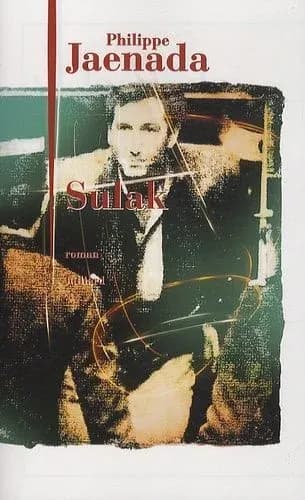
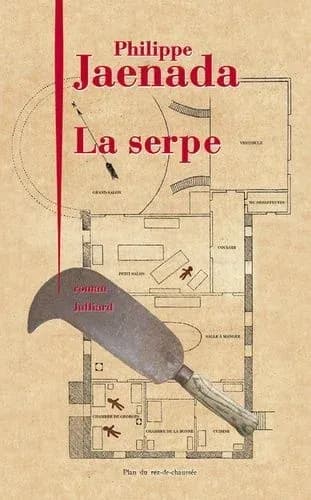
"I was determined to create a solution which helped breast cancer patients get through recovery, easier than I did," she says. "A trash bag is not a solution for women to shower in after mastectomy surgery."

The result was The Shower Shirt, the first and only patented water-resistant garment designed to protect chest surgery patients while showering. A Class 1 Medical Device designed by her company in Cocoa Beach, Florida, the garment is now stocked by mastectomy boutiques and home medical equipment suppliers across the United States and sold through Amazon, Walmart, and other retailers. The company says it has shipped the garment to patients in about 20 countries, from Canada and England to Japan, Australia, and the Seychelles.

A Medical Journalist Among Women Inventors

Crites belongs to a small group of women inventors in the United States, where only 2.7% own individual patents like hers. No research and development team, no academic financials or resources funding her, only one person's focus, resolve, resilience, and grit to create a product out of her own medical crisis. What set her apart was the career that preceded it. She spent more than 30 years in health and medical journalism, starting as the original health and medical news reporter for Central Florida News 13 in Orlando, then as a news anchor at America's Health Network (now Discovery Health). After a hiatus from medical journalism, wanting to learn the business side of healthcare, she directed media strategy for two large multi-hospital health systems while working as a media coach for a large U.S. media conglomerate, teaching print reporters to report on camera. She still writes a health column for Elysian Magazine.

The invention brought recognition that reached well beyond Florida. In 2015 she took second place in the national InnovateHER Challenge, the Small Business Administration competition honoring products that improve women's lives, winning a $10,000 prize and traveling as a guest of the U.S. State Department to present at the WE-APEC summit in Singapore. She received a Patient Innovation award from Catolica Lisbon School of Business and Economics in Portugal, presented at the World Government Summit in the United Arab Emirates, and says The Shower Shirt has been included in a London Science Museum innovation exhibit. She has also taken the cause to Washington, backing the Post-Mastectomy Infection Risk Reduction Act of 2014, introduced by Congressman Bill Posey and Congresswoman Debbie Wasserman Schultz to press for Medicare coverage of the garment.

Her invention and her advocacy have been covered by Forbes, Reader's Digest, The Huffington Post, Fox News, CBS, NBC, CNN and Lifetime Television's The Balancing Act.

The Memoir She Turned Down Twice

Beautifully Unbroken was not her idea. A publishing house approached her; she declined, then declined again.

"I'm an accidental inventor, and now, I feel the same in that I'm an accidental author," Crites says. "I had a publishing house approach me to write this book. I said no twice." The publisher persisted. "They pulled from blogs, speaking engagements and media features to create a storyline. It was fantastic, so I moved forward."

What convinced her, she says, was the same reasoning that produced the garment.

“I agreed to move forward for one primary reason, the same reason I invented The Shower Shirt: if this book can help even one person, it will be worth it.”

— Lisa F. Crites

In the book she carries that thought further: if it helps one cancer patient feel less alone, one exhausted survivor, one inventor doubting that a painful idea could become meaningful, one woman who has lost her mother, one Christian struggling with doubt, then every page was worth writing.

A Spiritual Biography of Loss, Faith and Recovery

Crites writes with honesty and moments of humor about grief, isolation, and the slow emotional work of recovery, presenting healing as a process that continues long after treatment ends rather than a line from sick to well. Faith runs through the book as a steady guide through loss, invention, and reinvention.

The book reached Amazon Best Seller status shortly after publication, trending at No. 1 in categories including Cancer, Spiritual Biography, and Health and Spirituality, and was still trending in New Releases 10 weeks on. Proceeds from each copy sold are donated to breast cancer support groups and nonprofit organizations serving breast cancer patients.

FAQ

How long do drains usually stay in after a mastectomy?
Surgical drains typically remain in place for one to three weeks after a mastectomy, until fluid output falls to a safe level. Keeping the drain sites dry is the reason Crites was handed a trash bag before showering, and the problem The Shower Shirt™ was designed to solve.
What are some must-haves for recovery after a mastectomy?
Patients commonly rely on front-closing tops, drain pouches or lanyards, extra pillows for sleeping, and a way to shower without soaking dressings or drain sites. Crites' memoir argues the emotional supports matter as much as the practical ones: patience, community, and permission to heal slowly.
How long does it take to recover from a mastectomy?
Physical recovery generally takes four to six weeks, though it varies with reconstruction and individual health. In Beautifully Unbroken, Crites makes the case that emotional recovery follows no fixed timeline and can continue for years after the surgical wounds have healed.